


You can recognize reliable vegan guarantees by five certification seals: the Vegan Trademark, V-Label, PETA-Approved Vegan, Leaping Bunny from Cruelty Free International, and Certified Vegan from vegan.org. For cosmetics, vegan means a product contains no animal ingredients and that no animal testing has been carried out by or on behalf of the manufacturer. Always check the logo on the packaging and verify it via the certification body’s own website, because not every “vegan” label on a bottle is independently verified.
In short:
- The Vegan Trademark and Leaping Bunny are the strictest certification seals, confirming the absence of animal ingredients and animal testing, respectively.
- A product can carry multiple certification seals, making it both vegan and cruelty-free at the same time, but not every logo guarantees full control or independence.
- Vegan and cruelty-free claims differ; vegan refers to ingredients, cruelty-free refers to the testing process, and both claims must be checked separately for certainty.
- Certifications are becoming stricter, with more focus on complete supply chains, testing methods without animal ingredients, and packaging requirements.
- Consumers are best off always checking the logos and the ingredient list, and verifying certification information on the official websites for the most reliable information.
Table of contents
- Which official certification seals exist for vegan cosmetics?
- What these certification seals check exactly: criteria and limitations
- Vegan versus cruelty-free: the difference you should know
- Checklist: how to recognize truly vegan cosmetics
- Limitations and pitfalls: not every vegan logo means the same
- Why test methods and supply chains matter for vegan claims
- Current developments and trends in vegan certification seals
- How consumers and companies grow vegan certification seals together
- What vegan certification seals mean for sustainability and the environment
- Pragmatically dealing with certification seals: what really matters
- Vegan fragrances without hassle: what we stand for
- Frequently asked questions
- Sources
Which official certification seals exist for vegan cosmetics?
A few certification seals dominate the market, and each has its own emphasis. You’ll spot them as a small logo on the packaging, often near the ingredient list or on the back of the box—and increasingly also on the product page of the webshop.
- Vegan Trademark by The Vegan Society: the oldest and most widely recognized certification seal, focused on both ingredients and the production process.
- V-Label: a European label that certifies both vegan and vegetarian, with clear tolerances for unintended traces.
- PETA-Approved Vegan: a separate PETA status specifically for products without animal components.
- Leaping Bunny by Cruelty Free International: focuses on the absence of animal testing, not necessarily on ingredients.
- Certified Vegan by vegan.org: an American certification seal with its own database of approved products.
These certification seals do not exclude one another. A bottle that carries both the Vegan Trademark and Leaping Bunny confirms that the product is vegan and that no animal testing was done anywhere in the entire supply chain, which is the strongest combination for many buyers.
What these certification seals check exactly: criteria and limitations
Each certification seal has its own scope, and that difference determines how strict the guarantee really is.
The Vegan Trademark from The Vegan Society certifies products without animal ingredients and without animal testing, and the standard also covers production processes and test methods. This certification seal is used by a very large number of products worldwide, and brands must provide documentation about their entire supply chain to be eligible. According to the official standards, even certain packaging materials containing known animal-derived components can exclude a product from certification.
V-Label uses a slightly different approach: it sets concrete tolerances for unintended presence of non-vegan substances, typically under a very small tolerance threshold in the final product, as described by V-Label. That makes the label practical for manufacturers with complex production lines where traces are sometimes unavoidable. The V-Label compliance guide also requires ingredient audits and supplier documentation before a brand may use the label.
PETA-Approved Vegan is something different from PETA’s broader cruelty-free status. The vegan variant confirms that a product is completely free of animal components, while the regular PETA list only says something about animal testing. So a product can be cruelty-free without being vegan, for example when it contains beeswax or lanolin.
Leaping Bunny, managed by Cruelty Free International, focuses exclusively on animal testing. The certification seal works with independent audits and supply-chain checks to ensure that no link in the chain—from raw-material supplier to finished-goods manufacturer—has used animals for testing.
Certified Vegan by vegan.org keeps its own database of approved products and is mainly aimed at the American market, although more and more European brands are appearing on the list.
Pro tip: If you’re unsure, look up the product number or brand name in the certification body’s official database rather than trusting a photo of a logo on a webshop.

Vegan versus cruelty-free: the difference you should know
Vegan and cruelty-free may sound like synonyms, but they are not. Vegan is about ingredients: no animal components such as beeswax, carmine, or collagen. Cruelty-free is about the testing process: no animal testing by or on behalf of the brand.
- A product can be cruelty-free but still contain beeswax or milk proteins, and is then not vegan.
- A product can contain vegan ingredients, but if the brand sells in a country where animal testing is mandatory, the cruelty-free status can come under pressure.
- For strict vegans, the vegan claim is the most important criterion because it directly concerns the composition.
If you want both guarantees, look for a combination of logos instead of relying on just one term.
Checklist: how to recognize truly vegan cosmetics
A few simple steps prevent you from confusing a vague marketing claim with a verified certification seal.
- Check the logo on the packaging and look up the product or brand in the database of the relevant certification seal.
- Read the INCI list and watch out for common animal-derived substances such as lanolin, carmine, collagen, beeswax, or squalene from shark liver.
- Ask for documentation when a brand does not use a recognized certification seal: transparent companies share information about test methods and suppliers on request.
- Use the search functions on the certification websites themselves, which are often faster and more reliable than a general search engine.
Pro tip: Save the product code from a bottle before you go to the store, so you can quickly verify it on-site via the certification body’s app or website.
Limitations and pitfalls: not every vegan logo means the same
A self-invented “vegan friendly” statement on packaging is different from an independently certified seal, and that distinction is often intentionally kept vague in marketing.
- A brand can print its own vegan text without any external control.
- Sales in countries where animal testing is still mandatory, such as certain markets outside the EU, can complicate a brand’s cruelty-free status: in the EU, animal testing on cosmetics is prohibited, but outside the EU other rules sometimes apply, so a brand that sells there indirectly may become involved in animal testing.
- Cross-contamination in shared production facilities and hidden processing aids in testing media remain technical risks that a layperson cannot see.
Third-party certification weighs heavily in the purchase decision: many vegan consumers find certification important, and a significant portion is willing to pay more for a visibly certified product, according to The Vegan Society. An independent logo is therefore not just a formality but a concrete trust signal.
Why test methods and supply chains matter for vegan claims
Standard microbiological testing media sometimes contain animal byproducts, even when the final product itself is completely vegan. Solutions such as VeganSure were developed as animal-free testing methods and are validated for EU and UK regulations, and The Vegan Society has explicitly assessed such solutions. If you’re unsure, ask whether a brand shares documentation about its testing processes, because that says more than just a logo on the box.
Current developments and trends in vegan certification seals
The number of vegan-certified cosmetic products continues to grow, and certification seals are refining their criteria to keep pace with new production techniques. Where earlier a lot of attention went mainly to the ingredient list, certification seals such as the Vegan Trademark and V-Label now pay more attention to the entire chain: from raw-material sourcing to packaging.
A noticeable shift is the growing focus on the testing methods themselves, not just the end product. Animal-free microbiological testing solutions are gaining ground, and certification seals increasingly ask for proof that quality controls also take place without animal byproducts. At the same time, we see more cooperation between certification seals: brands more often combine multiple labels on one product, because consumers search for combinations themselves before they buy.
Packaging itself is also receiving more attention within certification criteria. Glues, coatings, and inks may contain animal-derived components, and stricter certification seals increasingly include that in their assessments. For consumers, this means that a vegan logo today usually provides a more complete picture than a few years ago, even though the differences between certification seals remain large enough that you should always verify.

How consumers and companies grow vegan certification seals together
Demand for verified vegan cosmetics does not only come from consumers; it is also actively driven by companies that respond to that demand. Buyers who consciously look for a recognized logo guide manufacturers toward certification, simply because an independent certification seal has a direct impact on sales.
Companies respond by adjusting their formulations and reorganizing production processes around certification requirements. This often requires more than removing a few ingredients: it means finding new suppliers, maintaining documentation, and sometimes completely revising test protocols.
Consumers contribute in turn by asking critical questions of brands that do not use a recognized label, and by visibly choosing certified alternatives. This feedback loop, where supply and demand strengthen each other, explains why the number of certified products has continued to rise in recent years. The more buyers actively check a logo instead of believing a marketing text, the more pressure builds on brands to ensure that checks are actually carried out.
What vegan certification seals mean for sustainability and the environment
Vegan certification and environmental friendliness are not the same, but they often overlap in practice. Excluding animal raw materials reduces dependence on livestock farming, which according to environmental organizations is one of the largest sources of greenhouse gas emissions within the food and raw-material supply chain. Cosmetic brands that switch to plant-based alternatives often shift their raw-material sourcing to less environmentally intensive sources.
In addition, certification forces brands to map their entire supply chain, and that transparency often exposes other sustainability issues too, such as unnecessary packaging or non-recyclable materials. A brand that works toward a vegan logo often takes steps in other areas at the same time, simply because both goals require a critical look at its own production.
It remains important, however, not to confuse vegan with sustainable: a plant-based ingredient can still have a large ecological footprint depending on how and where it is grown. If you want to weigh both animal welfare and the environment, it’s a good idea to look at packaging materials and the origin of raw materials as well, in addition to a vegan certification seal.
Pragmatically dealing with certification seals: what really matters
A certification seal is a tool, not a guarantee of perfection. It provides certainty about a specific criterion, ingredients, or testing methods, but it says nothing about fragrance quality, skin tolerability, or price. If you want to buy truly critically, combine a recognized logo with your own check of the INCI list instead of blindly trusting a picture.
The most practical approach is to stay grounded: trust established certification seals such as the Vegan Trademark or Leaping Bunny, but keep verifying questionable or unknown labels.
— J
Vegan fragrances without hassle: what we stand for
We make perfumes from vegan fragrances—fully animal-friendly and without animal testing—so you don’t have to search for every bottle yourself. Since we save on expensive marketing and unnecessary packaging, we offer the same long-lasting scent experience as well-known designer brands at an affordable price.
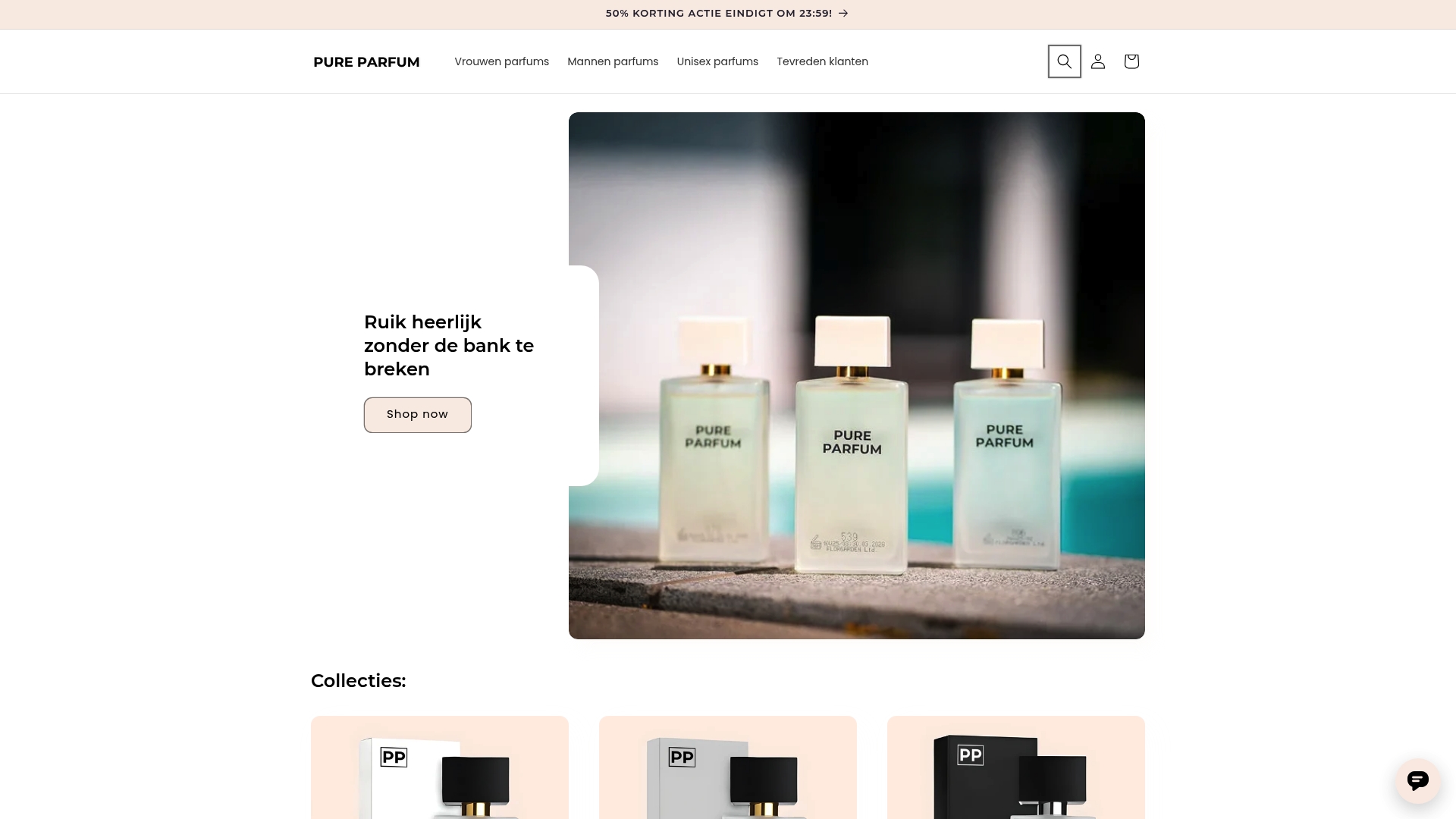
You can always check the certification seal or product description on the page of the choice you make—we recommend this to everyone, no matter where you buy, for example via Cashback Nederland. In addition to perfumes for women, men, and unisex, you’ll also find vegan body care, such as a scented hand cream, for anyone who wants to extend the scent experience to the entire care routine. View our full range at Pureparfum and find the fragrance that fits you.
Frequently asked questions
Which cosmetic brands don’t test on animals?
Brands approved by Leaping Bunny from Cruelty Free International or by PETA are independently checked for the absence of animal testing. Look up the specific brand in the official database of one of these certification seals before assuming that a claim on the packaging is correct.
Is the Kruidvat brand vegan?
Some products within the Kruidvat range are vegan, but that does not automatically apply to the entire brand or every product. Check the ingredient list per product and see whether a recognized vegan certification seal appears on the packaging.
Is Maybelline tested on animals?
Maybelline sells products in markets such as China where animal testing for cosmetics may be required in certain cases, which complicates its cruelty-free status. Without a recognized certification seal such as Leaping Bunny on a specific product, the safest assumption is that it is not independently verified as cruelty-free.
Which sustainable cosmetic brands are there?
Sustainability in cosmetics shows up in different choices, such as vegan formulations, recyclable packaging, and transparent supply chains. We choose to make our perfumes vegan and animal-friendly without expensive packaging, which limits the ecological footprint without compromising fragrance quality.
What is the difference between vegan and cruelty-free cosmetics?
Vegan means a product contains no animal ingredients, while cruelty-free means no animal testing has been carried out. A product can be one without the other, so ideally check both claims separately.
Sources
- What is the Vegan Trademark? | The Vegan Society
- Guide to compliance for vegan cosmetics | V‑Label
- Animal testing on cosmetics, but is animal testing still prohibited? | TheGreenList