


A good vegan skincare routine looks essentially the same as any good routine: cleanse, hydrate, and protect in the morning; cleanse, treat, and repair in the evening. The difference lies in what's in your jars and how they are made: no animal ingredients and no animal testing. In this guide, you'll learn which steps you really need, how to tailor them to your skin type, how to assess a vegan or cruelty-free claim, and how to introduce new products safely. And because your skin doesn't stop at your jawline, we'll also cover your body.
Briefly summarized
- Vegan and cruelty-free are two different things. Vegan refers to ingredients, cruelty-free to animal testing. For a fully animal-friendly routine, you want both.
- Four steps are enough to start: cleansing, optionally a toner or serum, a moisturizer, and sunscreen during the day. In the evening, skip the sunscreen and your cream can be richer.
- Your skin type determines the texture, not the label. Dry skin calls for richer creams, oily skin for lightweight, non-occlusive products.
- Check certifications, because ‘vegan’ and ‘cruelty-free’ are not protected terms. Logos from independent organizations provide more certainty than a standalone claim.
- Add new products one by one and first test them on a small patch of skin for a week or two.
Table of contents
- Vegan, cruelty-free, or both?
- Start with your skin type
- Your morning routine in four steps
- Your evening routine: cleansing and repairing
- Don't forget your body
- How to check ingredients and certifications
- Safely introducing new products
- How we look at it
- Frequently asked questions
- Sources
Vegan, cruelty-free, or both?
The words are often used interchangeably, but they mean different things. Vegan means a product contains no animal ingredients and that no animals were used in production. Cruelty-free means the product and its ingredients were not tested on animals. A product can be both vegan and cruelty-free, but it can also be only one of the two, or neither.
In practice, these are the combinations you mostly encounter:
| Label | No animal ingredients | No animal testing | Example of what may still be inside |
|---|---|---|---|
| Vegan only | Yes | Not guaranteed | Ingredients tested on animals elsewhere |
| Cruelty-free only | Not guaranteed | Yes | Beeswax, honey, lanolin |
| Vegan and cruelty-free | Yes | Yes | Nothing animal-derived, no animal testing |
But aren't animal tests banned in Europe anyway? That's largely true: since 2013 there has been a ban in Europe on testing beauty products on laboratory animals. Still, big brands that also sell outside the EU are not automatically cruelty-free, because different rules apply in some countries. A European product is therefore a good start, not a guarantee.
Also important: vegan does not automatically mean natural or plant-based. Many vegan products contain synthetically made ingredients, and that's fine. A lab-made substance is often actually purer and more consistent than a plant extract, and whether something is good for your skin depends on the formula, not the source. We previously wrote about this difference in an article about natural and synthetic fragrance.
Start with your skin type
A vegan routine only works if it suits your skin. So first see how your skin behaves an hour after cleansing, without putting anything on it.
- Does your skin feel tight or flake? Then you probably have dry skin.
- Does your whole face shine? Then your skin is oily.
- Does only your T-zone (forehead, nose, chin) shine while your cheeks are normal or dry? Then you have combination skin.
- Do you quickly get red, sting, or itch with new products? Then your skin is sensitive, which can occur with any of the other types.
This is how you translate that into your choices:
| Skin type | Cleanser | Moisturizer | Pay extra attention to |
|---|---|---|---|
| Dry | Mild, creamy cleanser | Rich cream, and in the evening feel free to use something fuller | Don't exfoliate too often |
| Oily | Gel or mild cleanser that removes oil without a tight feeling | Light gel or fluid | No heavy oils that can clog pores |
| Combination | Mild gel cleanser | Light on the T-zone, richer on the cheeks | It is fine to treat zones separately |
| Sensitive | As mild as possible, lukewarm water | Simple formula with few ingredients | Only one new product at a time |
A pitfall in vegan skincare: plant-based does not mean mild. Pure plant oils can clog pores just as much as animal fats on an oily or blemish-prone skin, and some essential oils irritate sensitive skin. So always read the ingredient list, even if the label looks green.
Your morning routine in four steps
In the morning, it's all about a clean base, moisture, and protection for the day. Keep it short: four steps are more than enough.
- Cleansing. Wash your face with lukewarm water and a mild vegan cleanser. Don't rub hard and pat your skin dry with a clean, soft towel. If you have dry skin, just water in the morning may be enough.
- Toner or serum (optional). A hydrating toner or serum gives extra moisture or addresses a specific issue, such as a dull complexion. Choose one, not three at once.
- Moisturizer. A day cream locks in moisture. Choose the texture that suits your skin type: rich for dry, light for oily.
- Sunscreen. Finish with a broad-spectrum facial sunscreen, even on cloudy days. This is the step that protects your skin the most in the long term.
Wait briefly between steps for the product to absorb, especially before applying sunscreen or makeup. That way, each layer stays in place better.
Your evening routine: cleansing and repairing
In the evening, you remove everything that has built up on your skin during the day: sunscreen, makeup, sebum, and dirt from the outside air. After that, your skin can recover.
- Thorough cleansing. If you wore sunscreen or makeup, double cleansing works well: first a cleansing oil or balm that dissolves oil, then your regular mild cleanser.
- Targeted treatment. This is the time for a serum with an active ingredient, for example bakuchiol as a plant-based alternative to retinol, or an exfoliant if you have blemishes. Start cautiously, a few times a week.
- Night cream. At night, your moisturizer can be richer than during the day. Dry skin benefits from a fuller cream; oily skin can simply use the day cream.
- Extras (optional). A vegan eye cream or lip balm, and a mask once or twice a week.
Don't exfoliate every night. Start with once or twice a week and only build up if your skin tolerates it well. If you have dry or irritated skin, it's better to skip strong exfoliants altogether until the skin is balanced again.
Don't forget your body
Most routines stop at the neck, even though the skin on your arms, legs, and hands also dries out, especially in the Dutch winter with the heating on and wet cold outside. Luckily, a vegan body routine is simple:
- Shower with a mild body wash. Lukewarm rather than hot water preserves your skin's natural lipid layer.
- Apply body lotion to skin that is still slightly damp. Right after drying off, lotion absorbs best and helps retain moisture.
- Use hand cream after washing your hands. We wash our hands more often than any other part of the body, so they deserve a tube on the counter and one in your bag.
If you want to know what to look for when choosing a lotion, read our article about the best vegan body lotion and the certifications that go with it.
That's where we come in. At Pure Parfum, in addition to our perfumes, we also make scented hand creams, body lotion, body wash, and skincare sets. All fragrances are vegan and animal-friendly, and just like with our perfumes, we save on expensive packaging and marketing rather than on what you put on your skin. That way, your body care immediately becomes the first layer of your fragrance.
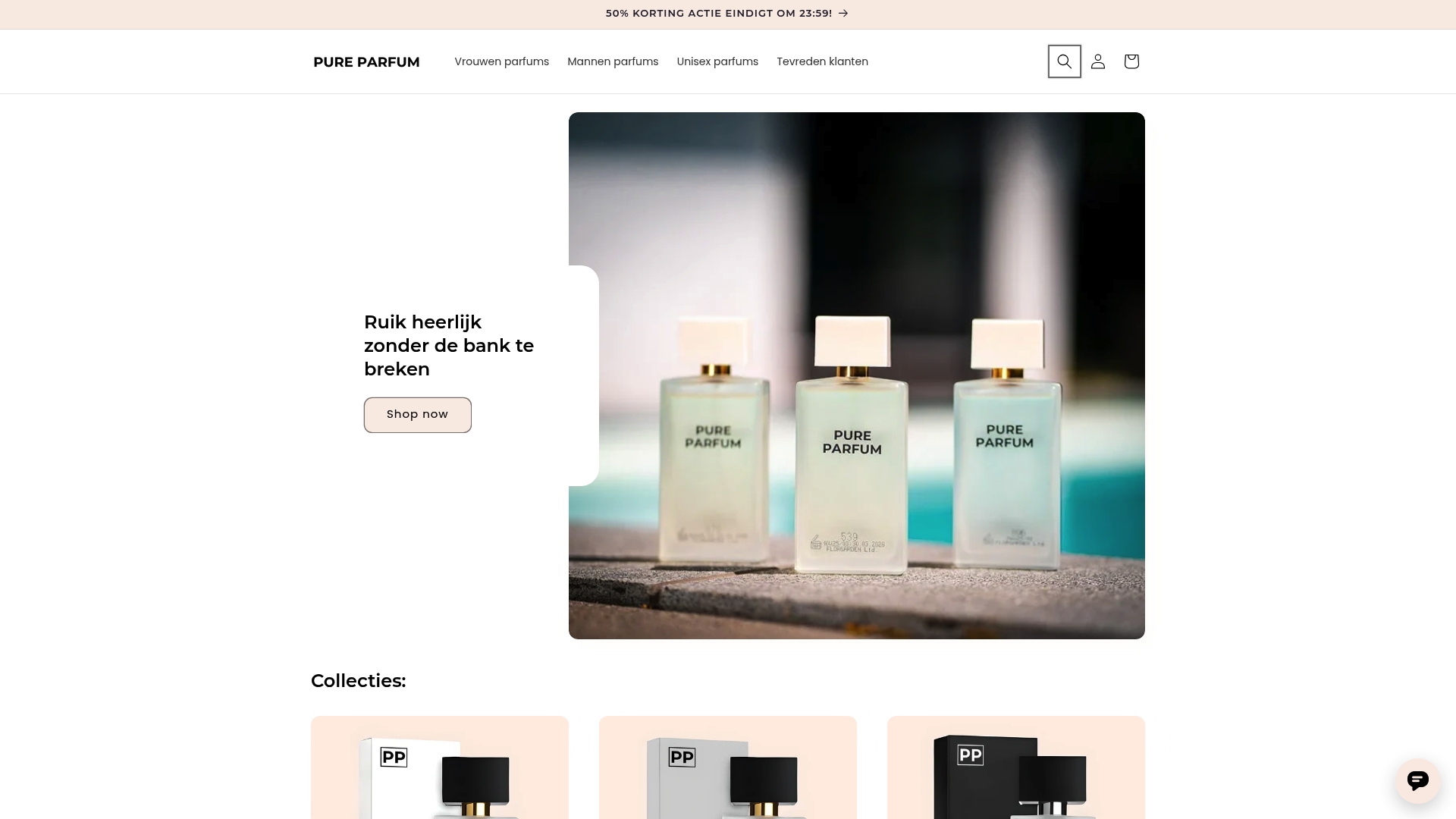
Check out our vegan body care or choose a fragrance to go with it from our unisex perfumes.
How to check ingredients and certifications

The most important rule: don't blindly trust a standalone claim. ‘Vegan’ and ‘cruelty-free’ are not protected claims: any manufacturer may put them on the packaging without external verification. A certification from an independent organization gives more reassurance.
Certifications you may encounter
- For vegan: PETA-Approved Vegan, The Vegan Society (the Vegan Trademark with the sunflower logo), the V-Label, and vegan.org.
- For cruelty-free: PETA-Approved (the bunny) and Leaping Bunny.
The Vegan Trademark from The Vegan Society is the broadest: it excludes animal ingredients and by-products in the final product and in the supply chain, as well as animal testing during development or production by or on behalf of the company. That covers both sides of an animal-friendly routine. To learn how to distinguish the different logos, read our guide to vegan certifications in cosmetics. If you want to verify cruelty-free status specifically, our step-by-step guide helps you check cruelty-free certifications.
Animal ingredients on the label
On the ingredients list (the INCI), animal-derived substances often appear under their Latin or technical names. Pay particular attention to:
| Ingredient | Origin | Often found in |
|---|---|---|
| Beeswax (cera alba) | Bees | Lip balm, rich creams |
| Honey (mel), propolis | Bees | Masks, cleansers |
| Lanolin | Wool grease from sheep | Lip and hand care |
| Collagen, gelatin | Cattle or pigs | Anti-aging creams, masks |
| Keratine | Horn, hair, feathers | Hair and nail products |
| Silk (serica, silk amino acids) | Silkworms | Serums, powders |
| Snail mucin (snail secretion filtrate) | Snails | Serums, essences |
| Carmine (CI 75470) | Scale insects | Red makeup, lipstick |
Some substances, such as glycerin, can be either plant-based or animal-derived. The label does not always tell you that; a vegan certification does.
Claims that say less than you think
The NVWA advises being critical of terms like ‘hypoallergenic’, ‘dermatologically tested’, and ‘pH-neutral’: they do not guarantee that a product will not irritate your skin. Read the label, check the shelf life (the open jar symbol with for example ‘12M’ means twelve months after opening), and store products cool and dry.

Safely introducing new products
The fastest way to upset your skin is to replace everything at once. If you're switching to vegan products, do it gradually.
- One product at a time. Start with the step that gives the most benefit, for example your moisturizer, and wait a few weeks before adding the next product. That way, if a reaction occurs, you'll immediately know which product caused it.
- Do a usage test. Anna Hospital describes a simple usage test for cosmetics: apply the product twice a day to the same spot on the inside of your forearm for at least 7 and at most 14 days. If no redness, bumps, or itching develops, the product is very likely safe for you.
- Keep a short log. Note which products you use and take a photo if your skin flares up. That will help you, and later possibly your doctor.
Irritation or allergy?
Not every reaction is an allergy. Irritation often feels burning, stinging, or tightening and appears shortly after application, for example due to acids, retinoids, alcohol, scrubs, or cleansers that are too strong. In that case, temporarily return to a simple routine: mild cleanser, simple cream, sunscreen, and add nothing new until your skin has calmed down.
If redness, itching, or bumps keep returning, or if you see swelling or blisters, stop using the product and see your GP. If necessary, they can refer you to a dermatologist for an allergy test, so you know exactly which ingredient to avoid.
If you already know that your skin reacts sensitively to certain fragrance ingredients, then in our article about allergens in perfume you can learn how to recognize them on the label, and in perfume for sensitive skin how you can still enjoy fragrance, for example by spraying it on clothing or hair.
How we look at it
For many people, a vegan routine begins with the face, but we like to think bigger. What you put on your arms, your hands, and your neck touches your skin just as much, and for us your fragrance is part of that too. An animal-friendly routine that stops at night cream and ends with any random bottle of perfume is only half finished.
That is why all our fragrances are vegan and animal-friendly, from our perfumes to our hand creams, body lotion, and body wash. We make them with a high concentration of perfume oil so the scent lasts, and we consciously save on expensive packaging and marketing. We'd rather spend that money on what is in the bottle than on what surrounds it.
Our advice: build your routine in layers. Cleanse with a scented body wash, care for your skin with a lotion from the same fragrance line, and finish with your perfume. That way, every step contributes to the same scent, and you can wear it all day without having to keep reapplying. Well-cared-for skin also holds fragrance better than dry skin; we wrote more about that in our article on perfume and skin type.
J
Frequently asked questions
Is vegan skincare better for your skin?
Vegan says something about the origin of ingredients, not about how well a product suits your skin. A vegan product works just as well as a non-vegan product, as long as the formula matches your skin type. So first choose based on skin type and texture, and then on vegan and cruelty-free.
How many steps does a vegan skincare routine need?
For most people, three to four steps are enough: cleansing, hydrating, and protecting from the sun during the day, optionally supplemented with a serum. More steps are not automatically better. A short routine that you can stick to every day will do more than a long one you abandon after two weeks.
Is all cosmetics in the EU cruelty-free?
In the EU, testing cosmetics on animals has been banned since 2013. However, brands that also sell outside Europe may face different rules there. A cruelty-free certification such as Leaping Bunny or the Vegan Trademark provides more certainty than just ‘Made in EU’.
Can I use a scented body lotion in my vegan routine?
Yes, as long as the lotion is vegan and your skin tolerates it well. Apply it to slightly damp skin after showering, then it absorbs best. If you have sensitive skin, first test it for a week or two on the inside of your forearm.
How long does it take before I see results from a new routine?
Give each new product a few weeks before judging or adding something else. That gives your skin time to adjust and makes it clear what a product is doing. If you notice stinging, redness, or itching during that period, stop and return to your simple base routine.
Sources
- The Green List: the difference between vegan and cruelty-free
- Fashionchick: what exactly is the difference between vegan and cruelty free?
- The Vegan Society: Cruelty-Free vs Vegan and the Vegan Trademark
- NVWA: preventing complaints caused by cosmetics
- Anna Hospital: usage test
- Allergy Centers: cosmetics allergy