


Yes, perfume without phthalates exists and it’s absolutely possible to find it if you know what to look for. The first step is simple: choose a brand that shares the full ingredient list and clearly states that it works phthalate-free. At Pure Parfum, for example, we show exactly what’s in our bottles—without hidden formulas.
In short:
- Phthalates can also end up in perfume from flexible plastic; glass bottles limit that migration—especially when you store your perfume for a long time.
- Possible risks mainly relate to repeated exposure through perfume, lotion, laundry detergent, and makeup; pregnant people, children, and people with sensitive skin need extra attention.
- Because labels often only mention “perfume” and don’t always call phthalates out separately, ask for the complete ingredient list and a phthalate-free statement.
- Natural oils can contain allergens and make the skin more sensitive to sunlight; therefore, test new fragrances on your arm and wait 24 hours.
Table of contents
- What are phthalates, and why do they show up in perfume?
- What does research say about the health risks of phthalates in fragrance?
- Why “perfume” on the label doesn’t always say enough
- Which natural fixatives provide lasting fragrance without phthalates?
- Checklist: how to choose a perfume without phthalates
- Transparency and expertise: what do we base our advice on?
- What this discussion often overlooks
- Discover our phthalate-free perfumes at Pure Parfum
- Frequently asked questions
- Sources
What are phthalates, and why do they show up in perfume?
Phthalates are a group of synthetic chemicals that were originally used to make plastics more flexible. In perfumery, substances such as DEP (diethyl phthalate) are often used as a solvent or fixative: they help fragrance molecules evaporate more slowly, so a scent lasts longer on the skin.
Phthalates can get into a perfume bottle in two ways. Sometimes they are intentionally added as part of the formula. More often, contamination occurs because the substance migrates from the plastic packaging into the liquid itself, especially when the bottle is made of flexible plastic. A systematic review that searched 562 articles and ultimately analyzed 37 relevant studies identifies phthalates—along with aldehydes and parabens—as some of the most common contaminants in perfume and cosmetics.
Key points to remember:
- Phthalates are not always intentionally added ingredients, but can also be present unintentionally due to migration from packaging materials.
- DEP and DBP are the most commonly mentioned variants in fragrance products, often used for their solvent and fixing properties.
- Flexible plastic bottles pose a greater migration risk than glass, because the substance isn’t chemically bound to the plastic.
- The presence of phthalates is often invisible on the label, because they enter via the packaging and aren’t listed as ingredients.
This pathway through packaging materials makes it extra difficult for consumers: you can buy a formula without intentionally added phthalates, yet still end up with contaminated liquid if the bottle is made from the wrong type of plastic.
What does research say about the health risks of phthalates in fragrance?
The scientific literature on phthalates in perfume points to real—but not yet fully clarified—risks. The systematic review mentioned earlier links phthalates and other fragrance contaminants to allergic reactions, respiratory complaints, and possible effects on fertility, although the exact dose-response relationship in humans remains underexplored.
A more recent narrative review in Frontiers, based on literature from 2005 to 2025, emphasizes especially the role of cumulative exposure. It’s not just one spray bottle of perfume that’s the problem, but the total sum of perfume, body lotion, laundry detergent, and makeup—all containing small amounts of synthetic fragrance ingredients. That review points to possible endocrine and reproductive effects with long-term, repeated exposure, and states that transparency about ingredients and their regulation is still lagging behind scientific knowledge.
Cumulative exposure, not a single bottle of perfume, is according to the Frontiers review the key healthcare concern around phthalates and synthetic fragrance ingredients. This means you shouldn’t think about just one product, but your entire set of personal care items.

According to this literature, pregnant people, children, and people with an existing allergy or sensitive skin have a relatively higher risk of noticeable effects, although the evidence for hard conclusions at an individual level is still limited. For a typical consumer, the practical takeaway is simple: you can’t exclude every source of exposure, but you can consciously choose products whose formula is transparent and in which phthalates have been intentionally avoided. That reduces your share of the cumulative burden, even if science hasn’t yet identified an exact safe threshold.
Why “perfume” on the label doesn’t always say enough
On most cosmetic products, the ingredient list simply says “perfume” or “fragrance” without further specification. This isn’t by accident: the exact composition of a fragrance is legally considered a trade secret and doesn’t have to be fully disclosed.
The EU cosmetics regulation does provide an important exception. Certain fragrance allergens must be listed separately above a set concentration threshold, precisely because they are known to cause skin reactions. Phthalates don’t always fall under that automatically, which means as a consumer you need to take action yourself to get clarity.
Practically, you can do the following:
- Ask for the full INCI list from customer service if it isn’t provided on the packaging or product page.
- Look for an explicit “phthalate-free” claim—not just the word “natural”.
- Check whether there are independent transparency indicators, such as a COSMOS label, in addition to the brand’s own claims.
- Pay attention to the packaging material: glass doesn’t migrate, flexible plastic bottles do.
- Store perfume cool and dark, because higher temperatures and longer contact time with plastic increase the migration risk from packaging materials.
More background on how fragrance allergens appear on labels, and what that means for your skin, is discussed in our article about allergens in perfume.
Which natural fixatives provide lasting fragrance without phthalates?
A perfume doesn’t need to contain a synthetic fixative to last. Perfumery has known natural alternatives for centuries that fulfill the same role: they hold fragrance molecules and slow down their evaporation.
- Labdanum, a resin from the rockrose, provides a warm, slightly leathery base known for its long-lasting dry-down.
- Benzoe (benzoin) works as a sweet, balm-like fixative and is often combined with woody notes.
- Tonka, with its distinctive aroma of almond and hay, slows the release of lighter top notes.
- Myrrh and other resins offer a dense, sticky structure that literally holds fragrance molecules onto the skin.
Techniques like an oil base or microencapsulation can further strengthen that effect.
But it’s important to note that “natural” doesn’t automatically mean risk-free. Some essential oils contain allergens or phototoxic substances, especially citrus oils that make skin more sensitive to sunlight. Use them in moderation and avoid direct sun after applying to bare skin.
Pro tip: Spray perfume on a well-moisturized skin or right after showering: oil and moisture in the skin hold fragrance molecules longer than dry skin.
Checklist: how to choose a perfume without phthalates
Before you buy a new bottle, it’s best to go through a short checklist. That helps prevent a disappointing purchase and lets you ask focused questions.
- Ask whether the brand shares the full INCI list, not just a vague mention of “perfume”.
- Check whether there is an explicit “phthalate-free” or “phthalate-free” claim on the product page.
- See if independent certificates or labels are associated with the claim, alongside the brand’s own statement.
- Pay attention to the bottle material: glass is safer than flexible plastic for long-term storage.
- Do a patch test on your inner arm and wait 24 hours before using a new fragrance on a larger area.
If you’re unsure, ask customer service three specific questions: is this perfume phthalate-free, can you share the full INCI, and what material is the bottle made from? A transparent brand will answer without hesitation.
If you want to compare multiple fragrances at home, don’t test more than two or three perfumes per session. Your nose gets tired quickly, which can make later scents seem weaker or less pleasant for the wrong reasons. During each test, watch for skin reactions, how the fragrance develops after a few hours, and how long it actually lasts.
Pro tip: Always test a new fragrance first on your wrist or inner arm—never directly on clothing—so you can also observe any skin reactions before using a full bottle.
For anyone looking for an option that passes this checklist by default, look for vegan, animal-friendly perfumes whose formulas are intentionally built to be phthalate-free.
Transparency and expertise: what do we base our advice on?
Our approach revolves around two things: vegan, animal-friendly formulas and openness about what’s in those formulas. We build our fragrances with a higher concentration of perfume oil than many other affordable alternatives, which contributes to a longer-lasting scent experience without the need for expensive marketing or luxury packaging.
- On our product pages, we share which choices we make regarding ingredients and formulation.
- Author J wrote more extensively on our blog about phthalates in perfume and how fragrance allergens work.
- For people with sensitive skin, we compile practical tips in our article about perfume for sensitive skin.
Want to get acquainted calmly without buying a full bottle right away? Start with a tester or a smaller bundle and read related background articles for more ingredient information.
What this discussion often overlooks
The common assumption is that “natural” equals safe and that synthetic automatically equals bad. That’s too simplistic. A natural essential oil can just as easily contain an allergen or a phototoxic substance as a synthetic ingredient, and not every “phthalate-free” claim is supported by a complete ingredient list.
What really matters, in my view, is transparency—not the label natural versus synthetic by itself. A brand that shows exactly what’s in the bottle and why gives you more control than a brand that simply says the product is “pure” or “clean” without providing evidence. The science on phthalates in perfume is not yet fully clarified, but the principle of limiting cumulative exposure through conscious choices is already useful—even without every individual dose threshold being established.
My advice: spend less time chasing a mythical product that’s completely risk-free, and more time selecting brands that dare to show their formula. Ultimately, that mindset determines more about your real exposure than whatever marketing label is on the box.
— J
Discover our phthalate-free perfumes at Pure Parfum
At Pure Parfum, we build our vegan, animal-friendly fragrances around transparency: you know what you’re buying, and you don’t pay for expensive packaging or marketing that adds nothing to the fragrance experience. Our higher perfume oil concentration provides a longer dry-down, a direct reason to choose a scent whose composition you know.
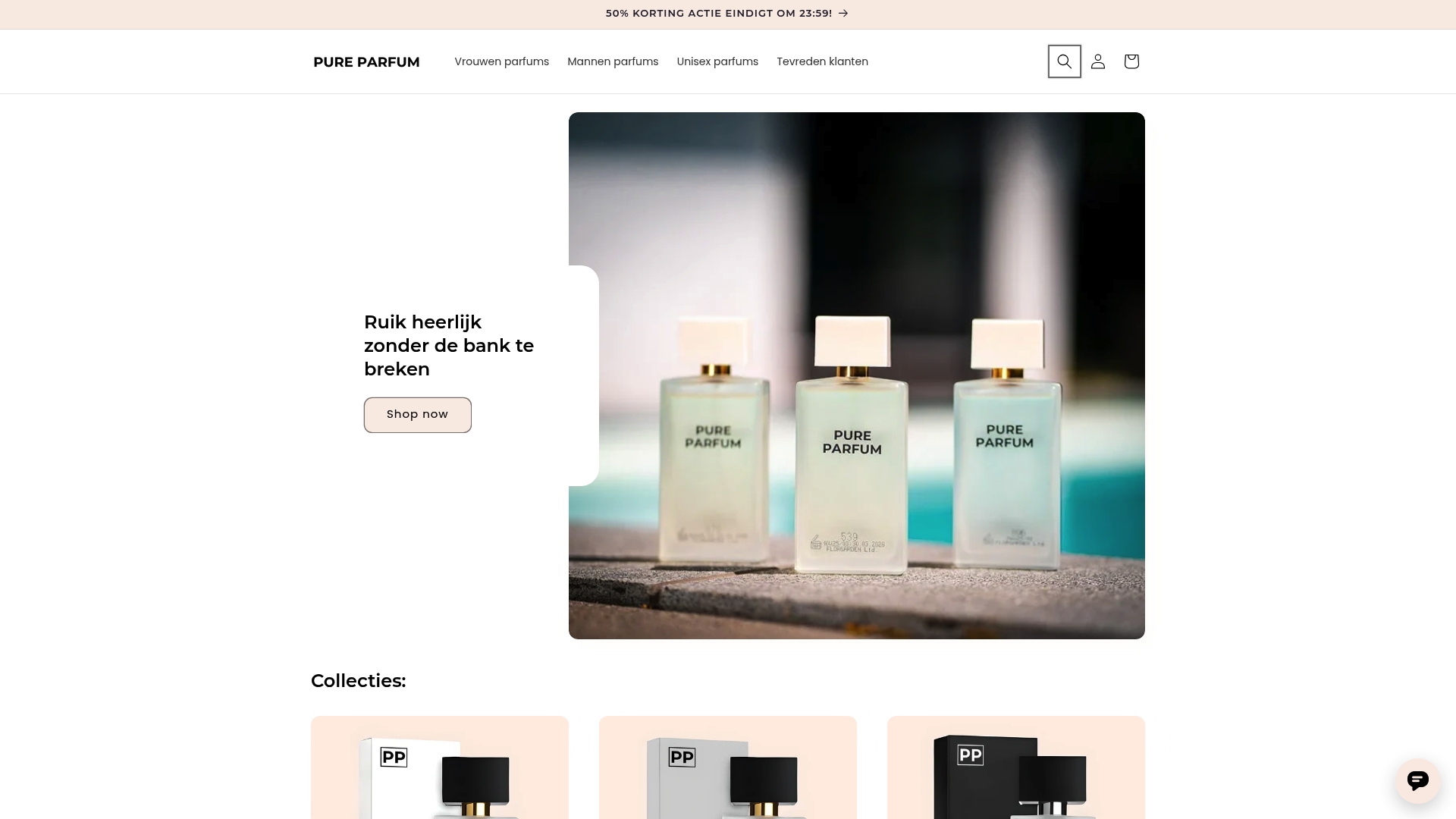
Still unsure which scent suits you? Check out our women’s perfumes or unisex perfumes, or start easily with the 3x100ml perfume bundle so you can test multiple fragrances right away without making a big choice at once.
This article contains general information and does not replace the advice of a qualified physician. Consult a qualified healthcare provider about your own situation before acting based on this content.
Frequently asked questions
Do perfumes really exist that are completely without phthalates?
Yes—perfumes without intentionally added phthalates exist and are increasingly labeled explicitly as such. Note, however, the possibility of migration from plastic packaging as an additional source of contamination, as described in research into contaminants in perfume.
How do I recognize a trustworthy certification label for natural products?
A reliable certification label is independently verified and publicly supports its criteria, rather than being only a self-declared brand claim. More explanation on how to recognize and evaluate green certification labels can be found in this overview of trustworthy labels.
Does every fragrance allergen need to be listed separately on the label?
Not every ingredient in a perfume has to be listed separately, because the full formulation is considered a trade secret. Certain well-known fragrance allergens must, according to the EU cosmetics regulation, be listed separately once they exceed a specified concentration threshold.
Can I test at home to see if a perfume suits my skin?
A simple patch test on your inner arm, followed by waiting 24 hours for redness or irritation, provides a good first indication. Also, don’t test more than two or three fragrances per session, so your nose doesn’t get tired and you can judge fragrance development fairly.
Is natural perfume always safer than synthetic perfume?
Not automatically: natural essential oils can themselves contain allergens or phototoxic substances, such as certain citrus oils that make skin more sensitive to sunlight. Transparency about the full ingredient list is a better guideline than the distinction between natural versus synthetic by itself.
Sources
- Evaluation of pollutants in perfumes, colognes and health effects on the consumer: a systematic review
- The impact of perfumes and cosmetic products on human health: a narrative review
- Consolidated text: Regulation (EC) No 1223/2009