


Yes, a perfume without animal musk exists and has by now become the standard: almost every modern fragrance works with synthetic or plant-based musk substitutes. Brands like Pureparfum deliberately build on that, with vegan and animal-friendly formulations. That matters, because animal welfare and a consistent scent are exactly the two things that animal musk could never reliably guarantee.
In short:
- Modern synthetic musks provide a stable, repeatable fragrance without relying on animal harvesting, avoiding the inconsistency of natural musk.
- Plant-based musk alternatives such as ambrette seed contain musk-like molecules and can be limited by IFRA regulations due to phototoxicity.
- The INCI list and recognized cruelty-free certification labels are essential tools to check whether a perfume contains any animal musk.
- Nothing in a perfume means there are no civet or ambergris properties present, because modern synthetic substitutes fully replace the historical animal ingredients.
- For a long-lasting, animal-friendly scent, it’s better to test a perfume on the skin for at least a few hours and pay attention to fragrance families like clean musk and amber-like notes.
Table of contents
- What musk used to be and why animal musk has largely disappeared
- Which animal-friendly alternatives do perfumers use?
- How do you check if a perfume truly contains no animal musk?
- Is there poop in perfume? And other myths debunked
- How to choose a pleasant, animal-friendly scent without musk
- Why we choose vegan, animal-friendly perfumes
- Try a vegan scent without animal musk at Pureparfum
- Sources
- Frequently asked questions
What musk used to be and why animal musk has largely disappeared
Musk originally comes from a gland of the musk deer, supplemented with civet (from the civet cat) and ambergris (from the intestines of sperm whales). These animal sources used to give perfumes their warm, animalic base, but obtaining them often involved killing animals, as the musk deer also showed in practice. Hunting musk deer brought the species close to extinction, leading to CITES protection measures and a rapid shift to chemical alternatives from the twentieth century onward.
That transition gave perfumers something that natural musk could never provide: a stable, repeatable fragrance without relying on animal harvesting.
- Musk deer: gland secretion, historically the best-known animal musk source.
- Civet: secretion from the civet cat, used as a fixative.
- Ambergris: waste matter from sperm whales, rare and ethically controversial.
- Synthetic musks: made chemically, no animal origin required.
Which animal-friendly alternatives do perfumers use?
Perfumers who want the musky feel without an animal source typically go down two main routes: modern synthetic musks and plant-based raw materials.
Macrocyclic musks and related esters give a clean, powdery scent that works as a base note and fixative, exactly the role that animal musk used to play. Materials such as Ecomusk were developed to avoid environmental and health concerns associated with older nitro and polycyclic musks. Regular synthetic musks are now widely used as a cruelty-free alternative in the fragrance industry.
From a plant perspective, the most common option is ambrette seed absolute, obtained from the seeds of the ambrette plant. This raw material contains musk-like molecules that provide an authentic, warm musk character and combines well with rose, orris, and oud. Ambrette does have IFRA limits due to phototoxicity, so perfumers dose it carefully. Labdanum, with its amber-like, resinous scent, often adds the same depth without that risk.
- Synthetic musks: stable, consistent, no animal source, ideal as a base note.
- Ambrette seed: plant-based, gives an animalic impression, phototoxicity limits apply.
- Labdanum: amber-like, resinous, a safe alternative for extra depth.
Pro tip: Are you torn between synthetic and plant-based? Synthetic musks keep a fragrance stable on the skin for longer, while plant-based options like ambrette add that touch of unpredictability that makes a scent feel more personal.
How do you check if a perfume truly contains no animal musk?
The INCI list is your best friend here. Animal sources are rarely mentioned explicitly under their own name, but synthetic musks usually appear under a chemical name or code—think of compounds ending in “-lide” or “-ketone,” or terms such as galaxolide variants. Manufacturers are legally required to list ingredients under the Cosmetics Regulation (EC) No 1223/2009, although fragrance blends are often still shown as “parfum” or “fragrance” on the label.
A “vegan” label says something about animal ingredients, but not automatically about animal testing—so check both claims separately. Cruelty-free certification labels from recognized organizations are more reliable than a standalone text claim on the packaging without evidence.
Follow these steps to be sure:
- Ask for or check the full INCI list, not just the marketing text.
- Look for a recognized cruelty-free or vegan certification label, not only the word “animal-friendly”.
- If in doubt, ask the seller for an ingredient overview or a sample.
- Order with a return option so you can test without risk.
Is there poop in perfume? And other myths debunked
No, there is no poop in perfume. This myth often comes from confusion with civet and ambergris, two historical animal raw materials that do come from animal glands or intestines, but chemically have nothing to do with excrement. Civet and ambergris were previously purified and processed into fragrance ingredients, but in modern perfumery they have largely been replaced by synthetic equivalents.
Regulation plays a role here that few consumers know about. European safety advice from the SCCS provides concentration limits for certain musk compounds, such as musk xylene and musk ketone, to limit skin irritation and allergic reactions.
Did you know? Musk xylene and musk ketone have been under stricter supervision by European safety authorities for years, precisely because older synthetic musks could cause skin sensitization. Modern variants such as macrocyclic musks are a response to that.
Do you have sensitive skin? Then don’t only look for “musk-free,” but also check the general allergen list and the concentration of fragrance oil in the product.

How to choose a pleasant, animal-friendly scent without musk
Never test a fragrance only on a test strip. Wear it on your skin for at least a few hours, because body heat and skin pH change how a base note unfolds. Also build on it: start with a light layer and repeat the test on another day to make sure your choice is right.
Looking for that musky feel without an animal source? Watch for fragrance families that are described as “clean,” powdery, or amber-like—often built from combinations of modern synthetic musks with ambrette or labdanum.
- Wear test: at least three to four hours on the skin, not just on paper.
- Fragrance families: clean musk, powdery amber, ambrette-oud combinations.
- Purchase: choose samples or small bundles before buying a full bottle.
- Transparency: prefer sellers who simply show their ingredient list.
Retailers are already responding with specific vegan perfume collections—an indication that the demand for animal-friendly scents is no longer a niche wish.
Why we choose vegan, animal-friendly perfumes
Pureparfum builds its range around vegan and animal-friendly fragrances, without extra costs for brand packaging or marketing. Transparency about ingredients isn’t an afterthought: if you can’t check what’s in your perfume yourself, any “animal-friendly” label is empty text. Trust is built through clarity, not a pretty label.
— J
Try a vegan scent without animal musk at Pureparfum
Pureparfum offers designer-inspired fragrances without expensive packaging or a marketing budget, with a high concentration of fragrance oil for a long-lasting scent. The fragrances are vegan and animal-friendly, making them suitable for consumers who want to avoid animal musk.
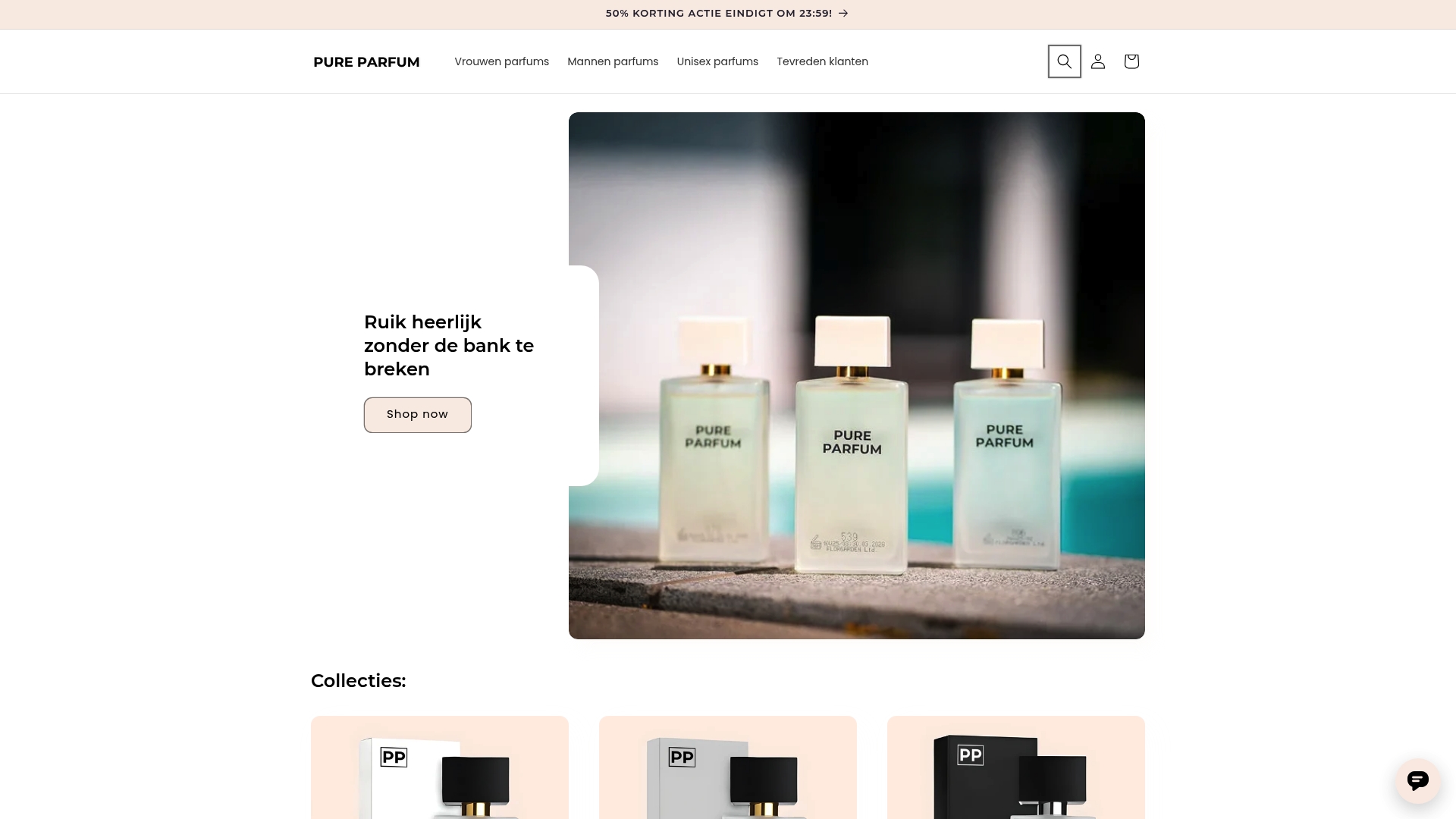
Still unsure which scent fits you best? Start small with the 3x100ml perfume bundle—this way you can test multiple fragrance profiles at once without immediately buying a full bottle. If you want to find the scent in your daily care routine as well, check the Body Care collection for matching hand cream and body lotion. View the full range at Pureparfum and order your first animal-friendly fragrance today.
Sources
- Regulation (EC) No 1223/2009 on cosmetic products
- Muskon (Wikipedia)
- Ecomusk R Clean Musk Symrise 643556 - De Kruiderie
- SCCP/SCCS opinions about musk xylene / musk ketone - EC document
Frequently asked questions
Which perfumes are not tested on animals?
Perfumes with a recognized cruelty-free certification are not tested on animals, but note: this doesn’t say anything about animal ingredients such as musk. Brands that are both vegan and cruelty-free combine both claims in their formulation.
Is there poop in perfume?
No, perfume contains no excrement. The myth comes from confusion with civet and ambergris, two historical animal raw materials that are now largely replaced by synthetic equivalents.
What are natural perfumes?
Natural perfumes use mainly plant-based raw materials such as essential oils, resins, and absolutes instead of synthetic molecules. They are not per definition more animal-friendly, because natural musk substitutes such as ambrette seed also require careful dosing due to phototoxicity.
Which scent turns men on?
There is no universal scent that guarantees this, but warm, amber, and musky base notes are often experienced as attractive and sensual. Choose a fragrance that matches your own skin chemistry—it works more convincingly than following a trend.
How much does a perfume cost at Pureparfum?
The current prices per fragrance and collection are listed on the Pureparfum website. Prices vary by product and are not shown separately outside the webshop.