


Use a fresh, low-projecting scent in the office and pay close attention to the dosage: one controlled spray is usually enough. Citrus, aromatic fougère, clean musk, and light woody notes work best in shared spaces, because they look professional without taking over the air. Affordable vegan alternatives are available with a high concentration of fragrance oil, so you remain subtly but noticeably present throughout the whole workday.
In short:
- In an open-plan office, one spray is usually enough—especially on the wrists and neck—to keep the scent subtle without being intrusive.
- Scents with citrus or fresh aldehydes evaporate quickly, so you often need to spray again regularly to maintain a fresh look during the day.
- For a safe choice, among others, musk and skin fragrances or light woody notes are suitable, because they offer low projection and long-lasting close-to-you presence.
- Always test new fragrances on your skin and check how they wear for at least an hour, because ventilation, season, and skin chemistry strongly influence how the scent develops.
- Pure Parfum offers affordable, vegan options with a high concentration of fragrance oil, ideal for a long-lasting office scent without having to re-spray much.
Table of contents
- What should you consider when choosing an office fragrance for men?
- Which scent profiles are safe for the office?
- How and where should you apply perfume at the office?
- Why is Pure Parfum a logical choice for office use?
- What is the etiquette around perfume in a shared workplace?
- Which brands and options are popular in business environments?
- How do you take allergies and sensitivities of colleagues into account?
- When is a more noticeable scent allowed in the office?
- Discover office-friendly fragrances at Pure Parfum
- Sources
- Frequently asked questions
What should you consider when choosing an office fragrance for men?
The most important question is not which scent smells best in the bottle, but how it behaves at a distance of one meter. This is called projection or sillage: how far and how long a perfume lingers around you. In an open office with little ventilation, low to moderate projection is almost always the safer choice, whereas a scent that works well in a large hall can quickly feel intrusive at a desk two meters wide.
The concentration of the fragrance oil plays a role, but less than many men think. Eau de parfum (EDP) typically contains more fragrance oil than eau de toilette (EDT), so it lasts longer. That doesn’t automatically mean that an EDT is more suitable for the office: with the right dosage, an EDP works just fine, while being too generous with an EDT can just as quickly lead to complaints. Dosage and concentration work together, not separately.
In practice, five scent families are the most office-friendly:
- Citrus and fresh aldehydes, for a clean, energizing opening.
- Aromatic fougère with lavender, rosemary, or sage—classic and reliable.
- Clean musk and skin fragrances, which stay close to the body.
- Light woody notes such as cedarwood or vetiver in low doses.
- Subtle, modern compositions that smell more “well-groomed” than “perfumed.”
Ventilation, skin chemistry, and the season affect how a fragrance develops. A perfume that barely stands out in a cold, well-ventilated space can come across much stronger in a warm, small room with air conditioning. That’s why you should always test a new scent first on your own skin, wait about an hour, and only then assess the projection—just as Wikiparfum advises for work hours.
Pro tip: Spray a new fragrance on your inner wrist and just carry on with your day. After an hour, you’ll truly be able to tell how the scent settles, not how it smells in the first five minutes out of the bottle.
Which scent profiles are safe for the office?
Not every “fresh” or “woody” perfume is automatically suitable for an eight-hour office day. The following four profiles are the most reliable choices, ranked from most to least suitable for warmer months:
- Citrus and fresh aldehydes. Bergamot, lemon, and grapefruit provide a clean, energizing opening that fits daily meetings and warm days. These notes evaporate relatively quickly, which means they linger less long: great for the office, but it sometimes requires an extra spray after lunch.
- Aromatic fougère. Lavender, rosemary, and sage together form a classic, masculine profile that has been considered “safe” in business circles for decades. It’s the fragrance family you’re least likely to get wrong—largely because it feels so recognizably professional.
- Clean musk and skin fragrances. Compositions built around Iso E Super or similar musky-like molecules stay close to the skin and produce little sillage. Vides Anges describes this type as popular for exactly that reason: it feels expensive without filling the room—ideal if you spend the whole day next to colleagues.
- Light woody notes and subtle vetiver. Cedarwood, sandalwood, and a hint of vetiver work warm and well-groomed, especially in cooler months. Watch the dosage: woody notes often have more body than citrus, so one extra spray can make the difference between “well-groomed” and “present.”
What you’d be better off avoiding at the office: heavy gourmands with vanilla or caramel, dominant oud and amberwood compositions, and noticeable white florals such as tuberose or ylang ylang. These directions aren’t necessarily bad, but their projection is often too strong for a shared space. If you still want to wear such a scent occasionally, use half your normal dose and save it for days with little direct contact.
According to IFRA, limits of use for fragrance ingredients don’t say anything about how “office-friendly” a perfume is: those limits are about safe concentrations per ingredient, not about social acceptability. A perfume can fully comply with IFRA standards and still be too noticeable for your desk. That distinction is exactly why dosage—rather than just the composition—makes the deciding difference.
How and where should you apply perfume at the office?
Always start with less than you think you’ll need. In an open office, one spray is usually enough. If you have your own room or work mostly alone, two sprays can still feel pleasant without bothering others.
The best places are the outer side of your wrists and your neck, or just behind your ear. If you want even less projection, spray into your elbow crease or on the inside of your collar. These cooler spots on the body provide a calmer, more gradual release than warm areas like your chest, according to The Telegraph in advice about scent use in the workplace.
Timing makes more difference than many men realize. Apply your perfume well before a meeting—ideally at home before you leave—so the sharp top notes have already settled by the time you sit at the table. If you only spray at the office, you often arrive with a scent that’s still too intense.
There’s also a clear difference between skin and clothing. Fabric holds fragrance molecules much longer than skin, so use less on clothing and test first on a low-visibility spot to avoid stains.
- In an open office, one spray is usually enough; in your own space, you may use a few more sprays.
- Apply to wrists and neck, not to clothing—unless you’ve tested it well.
- Spray at home, not right before a meeting at the office.
- If in doubt, go to the restroom instead of re-spraying at your desk.
Pro tip: Keep a small travel-size perfume in your bag for emergencies, but never spray where colleagues can see. A quick stop at the restroom feels more discreet and prevents your scent from mixing with someone else’s nearby.
Why is Pure Parfum a logical choice for office use?
There are perfumes available that are vegan and animal-friendly, with a higher concentration of fragrance oil than many budget alternatives, without the extra cost of expensive packaging or marketing. For office use, that combination can be appealing: enough oil for a long-lasting scent with a low dose, so that one spray in the morning lasts the entire workday without you needing to re-spray.
Because the formulas are inspired by well-known designer fragrances, you can search strategically for a profile that matches the criteria in this article: fresh and citrusy for summer, warmer and woodier for winter. The men’s fragrances collection makes it possible to switch per season or occasion without the price becoming a barrier.
If you want to test multiple profiles before choosing a go-to office scent, you’ll benefit from a fragrance bundle with multiple bottles. That way, you can discover on your own skin which family works best in your work environment, instead of relying on what smells good on the store floor.
What is the etiquette around perfume in a shared workplace?
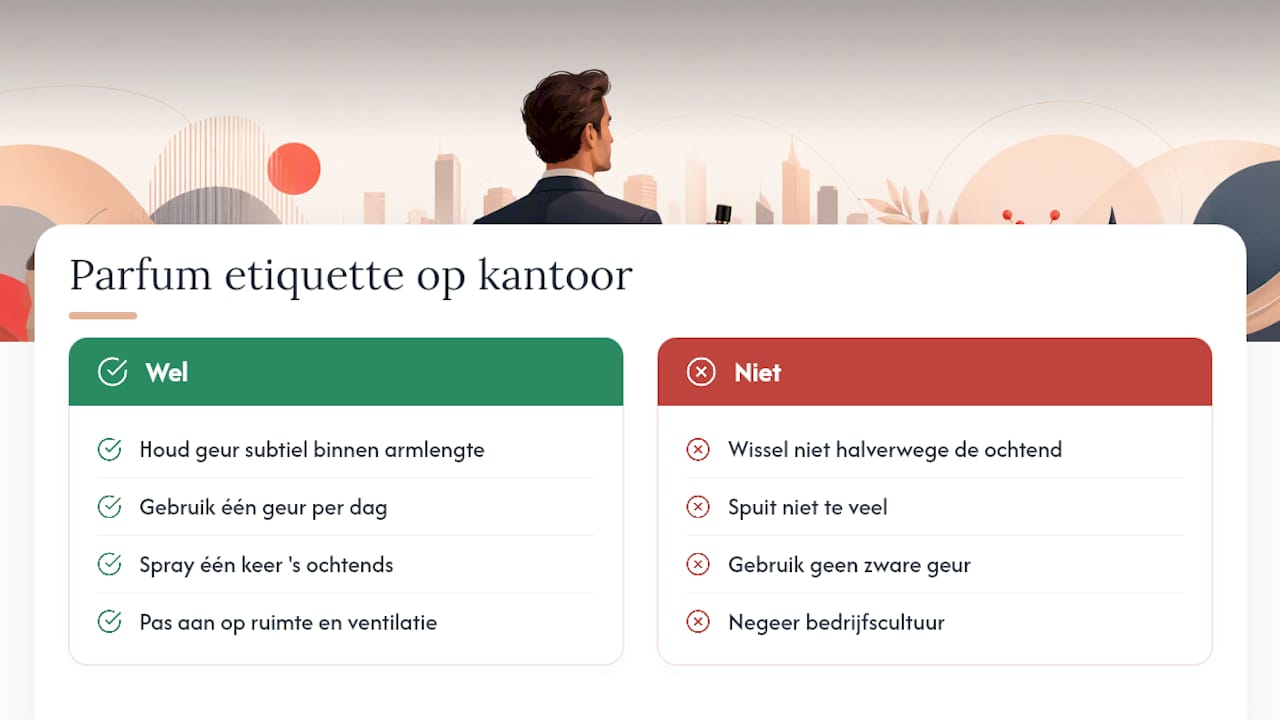
Think of perfume in the office as an accessory, not a statement. It may enhance your well-groomed impression, but it must never be the first thing someone notices as soon as you walk into a room. A commonly used rule of etiquette is that your scent should only be noticeable within arm’s length—not down the hallway.
Practically, that means: don’t wear more than one fragrance per day, don’t switch your perfume halfway through the morning because your colleagues would then have two scents at once, and take the size of the room into account. In a small meeting room with the door closed and little air circulation, even a moderate scent is already noticeable, whereas the same scent in a large, open-plan office floor barely stands out.
Also consider cultural differences within your company. What’s acceptable in a creative office with many young employees may be different in a conservative financial environment. When in doubt, it’s better to choose too little than too much: a subtle scent that nobody notices is never a problem, but a heavy scent that fills an entire floor is.
According to Pretty Business, one spray during the day is a common guideline for office use, precisely because perfume at the workplace serves a different purpose than perfume for an evening out. The goal is to come across as well-groomed—not to make an impression from a distance.
Which brands and options are popular in business environments?
In business circles, certain fragrance directions come up again and again, regardless of the specific brand. For example, restrained, iris-driven compositions are considered a staple favorite in conservative office environments: the Prada L’Homme profile is often cited as an example of how a soft, powdery scent can still come across as refined and mature without projecting.
This illustrates a broader pattern: there is no single universal winner for the office—there is, however, a clear preference for directions that smell “expensive and well-groomed” rather than “noticeable and sweet.” Skin fragrances with Iso E Super fall into the same category and are growing increasingly popular, precisely because they achieve that effect cheaply and subtly.
For those who would rather not spend hundreds of euros on designer bottles to achieve this effect, an affordable, inspired alternative is a realistic option. Similar scent directions are available for a lower price because the costs of luxury packaging and marketing are left out. Then you pay mainly for the fragrance oil rather than the brand logo on the box.
How do you take allergies and sensitivities of colleagues into account?
Scent sensitivity isn’t just a matter of taste—it can also be a medical issue. Some colleagues get headaches, feel short of breath, or experience skin irritation from strong synthetic fragrance ingredients, especially in poorly ventilated spaces. That means being cautious with perfume isn’t only an etiquette issue—it’s sometimes about being considerate and collegial.
Practically, it helps to be alert to signals: someone who keeps opening a window as soon as you walk in, or someone who openly says they have trouble with fragrances. Take that seriously and adjust your dosage or scent choice, even if you don’t personally notice anything unusual. What feels subtle to you may be intense for someone with a sensitive nose.
Companies with a fragrance policy or “scent-free zones” aren’t an over-the-top level of strictness, but a practical solution to a real problem. If you work in such an environment, a very light, close-to-skin scent is often still acceptable, while an intense woody scent is better left at home. If in doubt, simply ask a trusted colleague whether your scent is noticeable: that informal feedback moment can prevent more discomfort than a more expensive perfume choice ever could offset.
When is a more noticeable scent allowed in the office?
Not every workday calls for restraint. For an important client presentation, an after-work drink, or a senior role where you literally represent yourself, a fragrance with a bit more character and projection is allowed. Then it’s better to increase the intensity of your trusted scent with one extra spray than to choose an entirely different, heavier profile.
What in a creative office or start-up environment may be seen as expressive and bold can come across as intrusive in a conservative corporate culture. Test in small steps: one extra spray, not three. Ask informally a colleague or partner whether the scent still feels pleasant at a distance before making that adjustment a habit.
— J
Discover office-friendly fragrances at Pure Parfum
Some brands spend a large budget on the bottle and advertising campaigns, while that budget can also be invested in fragrance oil. The result can be a long-lasting, subtle release that’s suitable for the office—at a price worth it if you want to try different scents side by side.
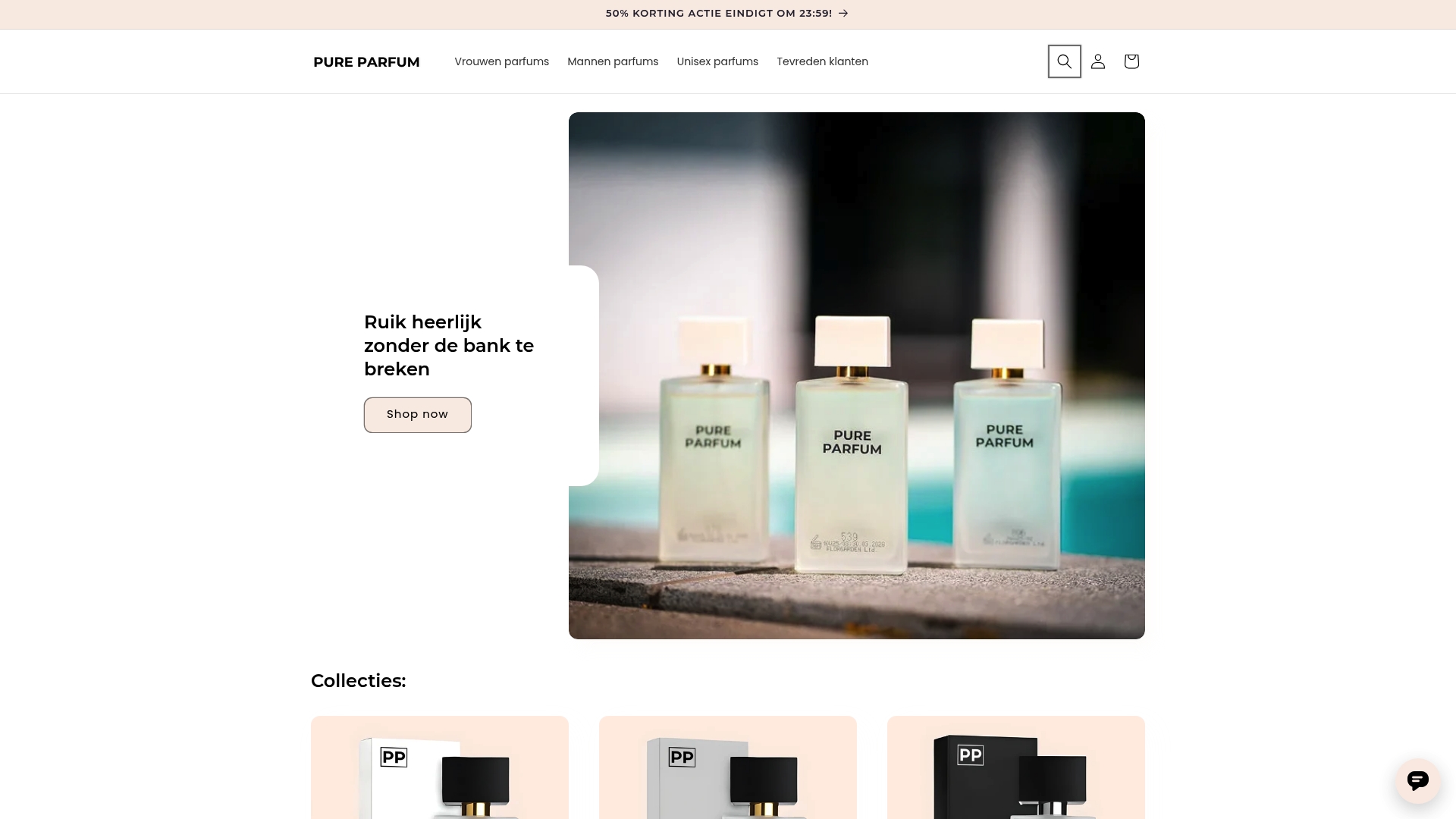
The perfumes are vegan and animal-friendly, which makes them a logical choice for environmentally conscious users who still don’t want to compromise on fragrance quality. Are you torn between citrus for summer and a woody note for winter? Check out the men’s fragrances collection and choose based on the fragrance families from this article, or go for a fragrance set with multiple bottles to test different profiles yourself first before choosing a permanent office scent. Additional body care products seamlessly complement that if you want to build a layered, subtle scent.
Sources
- The Telegraph — Smell powerful at work
- IFRA — Understanding standards
- Wikiparfum — Parfum for / work-office
Frequently asked questions
What is a good scent for men in the office?
There is no single “best” scent for the office—there is, however, a clear preference for fresh, low-projecting profiles such as citrus, aromatic fougère, clean musk, and light woody notes. These families look professional and stay within arm’s length instead of filling the entire room.
What is a good and subtle men’s perfume for everyday use?
Skin fragrances and compositions with Iso E Super are considered among the most reliable options for everyday use, because they stay close to the skin and feel expensive without projecting too harshly, as Vides Anges describes. Combine that with a low dose of one spray and you’ll have a scent that lasts the whole workday without standing out.
Which fragrance families are considered the best for men’s scents in the office?
The four most mentioned families are citrus and fresh aldehydes, aromatic fougère with lavender and rosemary, clean musk or skin fragrances, and light woody notes such as cedarwood. Heavy gourmands, dominant oud, and noticeable white florals are specifically discouraged for shared work spaces.
How much perfume do you spray at the office?
One controlled spray is usually enough in an open office; two sprays may be fine in your own room or with less direct contact with colleagues. Ideally, apply the fragrance at home, well before you leave, so the sharp top notes have already settled by the time you arrive at the office.
Does a Pure Parfum perfume cost as much as designer brands?
Pure Parfum works without the costs of luxury packaging and expensive marketing, which means the price is lower than with comparable designer fragrances. Current prices per perfume are listed on the Pure Parfum web shop.