

Blot the stain immediately with a white cloth, don’t rub, and then rinse from the back with cold water. As long as you don’t use heat, the stain remains treatable. If you leave it too long, or if the laundry goes straight into the dryer, the oil and dye residues get set into the fibers. Then removing perfume from clothing becomes a completely different story.
In short:
- For fresh perfume stains, quick treatment with cold water and a white cloth is crucial to limit the oils and dyes from taking effect.
- On cotton fabrics, a strong pre-treatment with oxygen bleach can work; silk and wool require a gentle approach and avoiding alcohol.
- For dried-in stains, soaking in lukewarm water with white vinegar helps, while isopropyl alcohol is suitable as a last-resort rescue.
- Self-treatment on fabrics labeled “dry clean only” is not recommended, because they often require professional cleaning.
- Rubbing pushes oil deeper into the fiber and worsens the stain, so always work from the edge toward the center and test the material first.
Table of contents
- Remove perfume stains from clothing: the first steps
- Approach per fabric: what works on cotton, silk, wool, and synthetics
- How do you get a dried perfume stain out?
- How do you prevent perfume stains on your clothing?
- When should you not treat a perfume stain yourself?
- The most common mistake when removing perfume stains
- What I want to leave you with about perfume stains
- Sources
Remove perfume stains from clothing: the first steps
A fresh perfume stain isn’t complicated if you act quickly. Perfume contains oil, alcohol, and dyes, and with fresh stains they haven’t yet sunk deeply into the fibers. If you wait an hour or a day, it’s a completely different story. Quick action is essential: the sooner you start, the fewer products you’ll need.
Follow this order:
- Blot the stain with a white cloth or a piece of kitchen paper until hardly any moisture remains. Always use white material so you can immediately see whether dye is being transferred.
- Turn the garment inside out and rinse from the back with cold water. Work from the edge of the stain toward the center so you don’t make it bigger.
- Apply a drop of liquid laundry detergent or dish soap to the spot, gently rub between your fingers, and then rinse with cold water.
- If a haze or faint ring is still visible, soak the garment briefly in lukewarm water with a splash of detergent and a splash of white vinegar.
After that, let the garment air-dry. Only once the stain is completely gone may it go into the dryer or under the iron.
Approach per fabric: what works on cotton, silk, wool, and synthetics
Not every fabric tolerates the same treatment. What’s no problem for a cotton T-shirt can permanently damage silk. First check the care label before trying anything.
- Cotton and linen: these fabrics are sturdy and tolerate a strong pre-treatment. On white cotton you may use oxygen bleach for stubborn stains, as long as the label allows it. If needed, soak a little longer than with other fabrics.
- Silk and satin: only blotting, never rubbing or soaking. Don’t use alcohol, as it affects the sheen and dyes. If you’re unsure, go straight to the dry cleaner instead of experimenting.
- Wool and cashmere: always treat with cold water and as gently as possible, because warm water and rubbing can make the fibers felt. When in doubt, professional cleaning is the safer route.
- Synthetic fabrics such as polyester or nylon are usually tolerant, but still test first on an inconspicuous spot. Triacetate and acetate are the exception: these fibers can react sensitively to solvents and even to vinegar.
- Carpet and upholstery fabric: blot the stain instead of scrubbing, use a targeted stain remover, and then blot with a clean, damp cloth. Let it dry without heat, and always test the stain remover first on a hidden corner of the upholstery.
The common denominator for every fabric: test first, then treat the rest of the garment. A colorfastness test prevents you from turning a small problem into a big one.
How do you get a dried perfume stain out?
If the stain has already dried or has been there for a few days, you’ll need a bit more patience and a slightly firmer approach. Panic is counterproductive: the harder you scrub, the deeper the oil pulls into the fiber.
- Soak the garment for about 15 minutes in lukewarm water with liquid detergent and a splash of white vinegar. This loosens the dried-in oils without attacking the fabric.
- If, after soaking and rinsing, a faint shadow remains, then isopropyl alcohol on a cotton swab is a last-resort remedy. Test first on an inconspicuous spot and rinse immediately afterward with cold water.
- If you see no improvement on delicate fibers, on a “dry clean only” label, or with persistent discoloration, stop home treatment and go to the dry cleaner.
Pro tip: Never use warm water on a dried-in stain, even if it seems logical to loosen grease. Heat actually sets the oil and dye residues into the fiber, making the stain permanent.
How do you prevent perfume stains on your clothing?
The best stain is the one that never happens. A few simple habits make all the difference.
- Spray or apply perfume to your skin first, then put on your clothing. Never the other way around.
- Test a new scent first on an inconspicuous seam or hem, especially with silk or bright colors.
- Dark or strongly colored perfumes pose more risk of discoloration than light, clear scents.
- Store perfume bottles upright and tightly closed to prevent leaks in your closet or bag.
If you wear perfume regularly on work clothes or blouses, it’s a good idea to apply the spraying technique intentionally: a short, targeted mist on your wrists and neck works better than spraying into the air and walking through it. If you travel with clothes and small bottles together, good protection during transport helps prevent leaks, such as protective packing material for clothing that also absorbs moisture and friction.
When should you not treat a perfume stain yourself?
If you’re unsure whether you can handle it yourself, use this simple rule of thumb. If the label says “dry clean only,” that fabric is always a job for the dry cleaner, even for a small stain. If the stain looks greasy or dried in and nothing changes after an initial pre-treatment, further self-treatment is often pointless and risky.
Professional laundries use enzymatic stain removers and fabric-specific solvents that you simply won’t find in a household cupboard. If you’re unsure about an expensive blouse or a wool jacket, that step is often cheaper than the risk of permanent damage.
The most common mistake when removing perfume stains
Rubbing is by far the biggest pitfall. It pushes the oil deeper into the fiber and makes the stain bigger instead of smaller. That’s why you should always work from the outer edge of the stain inward, and use a white cloth so you can immediately see whether dye is coming off.
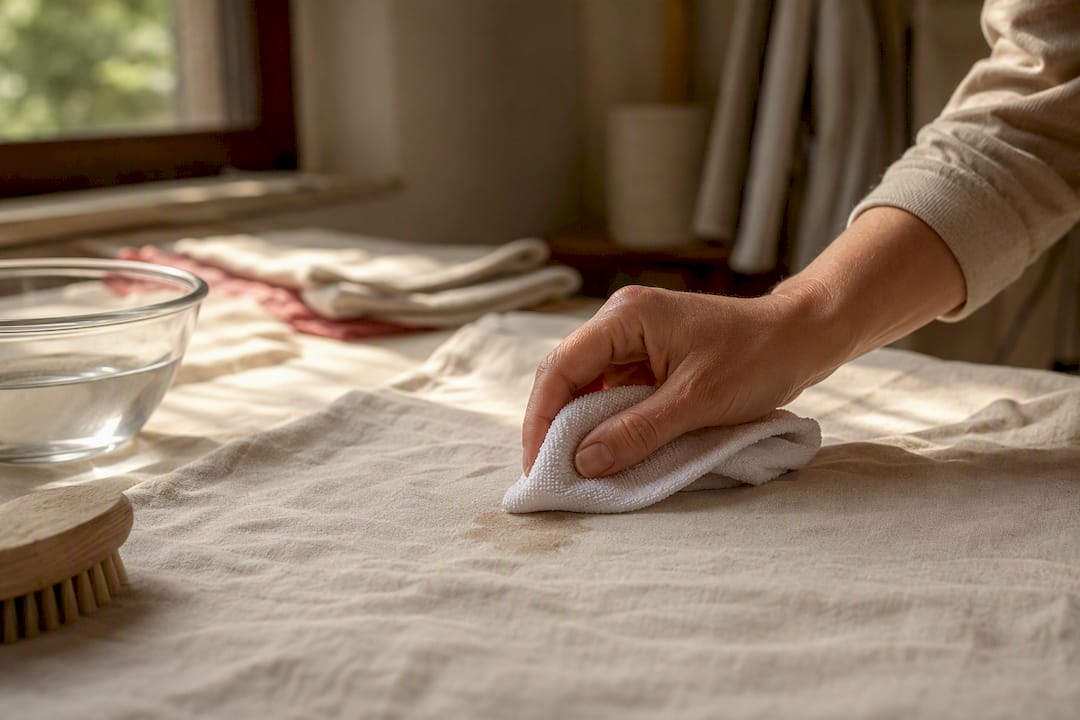
Pro tip: After rinsing, let the garment air-dry and check the spot in daylight before using heat. Artificial light often hides a faint residue that becomes clearly visible in daylight.
What I want to leave you with about perfume stains
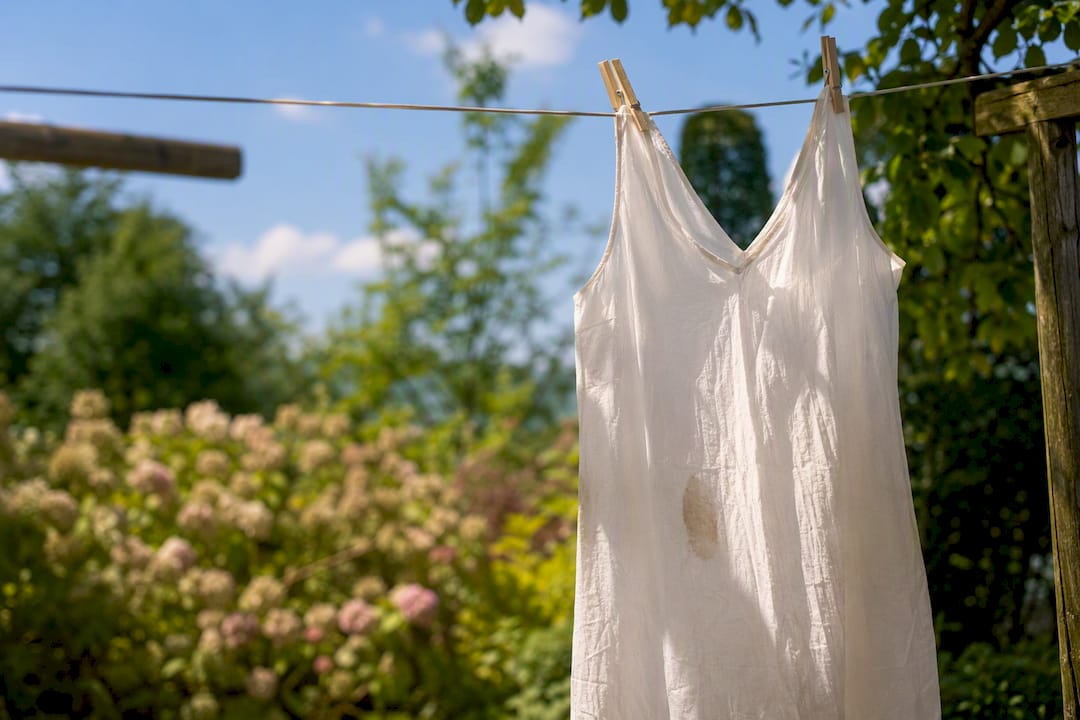
The pattern I keep seeing: people wait too long, or reach for the dryer because they think heat helps. Both decisions create a stain that could have been removed permanently in five minutes. Quick action is the only real trick here—no secret detergent.
At Pureparfum, we consciously choose perfumes with a high concentration of perfume oil for a long-lasting scent experience, and that’s exactly why we recommend spraying first on the skin and only then putting on your clothing. If you prefer to experiment with small bottles before choosing, you can start with a set of smaller formats so you can get to know a scent well without the risk of losing a large bottle.
If you’re dealing with a delicate garment or a stain that won’t come out, just go to the dry cleaner. That’s not a failure—it’s simply the sensible choice.
— J