


If you have dry skin, you often can barely smell your perfume after just a few hours. That is usually not because of the scent itself, but because of the surface it sits on: dry, flaky skin gives fragrance molecules little to hold onto. The good news is that you can do a lot about that. With hydrated skin, the right order of application, a scent with a solid base, and a smart layer on your clothes, your perfume will stay noticeable much longer. Below, you'll read why it happens, what works, and how to do it safely if your skin is also sensitive.
In short
- Dry skin holds perfume less well; well-hydrated skin helps the scent stay around longer.
- First apply an unscented or matching scented lotion, then spray on skin that still feels slightly damp.
- Choose fragrances with wood, resin, amber, or tobacco in the base: they evaporate more slowly than fresh citrus and light floral scents.
- An extra spray on clothing or a scarf keeps the scent longer than skin does.
- If you get itching, redness, or bumps where you spray perfume, stop using that product and have your doctor or dermatologist take a look.
Table of contents
- Why perfume evaporates faster on dry skin
- Can’t you smell it anymore, or has your nose gotten used to it?
- How to apply perfume on dry skin
- Which scent notes last longer
- Layering: lotion, hand cream, and perfume as one routine
- Perfume on clothing and hair
- Dry, sensitive, or eczema-prone skin: how to wear perfume safely
- Our perspective
- Frequently asked questions
- Sources
Why perfume evaporates faster on dry skin
Perfume consists of fragrance molecules dissolved in alcohol. As soon as you spray it, the alcohol evaporates and the fragrance ingredients remain on your skin. There they come into contact with sebum, moisture, and the outermost layer of skin. Skin with a bit of natural oil acts like an anchor: the fragrance ingredients partly dissolve in that oil and are released more slowly.
On dry skin, that anchor is largely missing. According to Linda, dry or flaky skin is a poor base for perfume, while better-hydrated skin holds scent longer. The fragrance molecules sit more or less on top of the skin and evaporate faster, especially the light top notes.
But it is more than just oil or no oil. French researchers describe perfume evaporation as an interaction between fragrance molecules and the condition of the skin. So which molecules a scent contains matters just as much as how dry your skin is. That explains why the same skin can wear one perfume all afternoon and lose another before lunch.
Dry skin also has more than one cause. According to Thuisarts, you can have dry skin for several reasons, such as your skin type, your age, and how you care for and wash your skin. In the Netherlands, many people notice it especially in winter, when the heating is on and the indoor air is dry. If you want to know how your skin type and fragrance choice affect each other, also read our article about perfume and skin type.
Can’t you smell it anymore, or has your nose gotten used to it?
Before you blame your skin: sometimes your perfume is still there, but you can no longer smell it yourself. Your nose gets used to a scent that is constantly around you. Experts call that nose adaptation, and that often makes people wrongly think their scent has disappeared, while the people around them can still smell it.
A simple test: spray your perfume on one wrist in the morning and only smell it again after three or four hours, after a walk outside. Or ask a colleague or housemate whether they can still detect your scent. If others can still smell it, you do not need to respray. If nobody can smell anything anymore, then dry skin is probably the culprit and the steps below can help. If you notice the same problem even with normal skin, see why your perfume doesn't last for the other causes.

How to apply perfume on dry skin
With this order, you get the most out of every spray. It does not take extra time: it fits into your normal morning routine.
- Take a short, not-too-hot shower. Long, hot showers wash away even more of the little skin oil you have. Afterwards, pat your skin dry instead of rubbing hard.
- Apply a lotion or cream right away. Do this within a few minutes, while your skin still feels slightly damp. A neutral or unscented body lotion gives fragrance molecules more grip on the skin. If you want to boost the scent, choose a scented lotion that matches your perfume.
- Let the lotion absorb for a moment. One or two minutes is enough. If you spray on a soaking-wet layer of cream, the scent will partly slide off.
- Spray on the right spots. Think of your neck, behind your ears, the inside of your wrists, and the backs of your knees. One to three sprays is enough for most fragrances. In our article about perfume application points, you can read how to dose by area.
- Do not rub. Rubbing your wrists together heats the skin and unnecessarily damages the fresh top notes. Just let the scent dry on its own.
- Add a layer on fabric. One spray on a scarf, the collar of your coat, or your sweater holds the scent longer. More on that below.
Not sure about the order of lotion and perfume? We explain it in detail in perfume before or after body lotion.
What you should avoid
On dry skin, the temptation is strong to simply spray more. That helps less than you think: you may smell it more strongly for the first ten minutes, but the scent disappears just as fast. On top of that, you expose already unbalanced skin to more alcohol. It is better to improve the base than the amount. Heat also speeds up evaporation: on a summer day or in a warm office, you are dealing with two factors at once. How to handle that, you can read in perfume and heat.
Which scent notes last longer
A perfume is built in layers. You smell the top notes immediately, but they are the first to go. The heart notes come next, and the base notes last the longest. On dry skin, that difference becomes greater: light notes evaporate even faster, while heavier base notes hold up relatively better.
According to The Guardian, wood, resin, and tobacco evaporate more slowly than light citrus and floral scents. If you have dry skin and want a fragrance that lasts through the day, it pays to look at the base of a perfume rather than only the first impression on the test strip.
| Type of scent note | Examples | On dry skin | Tip |
|---|---|---|---|
| Fresh and citrus | bergamot, lemon, grapefruit | Fades the fastest | Combine with a scent that has a woody or musky base |
| Light floral | lily of the valley, freesia | Noticeable for a relatively short time | Layer with a matching lotion |
| Warm floral | jasmine, tuberose, orange blossom | Average | Good on hydrated skin |
| Woody | sandalwood, cedar, vetiver | Lasts a long time | A strong choice for winter |
| Amber and resin | amber, benzoin, labdanum | Lasts a long time | A spray on clothing strengthens the effect |
| Gourmand and tobacco | vanilla, tonka, tobacco | Lasts a long time | Ideal for the evening |
If you want to know which base notes truly last all day, read our overview of long-lasting scent notes. Still prefer fresh scents? Then you do not have to give them up: wear them over a scented lotion and reapply once more halfway through the day.
Layering: lotion, hand cream, and perfume as one routine
Layering means wearing multiple products with the same or a complementary scent over each other. On dry skin, this is one of the most effective tricks, because it solves two problems at once: your skin gets moisture and oil back, and the fragrance gets a base layer to rest on. The Guardian mentions layering with a matching body lotion as a way to significantly extend longevity.
A practical routine looks like this:
- After showering: body wash with a mild scent, then a body lotion all over your body.
- On your wrists and neck: your perfume, over the lotion.
- During the day: a scented hand cream on your hands. Hands often dry out from washing, and each time you apply it, the scent is refreshed.
That is exactly why we developed our body care. Alongside our perfumes, which are made with a high concentration of perfume oil, we offer scented hand creams, body lotion, and body wash, plus sets and bundles so you can build a complete fragrance routine. Everything is vegan and cruelty-free, and we save on expensive packaging and marketing so you pay for the scent itself.
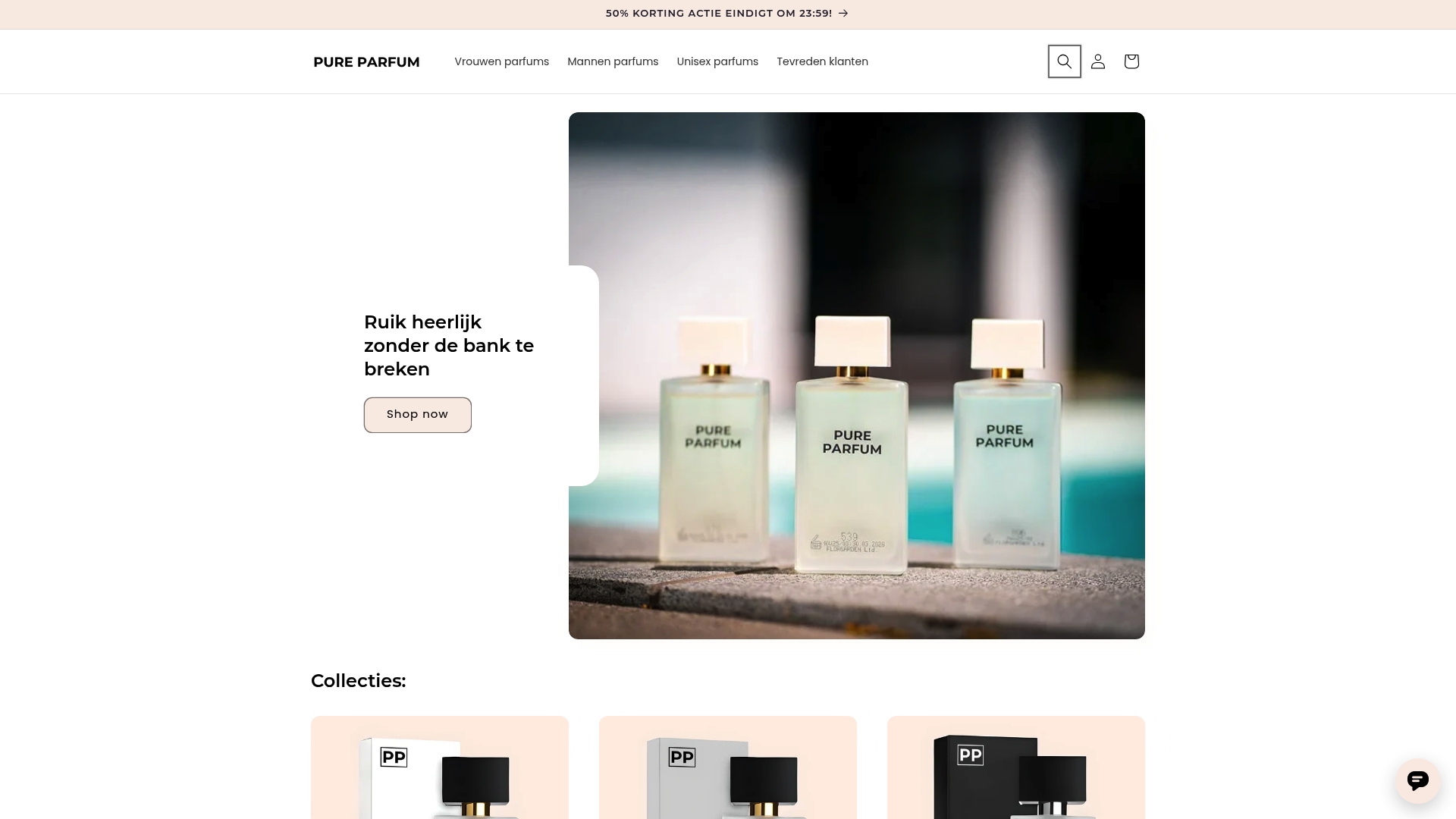
Check out our body care for dry skin and combine a lotion or hand cream with a scent from the women's perfumes, men's perfumes, or unisex perfumes.
Perfume on clothing and hair

Fabric holds scent better than dry skin. The Guardian points out that clothing and hair retain fragrance molecules better than skin itself. A spray on your scarf often stays noticeable longer than the same spray on your wrist.
A few points to keep in mind to protect your clothes:
- Spray from a distance. Hold the bottle about 15 to 20 centimeters from the fabric so the scent spreads out instead of creating a wet spot.
- Be careful with light and delicate fabrics. Silk and white cotton can stain if too much perfume oil lands in one place. Test first on an inner seam.
- Wool and cotton work well. A wool scarf or the lining of your coat is an ideal scent carrier in Dutch autumn and winter.
- Hair in moderation. Do not spray directly onto your scalp. Better spray into the air and walk through it, or spray onto your hairbrush.
Clothing is also a solution if your skin is not only dry but also sensitive. That is what we will cover next.
Dry, sensitive, or eczema-prone skin: how to wear perfume safely
Dry skin often has a weaker protective barrier. As a result, substances can irritate the skin more quickly. That does not mean you cannot wear perfume, but it does mean you should apply it more wisely and pay attention to what to watch for.
Recognize an allergic reaction
An allergy to fragrance ingredients is different from a temporary dry patch. According to Amsterdam UMC, a perfume allergy often shows up as itchy, red rash, with flaking, bumps, or blisters, especially on the areas where you apply eau de toilette or deodorant. If you see this after using a perfume, stop using it and go to your doctor. They can refer you to a dermatologist for a patch test to determine which fragrance ingredient you are allergic to.
Read the label
If you know which substance you are allergic to, you can avoid it: the fragrance ingredients you are tested for are now listed on the product or leaflet. The EU has tightened these labeling rules further with Regulation (EU) 2023/1545: from 31 July 2026, cosmetic products must list many more fragrance allergens separately on the label. For more on these substances themselves, read our article about allergens in perfume.
Test on a small patch of skin first
Try a new fragrance on a small area first, for example the inside of your elbow. Wait a day or two before spraying it on your neck. If your skin stays calm, you can use the fragrance normally.
Spray on clothing if your skin is irritated
If you have irritated skin or eczema, you can spray perfume on your clothing instead of on your skin. Note, however, that Amsterdam UMC warns that perfume in the air can cause eczema, especially around the eyelids. If you have a confirmed perfume allergy, spraying it on your sweater is not a safe solution either. Then talk to your dermatologist about what is possible.
Care for eczema skin with a basic ointment
If you have eczema, Thuisarts advises using a basic ointment every day, such as lanette ointment or cetomacrogol cream. Do not use scented lotion on eczema areas, and do not spray perfume there either. For your fragrance, choose an area where your skin is healthy. In our article about perfume for sensitive skin, you can read more about what does and does not work.
Our perspective
People with dry skin are often told to simply spray more or buy a more expensive bottle. We think that is the wrong solution. A scent lasts because of what is in the bottle and how you wear it, not because of the brand on the box.
That is why we work with a high concentration of perfume oil. Our customers notice that the scent lasts longer than the other options they used before. That is exactly what you need on skin that does not hold fragrance well: more scent per spray, so you do not need to respray as often and therefore expose your skin to less alcohol.
We also believe in layering. A perfume works best on well-cared-for skin, which is why we make body lotion, body wash, and hand creams that complete the routine. Everything is vegan and cruelty-free, without expensive packaging or big advertising budgets. We'd rather put that money into the scent itself. That way, even with dry skin, you can wear a fragrance you can still smell in the evening, without paying top dollar for it.
J
Frequently asked questions
Should I apply perfume to dry or damp skin?
Apply perfume to skin that you have just moisturized and that still feels slightly damp, but not wet. The lotion gives the fragrance molecules a layer to cling to. On bone-dry skin, the scent evaporates faster, and on wet skin it runs off.
Is perfume harmful for dry skin?
For most people, no, as long as you apply it to healthy skin and do not overdo it. Dry skin can react more sensitively, though. If you get itching, redness, bumps, or blisters where you spray, stop using the product and have your doctor check whether it is an allergy.
Which perfume lasts the longest on dry skin?
Scents with a warm, heavy base, such as wood, amber, resin, vanilla, or tobacco, last the longest on dry skin. Fresh citrus scents and light florals evaporate faster. A perfume with a high concentration of perfume oil also helps, because each spray contains more fragrance.
Does petroleum jelly or an oily ointment help under perfume?
A thin layer of unscented ointment or cream on your wrists and neck gives the scent more to hold onto, just like a lotion. Use only a little, otherwise it feels sticky and can stain your clothes. If you have eczema, use the basic ointment recommended by Thuisarts or your doctor and do not spray on those areas.
Why can’t I smell my own perfume after an hour?
Often that is nose adaptation: your nose gets used to a scent that is constantly around you and starts ignoring it after a while. Other people may still smell it. Ask someone near you whether the scent is still there before you spray more.
Sources
- Linda.: Why perfume evaporates quickly (and what you can do about it)
- PMC: Exploring the impact of fragrance molecular and skin properties
- Thuisarts: I have dry skin
- The Guardian: I have dry skin, how do I make perfumes last on me?
- Amsterdam UMC: Perfume allergy
- EUR-Lex: Regulation (EU) 2023/1545
- Esthé: New EU rules for fragrance allergens
- Thuisarts: I have eczema. What can I do myself?