


For a living, evolving scent, the best place to apply your perfume is on your skin. If you want your fragrance to linger all day, choose clothing instead. Skin gradually changes the scent, creating a richer fragrance experience. Clothing works like a kind of sponge: it holds onto the scent longer, but without that lively development.
Still unsure? Choose skin for a date or an evening when you want the fragrance to adapt to your body. Choose clothing if you spray in the morning and still want to smell something in the evening, or if you have sensitive skin and want to avoid irritation. With lots of sun, clothing is often the safer option too, especially with citrus fragrances.
The classic pulse points give the best results on the skin:
- Sleeping (temples)
- Neck
- Wrists
- Behind the ears
- Décolletage
- Behind the knees
- Hips and navel
Key insights
Skin provides the most vivid and personal fragrance development, while clothing offers the longest lasting power, and the right choice depends on the occasion, skin sensitivity, and sun exposure.
| Point | Details |
|---|---|
| Skin for development | Body warmth and skin lipids let fragrance notes transition gradually from top to base notes. |
| Clothes for longevity | Natural fibers such as wool and cotton hold onto fragrance for hours, even up to days. |
| Use pulse points | Spray on temples, neck, wrists, décolletage, and behind the knees for the best projection. |
| Prevent stains | Spray from 20 to 30 centimeters away, or use the fragrance mist technique on clothing. |
| Sensitive skin or sun | Avoid direct skin contact in case of allergy or intense sun, and choose covered clothing as an alternative. |
| Combine for best results | Pureparfum’s high oil concentration works on both skin and clothing with fewer sprays needed. |
Table of contents
- Why does perfume smell different on clothes or skin?
- Where should you apply perfume best?
- Perfume on clothes: what are the pros and cons?
- Can perfume on your skin be dangerous?
- How do you make your perfume last longer?
- How many times do you spray, and what should you avoid?
- Sources
- Frequently asked questions
Why does perfume smell different on clothes or skin?
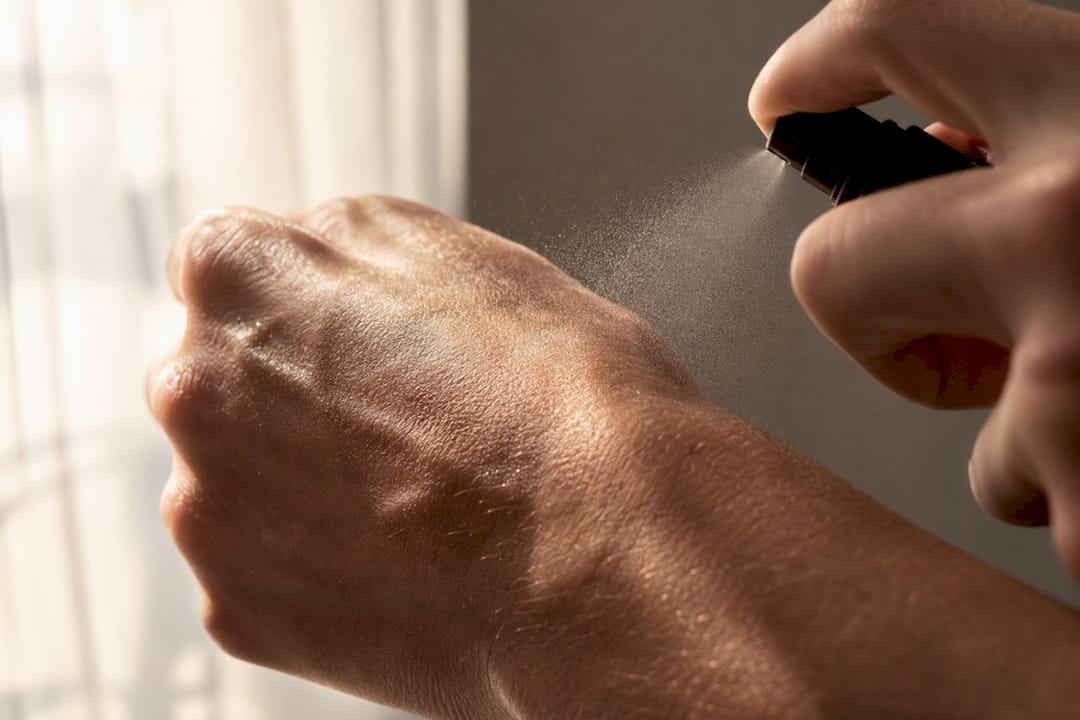
Your skin is warm, slightly moist, and covered with a thin layer of sebum. This combination of body warmth, skin lipids, and your skin’s microbiome makes perfume, as it were, “come alive.” According to Cosmopolitan, this exact chemical interaction creates the most authentic fragrance development: top notes evaporate, heart notes come forward, and base notes complete the circle—all at a pace that fits your body.
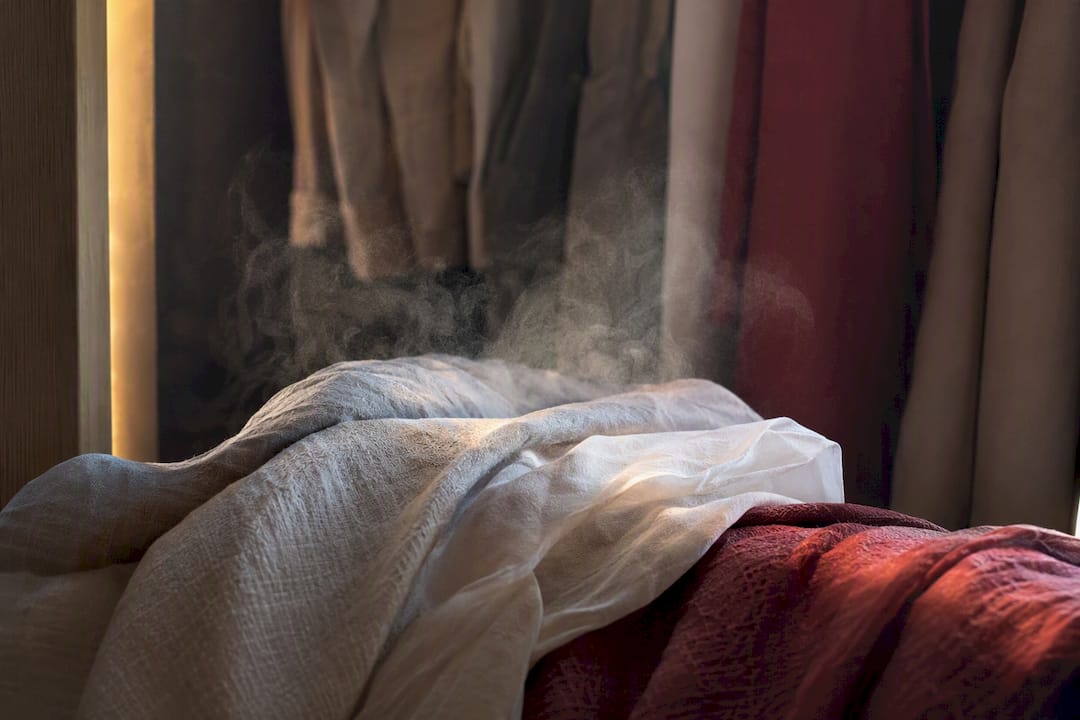
Fabric dust doesn’t create that same interaction. A sweater or scarf doesn’t chemically react with perfume; it simply absorbs the fragrance molecules and releases them slowly. Natural fibers such as wool, cotton, and silk do this particularly well: they can hold onto a scent for a long time.
Think of it like this: skin is a living instrument that plays the composition as intended; clothing is the storage place that lets the sound linger a little after the music has already stopped.
Where should you apply perfume best?
If you want to get the most out of the way your skin develops fragrance, follow these steps:
- Hold the bottle 15 to 20 centimeters away from your skin.
- Spray once or twice on each pulse point—never more.
- Never rub your wrists together; it breaks down the fragrance molecules and disrupts the development.
- Apply an unperfumed body lotion first, then spray your perfume over it (the layering principle).
- Don’t forget your décolletage and the skin behind your knees—warm areas hold onto scent longer.
Pulse points work so well because blood vessels lie close under the skin and your body temperature is slightly higher there. That warmth keeps reactivating the fragrance molecules.
For hair, it’s a different story. Regular perfume often contains alcohol that can dry out hair, so it’s better to choose a hair mist or spray from 30 centimeters away into the air and walk through it.
Pro tip: Spray your perfume into the air in front of you, then walk through it. This gives you an even, light fragrance cloud over clothes and hair without stains or direct alcohol contact on your hair fibers.
Perfume on clothes: what are the pros and cons?
Clothing often holds onto scent longer than skin, which makes it appealing for people who spray in the morning and still want to smell something at 22:00. According to Marie Claire, that’s exactly why more and more people consciously choose clothing: textiles act as a slow fragrance reservoir. The downside is that the scent stays flatter; you largely miss the development from top to base notes.
Not every fabric is suitable. Wool and cotton generally tolerate perfume well. Silk, leather, and light, delicate shades are riskier: stains show up faster and the fibers can discolor.
A few practical precautions prevent damage:
- Spray from a sufficient distance to prevent stains.
- Test a new fragrance first on the inside seam of the garment.
- Use the fragrance mist technique: spray into the air and walk through it instead of spraying directly onto the fabric.
- Let the garment dry first before wearing it.
Spraying directly from close range onto clothing causes greasy stains more often. The professional tip is a fragrance mist from 20 to 30 centimeters away, or spraying onto the lining of a jacket or scarf instead of the visible fabric, as Cosmopolitan advises.
Can perfume on your skin be dangerous?
Some people develop a perfume-mix allergy. This shows up as red, itchy patches with flaking or blisters, sometimes even on the eyelids without direct contact with perfume. The Dutch Association for Dermatology and Venereology advises, in case of a known allergy, not to use perfume on the skin—but also not on clothing or in the hair. Volatile fragrance ingredients spread through the air and can still cause skin contact.
Phototoxicity is a second risk. Certain citrus notes react with sunlight and can cause irritation or pigment spots. Kieskeurig recommends covering your neck and arms in lots of sun, or spraying perfume on clothing instead of on uncovered skin.
Exposure to perfume particles in the air, without direct skin contact, can still cause eczema in sensitive people. That makes the environment just as relevant as the place where you spray.
Do you have a known sensitivity? Then consider keeping your wardrobe and living room perfume-free and consult a dermatologist if you’re unsure.
Pro tip: Always do a patch test first on your inner arm and wait 24 hours before using a new fragrance on a larger scale.
How do you make your perfume last longer?
Three habits make the biggest difference in how long your scent remains wearable:
- First hydrate your skin with an unperfumed lotion or fragrance-free oil; dry skin makes fragrance molecules evaporate faster.
- Store your bottle in a cool, dark place and keep it upright; light and heat speed up oxidation and loss of scent, as Marie Claire also emphasizes.
- Store clothing in which you want to preserve the scent in a fragrance-free bag or a closed closet, so the scent doesn’t mix with other smells.
A hydrated skin is like moist soil: the scent “sticks” better and evaporates more gradually than on a dry, barren surface.
How many times do you spray, and what should you avoid?
One to three sprays are usually enough, depending on the intensity of your perfume and the occasion. More is rarely better; it overwhelms faster than it impresses.
Always keep a sufficient distance and never spray directly into someone else’s face or right next to the clothing of someone standing beside you. Also avoid these classics:
- Rubbing after applying (breaks down the fragrance molecules).
- Over-spraying in small, enclosed spaces.
- Spraying directly onto jewelry, leather, or delicate fabrics.
What do dermatologists and perfumers specifically recommend?
Dermatologists are clear: with a known allergy, you avoid both skin and clothing, and if you’re unsure, a patch test is sensible. Perfumeries look at it more practically and often advise a combination: pulse points for direct projection, and clothing or a scarf as a slow fragrance reservoir for the rest of the day.
A combined approach, pulse points for projection and textiles as a fragrance reservoir, usually gives the best of both worlds, according to Cosmopolitan.
So always test new fragrances first, and adjust the intensity to the place and the occasion.
What we recommend at Pureparfum
Combine an unperfumed body lotion with a high-concentration fragrance for a result that lasts all day without overloading your skin. At Pureparfum, we use a higher oil concentration than many other affordable brands, which means you get a noticeable result with fewer sprays—whether you choose skin or clothing. For those who care about sustainability: our vegan and animal-friendly formulas make that choice easier to defend.
Practical next step: choose your fragrance and care routine
Want to apply the layering principle right away? Start with an unperfumed body lotion as a base under your perfume; it significantly extends the longevity on your skin.
For hair, a separate spray is often too strong. Then choose a lighter application such as Verleid Haar - Love Parfum, which you can mist from a distance without drying out your hair. If you’re torn between multiple fragrances for different occasions—skin during the day, clothes in the evening? Then the 3x100ml perfume bundle is a practical way to vary without paying the full price three times. View the full range on Pureparfum and build your own routine.
Sources
- Is it advisable to spray perfume on your clothes?
- Allergy to perfume mix - Dutch Association for Dermatology and Venereology
- How do you use eau de parfum (EDP) best?
- The surprising reason why spraying perfume on your clothes works better | Marie Claire
Use these sources for further reading alongside the tips in this article.
Frequently asked questions
Is it better to spray perfume on your skin or on your clothes? It depends on your goal. For the most natural, evolving fragrance, choose skin. If you want the scent to last all day without re-spraying, clothing works better.
Can perfume cause stains on clothes? Yes, especially on light shades and delicate fabrics like silk. Spray from a distance, test first on the inside seam, and let the clothing dry before wearing it.
Why does my perfume smell different on my skin than it does on a friend? Your skin type, pH level, and microbiome influence how a fragrance develops. That’s why the same perfume never smells exactly the same on two people.
Is perfume in the sun dangerous for your skin? Certain citrus notes can react phototoxically with sunlight. In lots of sun, it’s wiser to avoid uncovered skin or use perfume on clothing instead of directly on the skin.
How do I apply perfume to my hair without drying it out? Use a hair mist or spray from 30 centimeters away, so the alcohol in regular perfume doesn’t directly touch your hair.