


Start with your fragrance family, not the brand. Choose a direction that appeals to you, such as fresh/citrus or lightly floral, and test it on your own skin before you buy anything. As a starting point, go for an eau de toilette or a light eau de parfum, and always request samples. Never test more than two to three fragrances per session, because your nose gets tired faster than you think.
In short:
- Always test a maximum of two to three scents at once, and wait at least 45 to 90 minutes to assess the full development of the fragrance.
- Choose a light eau de toilette or eau de parfum as your starting point, because these are broadly wearable across most fragrance families and won’t clash with clothing or mood.
- Determine the perfume concentration based on how long and how intense you want it to last: eau de cologne and EDT are suitable for shorter wear, while EDP or parfum are better for long-lasting use.
- Keep in mind that your personal skin chemistry and the time of day, season, or occasion strongly influence your fragrance experience.
- Start with affordable samples from brands like Pureparfum to avoid risks, and build your fragrance collection using bundles or sample sets for a better testing experience.
Table of contents
- Which fragrance families are there, and which ones suit you?
- How does a perfume develop on your skin?
- Which perfume concentration suits you?
- How to choose a perfume for every occasion, season, and personality?
- How to test and buy perfume without regrets
- Why your own nose is the best guide
- Start with samples, not an expensive gamble
- Sources
Which fragrance families are there, and which ones suit you?
Every perfume falls into a family with a recognizable character. Once you know which family matches your personality, choosing perfume becomes much more straightforward instead of a shot in the dark.
- Floral: rose, jasmine, peony. Romantic and soft, popular as best perfume for women for anyone looking for something classically feminine.
- Fresh/citrus: bergamot, lemon, grapefruit. Light and energizing—ideal for daytime and warm days.
- Woody: sandalwood, cedarwood, vetiver. Warm and earthy, often chosen by people who want a subtle, mature vibe.
- Oriental: amber, clove, incense. Intense and sensual—strong presence and suitable for the evening.
- Gourmand: vanilla, caramel, cocoa. Sweet and comforting—attractive for those who like to stand out without smelling aggressively.
- Fougère/chypre: lavender, oakmoss, spices. Classic and fresh at the same time—a common base in perfume tips for men.
- Aromatic: sage, rosemary, mint. Spicy and lively—pleasant for a casual, active day.
An introverted, calm personality often feels at home with woody or fougère tones. Someone who likes to attract attention will more readily go for oriental or gourmand. For a first perfume, fragrance experts recommend accessible, broadly wearable families such as citrus, light florals, or soft woody notes. This isn’t a random tip: these scents rarely clash with an outfit, occasion, or mood, making them a safe starting point when you’re still discovering which personal scent suits you.
How does a perfume develop on your skin?
A fragrance that smells good right after you spray it isn’t necessarily the one you’ll wear for the rest of the day. Perfume is built in three layers—the so-called fragrance pyramid: top notes, heart notes, and base notes. The top notes evaporate first, within five to fifteen minutes, and are often fresh and citrusy regardless of the final style of the fragrance. Then the heart notes come forward, usually floral or spicy, and they form the true character. The base notes, such as sandalwood, musk, or vanilla, linger the longest and determine the trail you can still smell at the end of the day.
This is exactly why many people buy the wrong perfume: they judge based on the first impression, even though that impression is already gone after half an hour. Parfumdeal advises waiting until after the drydown, the phase in which the base notes fully come through.
- Spray the fragrance onto a warm pulse point, such as your wrist, the inside of your elbow, or your chest.
- Wait at least 45 to 90 minutes before forming a final opinion.
- Reassess the fragrance after a few hours and pay attention to how the base notes behave on your skin.
Skin chemistry plays a bigger role than most people realize. Oil levels, pH, and even your diet influence how a fragrance unfolds, meaning the same perfume can smell completely different on two people. Do you have sensitive skin? Then first do a short patch test on a small area before wearing the fragrance all day.
Pro tip: Never spray directly onto clothing or hair if you want to know how a fragrance truly smells on you. Lotions, oils, and other cosmetics on your skin can affect the fragrance’s composition, so it’s best to test on clean skin.
Which perfume concentration suits you?
The concentration of perfume oil determines how long a fragrance lasts and how strong it smells from a distance—also called sillage. More oil usually means a more intense and longer-lasting experience, but it also comes with a higher price.
- Eau de cologne (2 to 5% oil): light and short-lived, lasts two to three hours, pleasant for a fresh daytime boost.
- Eau de toilette (EDT) (5 to 15% oil): a commonly used middle ground, lasts three to five hours, suitable for everyday wear in the office.
- Eau de parfum (EDP) (15 to 20% oil): more intense and longer-lasting, often five to eight hours—a good choice for an evening out.
- Parfum/extrait (20 to 30% oil or more): the most concentrated form; it can last all day with just a few drops.
If you’re just getting started, an eau de toilette or a light eau de parfum is the logical first step. Extrait is better saved for the moment when you already know which fragrance family and which notes truly appeal to you, because the price per bottle is significantly higher.
How to choose a perfume for every occasion, season, and personality?
A scent that works perfectly during a summer lunch can feel overwhelming during a winter gala evening. Think in three layers: time of day, season, and who you are.
During the day and in the office, light works best. Fresh citrus fragrances or soft floral notes don’t stand out too much, but they are still pleasantly present. For the evening, you can scale up to oriental or woody—scents with more depth that hold up well in a warm, busy space.
The season changes how a fragrance behaves on your skin. Heat boosts sillage, so a heavy oriental scent that feels subtle in winter can become overpowering in July. A few reliable combinations that work well:
- Summer daytime: fresh/citrus or lightly aromatic—think bergamot with mint.
- Winter evening: oriental or gourmand, with amber, clove, or vanilla.
- Office, year-round: woody or fougère at low concentration—subtle but present.
- Special occasions: a more intense EDP or extrait in a fragrance family that already matches your character.
Don’t want to reinvent yourself every day? Build a signature scent—one perfume people associate with you—and keep one or two additional fragrances on hand for specific seasons or special occasions like a wedding, a job interview, or a first date. This is also one of the best ideas for a birthday gift perfume: choose a scent that fits the recipient’s personality, not just what’s popular at that moment.
How to test and buy perfume without regrets
Buying a full bottle impulsively based on a single spray in the store is the most common mistake when choosing perfume. Instead, build a small testing process.
- Test a maximum of two to three fragrances per store visit. More than that will overload your nose, and everything will start to smell the same.
- Write down how each scent smells when you spray it, after one hour, and at the end of the day.
- Wear a contender for at least a full day before purchasing a bottle—ideally with samples or travel sizes.
- Buy from a reliable seller with a clear returns policy, especially for online purchases.
A fragrance finder like the Fragrantica Perfume Finder helps you sharpen your preferences based on notes you already know and enjoy. Such a tool doesn’t replace testing on the skin, but it saves you time in figuring out which fragrance families are worth trying.
Store your bottles cool and dark, away from direct sunlight and bathroom humidity. Heat and light break down fragrance molecules faster, so over time a perfume can smell less sharp—or even different—than when you bought it. Want a fragrance to last longer? Layer it with a matching, scented hand cream to strengthen the base notes without having to spray again. If you have sensitive skin, watch for common allergens like linalool or citral, often found in citrus and floral fragrances, and if in doubt, do the patch test mentioned earlier first.
Why your own nose is the best guide
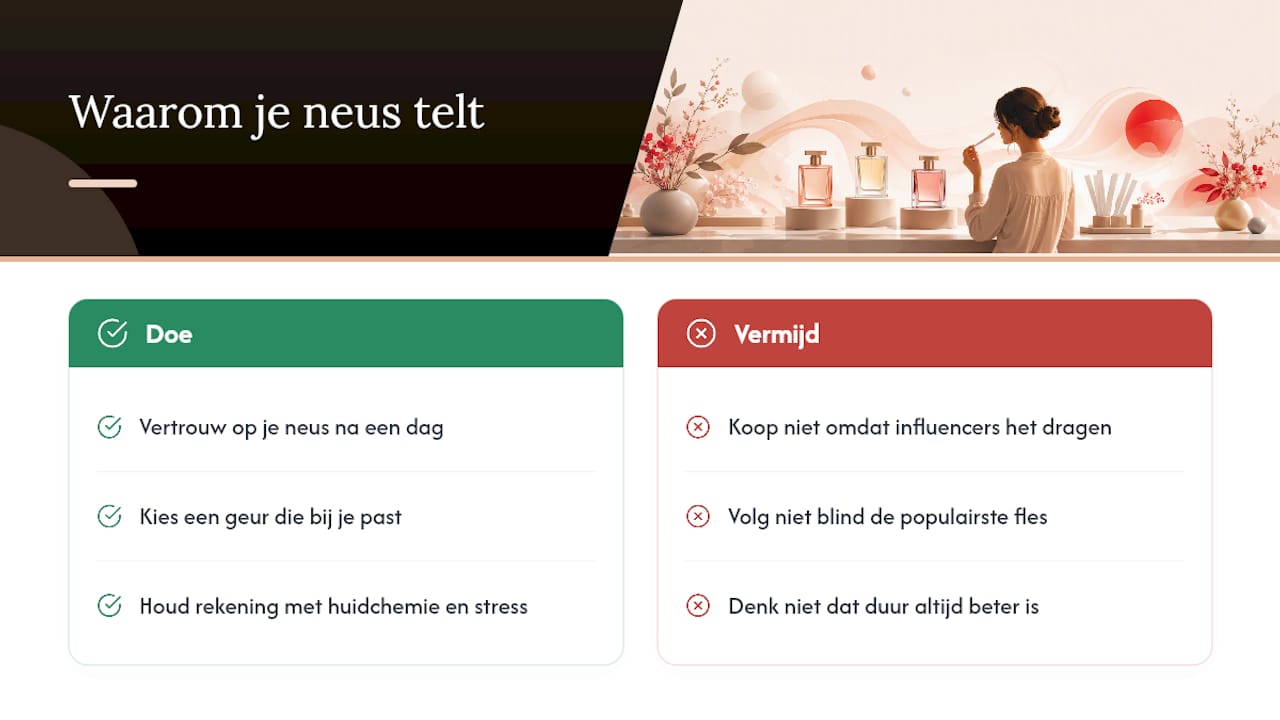
Most perfume advice is about what’s trending, what an influencer is wearing, or which scent “everyone” is buying right now. That’s exactly where things go wrong. A fragrance that smells fantastic on someone else’s skin can feel flat, too sweet, or just not right on you—and that has nothing to do with bad taste. Skin chemistry, hormones, and even your stress level all influence how a perfume unfolds.
What I’ve learned over years of fragrance testing is that the most satisfied buyers rarely go for the most popular bottle. They choose the bottle that matches who they already are, not who they want to look like on a billboard. So trust what your own nose tells you after a day of testing, and feel free to ignore a trend if it doesn’t work for you. A brand like Pureparfum shows that a good fragrance doesn’t have to be expensive to be taken seriously. In the end, only one opinion matters: yours, after wearing it for a full day.
— J
Start with samples, not an expensive gamble
Pureparfum makes it affordable to test multiple fragrance families without immediately buying a pricey bottle. The perfumes are fully vegan and animal-friendly, made with a higher oil concentration than many other affordable brands, so the scent lasts longer on your skin. Thousands of customers have already shared their experience on the product pages, giving you a good idea of what to expect before you buy yourself.
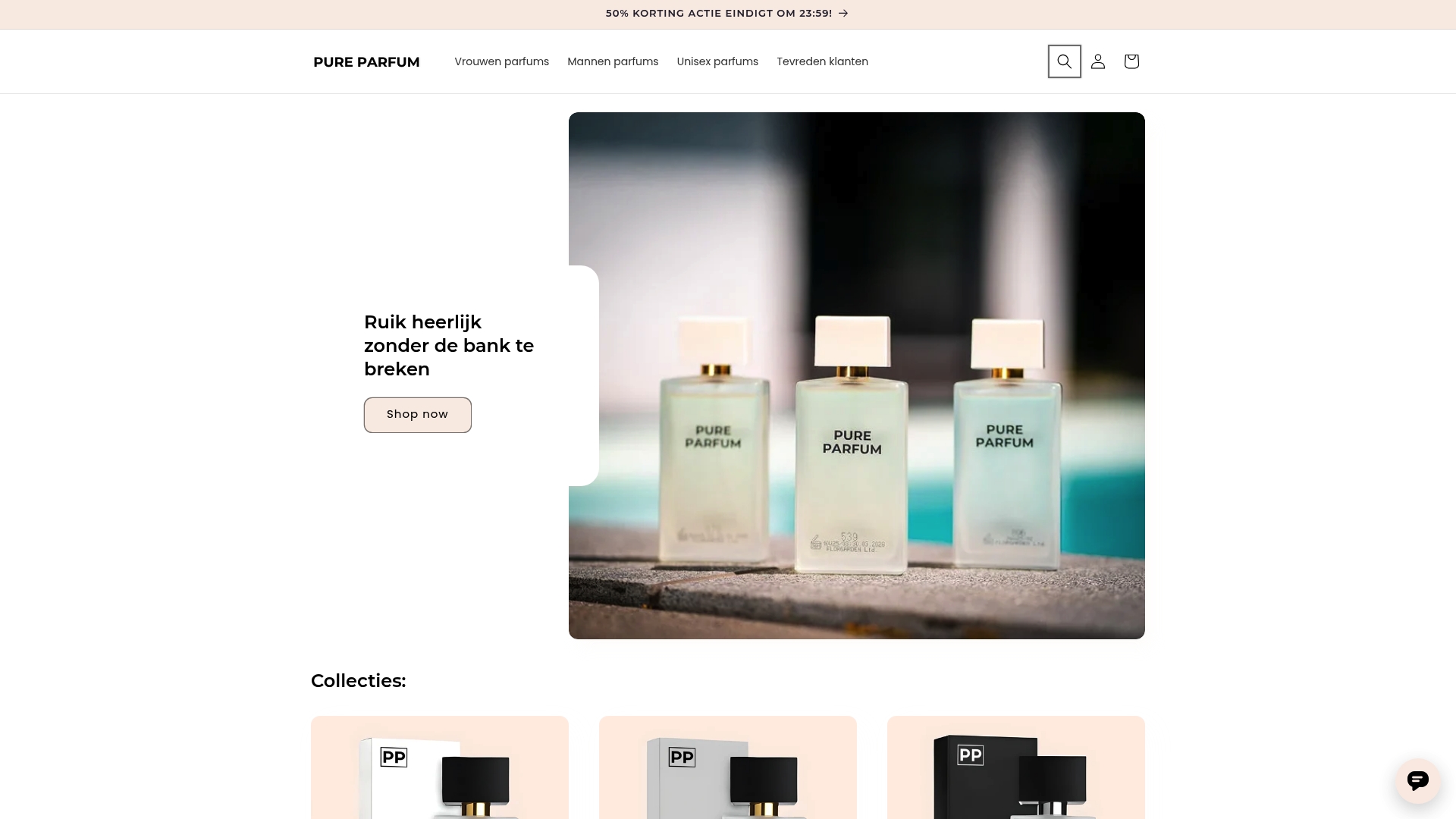
Want to get started right away with the advice from this article? Begin with the 30ml x4 Parfum Set, specially composed to test multiple fragrance families side by side without having to buy a full bottle. Are you further along in your search and want to have multiple full sizes at a sharper price per bottle? Then the 3x100ml Parfum bundle is the logical next step. Both options include clear shipping information and an easy-to-understand returns policy on the website, so testing stays risk-free. For anyone interested in broader aromatic experiences beyond perfume, Spiristones’ esoteric fragrance oil collection is an interesting addition to explore.