


Short answer: once opened, perfume usually stays 1 to 3 years good. An unopened bottle, stored in its original packaging and in the right place, often lasts 3 to 5 years or longer. The exceptions determine the story: citrus and fresh top notes evaporate the fastest, while amber, woods, and oriental compositions remain much more stable.
What mainly determines shelf life is not the age of the bottle, but what happens to it in the meantime.
- Opened: on average 1 to 3 years, depending on fragrance type and storage
- Unopened: often 3 to 5 years, sometimes longer with stable, cool storage
- Citrus and green notes: age the fastest
- Amber, wood, and oriental scents: stay intact the longest
Good to know: Kruidvat reports that citrus fragrances noticeably change within 1 to 3 years, while heavier amber and woody fragrances often remain stable for 5 years or longer. On the packaging, you’ll often find two symbols that help you with this: an opened jar with a number (PAO, for example “24M” for 24 months after opening) and sometimes a “use by” date. That second one is according to European regulations only required if a product is shelf-stable for less than 30 months, which explains why you don’t usually find it on many perfumes.
Key insights
Perfume shelf life depends mainly on oxidation, storage conditions, and fragrance type—not on a fixed expiration date on the bottle.
| Point | Details |
|---|---|
| Opened vs. unopened | Opened perfume stays good for 1 to 3 years; unopened often 3 to 5 years or longer. |
| The biggest enemy is oxygen | Every time you spray, air gets in—so the emptier the bottle, the faster it breaks down. |
| Store cool and dark | Keep the temperature around 15 to 20 degrees and use the original box as protection. |
| Avoid the bathroom and the car | Moisture, heat, and sunlight significantly speed up aging. |
| Test with your senses | Check color, texture, and scent before you spray questionable perfume on your skin. |
| Choose stable formulas | Pure Parfum’s vegan fragrances with a higher oil concentration pair well with the right storage routine for longer-lasting scent enjoyment. |
Table of contents
- What actually determines the shelf life of your perfume?
- How and where should you store your perfume best?
- How long do different fragrance types and concentrations last?
- How to tell if your perfume is no longer good
- Smart travel with decants and your perfume collection
- What most storage tips overlook
- Enjoy your favorite scent longer with Pure Parfum
- Sources
What actually determines the shelf life of your perfume?
Oxidation is the biggest enemy of any fragrance. As soon as you open a bottle, oxygen comes into contact with the liquid, and that oxygen slowly breaks down the fragrance molecules. The emptier the bottle, the more air is inside, and the faster that process goes. That’s also why Kruidvat points out that an almost empty bottle ages faster than a full one.
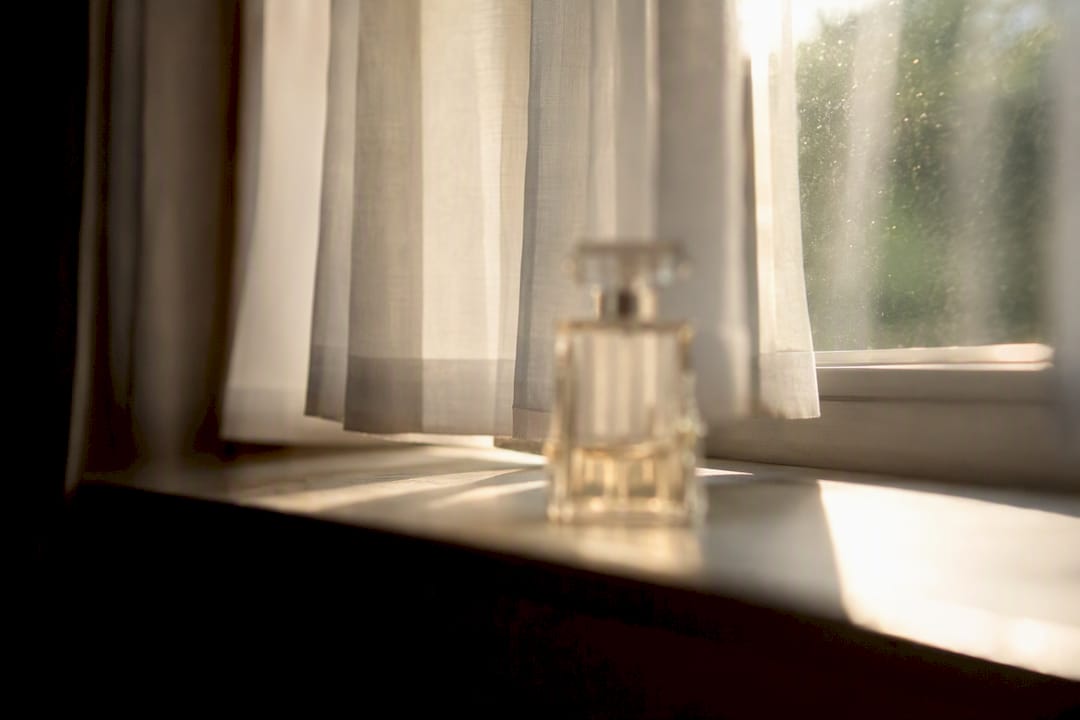
Light and heat speed up that breakdown even more. UV radiation directly breaks down certain aromatic compounds, and heat acts like a catalyst: the warmer the environment, the faster the chemical reactions. A bottle on the windowsill in summer sunlight can noticeably change in scent within a few months.
The alcohol percentage also plays a role. Alcohol works as a preservative and helps prevent bacterial growth, but it does not protect against oxidation. Synthetic fragrance molecules are often more stable than natural extracts, which explains why some modern, synthetically composed perfumes last longer than purely botanical scents.
Finally: the bottle design makes a surprisingly big difference. A sprayer keeps air mostly out and protects the contents better than an open splash bottle, where you let air in every time you remove the cap.
- Oxygen gradually breaks down fragrance molecules, faster as the bottle gets emptier
- UV light and heat speed up chemical breakdown
- Alcohol protects against bacteria, not oxidation
- Synthetic fragrance ingredients are generally more stable than natural extracts
- Spray bottles keep air out better than splash bottles
Pro tip: If you’re unsure, it’s better to buy a smaller bottle that you’ll use up within a year than a large bottle that sits in the cabinet for years with more and more air inside.
How and where should you store your perfume best?
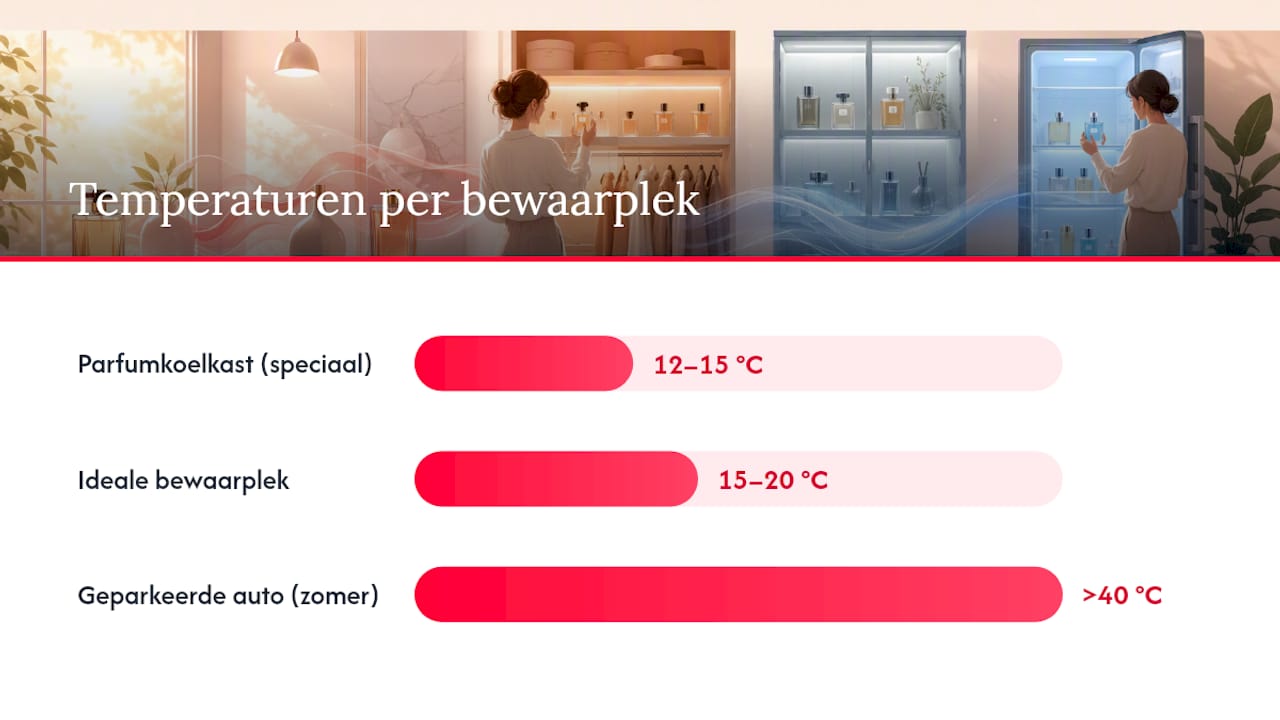
The ideal storage spot is cool, dark, and with a stable temperature—about 15 to 20 degrees. Margriet emphasizes that fluctuations in temperature and moisture significantly speed up aging, and that the original box is an underestimated ally: it filters light and dampens temperature changes.
- Store the bottle upright, not on its side, so the liquid isn’t constantly in contact with the cap or pump—and also use a hand cream with SPF to give your skin extra protection against aging.
- Always close the cap tightly after use, because every second the bottle is open lets in extra oxygen.
- Keep the original box and use it as your first line of defense against light.
- Write the opening date on a sticker on the bottom of the bottle, so you know exactly where you stand.
- Choose a drawer or cabinet in the bedroom instead of the bathroom or windowsill.
The bathroom is actually the worst place you can choose, even if your perfume is most convenient there. Moisture, hot showers, and temperature fluctuations create exactly the combination that speeds up oxidation. A windowsill is just as risky due to direct sunlight, and the car is an absolute no: temperatures in a parked car can easily rise well above 40 degrees in summer.
Also, a regular kitchen fridge isn’t a good idea. It brings in moist air and temperature fluctuations every time you open the door, which works against you. Only a special wine or cosmetic fridge with a stable temperature around 12 to 15 degrees is suitable—and that’s especially relevant for collectors with an extensive collection, not for the average user with a handful of bottles.
Pro tip: A dark drawer in the bedroom works just as well for most people as an expensive perfume fridge, and it costs nothing extra.
How long do different fragrance types and concentrations last?
The EDP or EDT label says less about shelf life than people think. The concentration of perfume oil plays a role, but the composition of the fragrance itself weighs even more. A light eau de toilette with lots of amber base can stay stable longer than a concentrated eau de parfum full of citrus notes.
| Fragrance type | Typical shelf life when opened |
|---|---|
| Citrus and fresh top notes | 1 to 3 years |
| Floral and green | 2 to 4 years |
| Oriental, amber, and woody | 3 to 5 years or longer |
Citrus fragrances contain many volatile, small molecules that evaporate and oxidize quickly. Floral and green compositions fall somewhere in between in terms of stability. Oriental, amber, and woody scents are often made up of larger, heavier molecules that break down much more slowly, and this group can last well over a decade with good storage without you noticing it in the scent.
Interesting detail: in the first year after creation, many perfumes actually get better. The scent “rounds out” because ingredients blend together before oxidation takes over in the long run. Chemically speaking, the quality curve of perfume looks like an inverted U: first it rises, then gradually declines as time passes.
How to tell if your perfume is no longer good
Your nose and eyes are your best measuring tools. Kruidvat advises that if you’re unsure, you should simply look and smell first before spraying anything on your skin.
- Color change: a scent that has darkened or become cloudy indicates oxidation
- Changed texture: a thicker or more viscous liquid than you’re used to is a warning sign
- Unusual smells: a sour, metallic, or plastic-like undertone that wasn’t there before
- Skin reaction: redness, itching, or irritation after use—even if you wore that scent earlier without any problems
The last one isn’t just caution. Oxidized molecules like limonene and linalool—common ingredients in perfume—can form allergenic byproducts during breakdown. An expired perfume can therefore cause a skin reaction that the original, fresh version never gave.
Still unsure? Spray a small amount on a piece of fabric or test first on a small area of skin, for example on the inside of your wrist, and wait a few hours. If you notice anything strange, throw the bottle away—even if it’s still half full. Also always check the batch code and the PAO symbol on the packaging: they give you an objective starting point alongside your own senses.
Smart travel with decants and your perfume collection
Traveling with a full 100-milliliter bottle is often unnecessary and impractical. A small travel spray not only makes your carry-on lighter, but also protects the rest of your bottle from unnecessary frequent opening and closing, which slows oxidation at home.
- Use small bottles for on the go, so your main bottle stays mostly unopened.
- Consider decanting in moderation: pouring into smaller sprayers can be convenient, but Elle points out that you introduce extra air, which can actually speed up aging.
- Actively rotate your collection: use half-full bottles first instead of letting them sit half-filled for years.
- Store unopened stock in the box and write the purchase date and batch code on a sticker.
A smaller set of bottles, such as a 30ml x4 perfume set, is ideal for this: you use each bottle up faster, which gives oxidation less chance and lets you switch scents more often.
Sensory checks and what brands like Pure Parfum contribute
Your own nose remains the most reliable test you have. Smell, look, and trust what you perceive: those three steps filter out nine out of ten doubts immediately.
- Smell first directly from the bottle, not through fabric or a blotter
- Look at color and clarity in bright light
- If you’re unsure, test on a small patch of skin before wearing the scent fully
A fragrance that is composed to be vegan, animal-friendly, and with a higher oil concentration often stays stable longer and stays true to the original profile—exactly what Pure Parfum focuses on in its formulas.
Pure Parfum works with vegan and animal-friendly fragrance formulas with a relatively high perfume oil concentration, which contributes to longer-lasting scent enjoyment per spray. Combine that formulation with the storage rules from this article, and you get the most out of every bottle.
What most storage tips overlook
The usual approach—“store your perfume somewhere dark and you’re done”—is right, but it misses the nuance that really matters: not every bottle needs the same level of protection. A citrus scent in a splash bottle requires much stricter discipline than an amber-heavy eau de parfum in a good sprayer. If you treat your entire collection the same, you either waste protection or waste fragrance.
Where conventional advice also falls short: they treat decanting and travel as a compromise, while it’s actually an opportunity. Smaller bottles force you to use them up faster, and that’s exactly what prevents oxidation. The biggest mistake I see is people cherishing one large bottle for “special occasions” for years, while that bottle slowly loses its best version.
So don’t prioritize the most expensive storage solution—prioritize the simple rhythm: smaller amounts, faster rotation, and a dark drawer instead of the bathroom cabinet.
— J
Enjoy your favorite scent longer with Pure Parfum
Pure Parfum is the answer for anyone who wants fragrance enjoyment without the compromises that often come with cheaper alternatives: no animal testing, no unnecessary packaging costs, but a higher concentration of perfume oil that lingers on your skin a little longer—and, as long as you store it well, also lasts longer in the bottle.
Want to build your collection smartly without half-full bottles that sit and oxidize for months? Then choose smaller, rotating formats. The 3x100ml perfume bundle lets you rotate three scents at the same time, so no bottle stays with too much air for too long. Travelers or people who want to discover which scent suits them will find the exact flexibility recommended in this article in the 20ml x5 perfume set: small enough to use up quickly, large enough to actually wear. Check out the range and build your own rotation on Pureparfum.
Sources
- How long does perfume stay good? | Kruidvat
- The shelf life of perfume: this is how it really works | Margriet
- Can perfume go bad? Here’s what experts say | Elle