


Yes, perfume can trigger headaches or even a migraine attack in some people. This happens through three mechanisms: irritation of the trigeminal nerve in your nose, scent processing that is deeply connected to your emotional memory, and sometimes a mild allergic or inflammatory reaction in your airways.
What you’ll find here:
- Which fragrance ingredients most often cause complaints
- How you can test yourself whether a perfume is your trigger
- When you need a GP, an ENT specialist, or a migraine clinic
Pro tip: Do you already notice a headache from a strong scent? Ventilate the room, step outside for a moment, and test later calmly using the method further on in this article.
Key insights
Perfume causes headaches mainly through trigeminal irritation, emotional scent conditioning, and sometimes mild inflammation—and with testing and adjustments, it’s well manageable.
| Point | Details |
|---|---|
| Three mechanisms | Trigeminal irritation, emotional conditioning, and inflammation together explain most complaints. |
| Make the distinction | A direct skin reaction points to an allergy; delayed throbbing pain points to migraine; sharp nose complaints point to trigeminal irritation. |
| Safer notes | Vanilla, light citrus, and amber are generally tolerated better than heavy synthetic or musky compositions. |
| Test step by step | Spot-test on clothing, wait, then test on the skin and observe for at least two to four hours. |
| Hormone claims debunked | With normal use, the concentrations in perfume are too low to disrupt hormones or the thyroid, according to a fact check. |
| Mild alternative | Pureparfum offers small test sets with a high oil concentration, suitable for discovering calmly which scents you do tolerate. |
This article contains general information and does not replace the advice of a qualified doctor. Consult a qualified healthcare professional about your own situation before acting based on this content.
Table of contents
- How can perfume cause a headache?
- Allergy, fragrance intolerance, or migraine: what’s the difference?
- Which fragrance notes more often cause complaints?
- How do you test safely whether a perfume is your trigger?
- What does research say about perfume and headaches?
- When should you see a doctor for complaints caused by scent?
- You’re not the only one with scent sensitivity
- Mild alternative if you still love fragrance
- Sources
How can perfume cause a headache?
The main culprit is your trigeminal nerve—the same nerve that responds to menthol-like or sharp substances. Volatile aromatic compounds irritate nerve endings in your nose and sinus lining, and your brain interprets that irritation as pain or pressure. Research on chemosensory irritation confirms that this is a real neurophysiological mechanism, not something imagined.
There’s also a psychological component. Pamela Dalton from the Monell Chemical Senses Center explains that smell is directly connected to the emotional and memory areas of your brain. A scent you once associated with a bad event can still cause tension and headaches years later—purely because of that association.
In addition, high concentrations of perfume can literally irritate the nasal cavity and sinuses, leading to an inflammatory reaction.
Poor ventilation, a warm room, and a concentrated cloud of fragrance together create the perfect conditions for an attack. The same scent in a well-ventilated space often causes hardly any complaints.
- Trigeminal irritation from volatile substances
- Emotional conditioning through scent memory
- Inflammation of the nose and sinuses at high concentrations
- Poor ventilation and warmth intensify each of these effects
Allergy, fragrance intolerance, or migraine: what’s the difference?
Not every reaction to perfume is the same, and the distinction determines what kind of help you need. An allergic reaction often shows up right away: rash, sneezing, itchy eyes, sometimes within minutes after contact. Osmophobia—the term for fragrance intolerance in migraine—causes a nauseating aversion to scent without skin symptoms. Trigeminal irritation feels sharper: a stabbing, burning sensation in the nose that quickly goes away when you avoid the source.
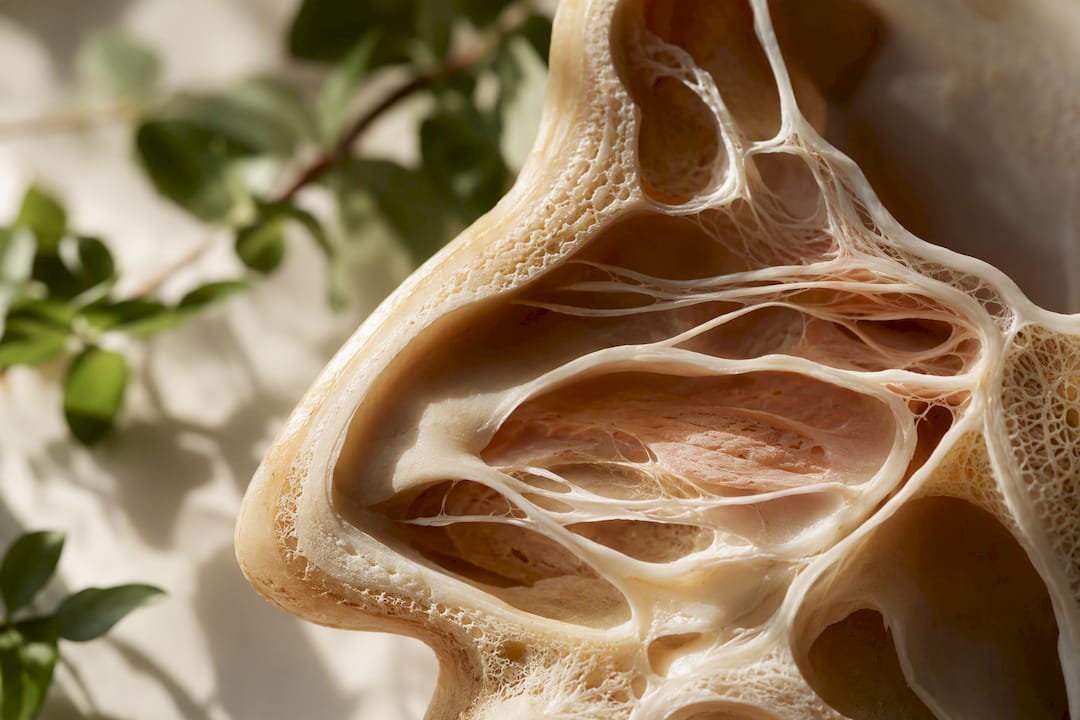
The timing pattern reveals a lot. An allergy usually occurs immediately; a migraine attack may only start after thirty to sixty minutes; and trigeminal irritation often disappears once you get fresh air.
Ask yourself these questions to place your complaint:
- Do you get a rash or start sneezing? Think allergy.
- Do you feel throbbing pain, nausea, or do you see flashes of light? Think migraine.
- Do you mainly feel a sharp, irritating nose without other symptoms? Think trigeminal irritation.
A public study shows that perfume is mentioned as a trigger by more than half of the surveyed migraine patients, with floral scents as the biggest culprit.
Which fragrance notes more often cause complaints?
Some fragrance categories show up in complaints more consistently than others. Heavy synthetic aromas, flashy floral compositions, and strong musky notes in high concentration are at the top of that list. Also, sharp, menthol-like, or solvent-like molecules—often used to make a scent feel “fresh”—irritate the trigeminal nerve faster than other substances.
On the other hand, vanilla, light citrus, amber, and clean, soapy notes are generally tolerated better. A study in Current Biology even found a striking agreement across different population groups about which scents are considered pleasant, with vanilla consistently scoring high. That doesn’t say anything about your personal sensitivity, but it’s a good starting point.
- Often problematic: heavy synthetic aromas, strong floral notes, musk in high doses
- Often better tolerated: vanilla, light citrus, amber, soapy notes
Pro tip: Don’t just look at the name of a scent—look at where you use it. A perfume with a higher oil concentration often spreads less diffusely through the air than an air freshener with the same note, which can make the difference between having complaints or not.
How do you test safely whether a perfume is your trigger?
Never test a full day-to-day routine right away with a new scent. Build it up slowly:
- Spray a small amount on a piece of clothing or a test card—not directly on your skin.
- Smell it briefly and wait fifteen minutes before forming a judgment.
- Only then, if there’s no reaction, test a small amount behind your ear or on your wrist.
- Observe for at least two to four hours, because a scent changes from top notes to base notes and complaints may only show up later.
- Write down what you felt and when, so you can recognize a pattern.
In addition to testing, you can reduce your overall exposure:
- Ventilate rooms well, including at the office or in the car
- Avoid enclosed spaces with lots of perfume, such as full elevators or perfumeries
- Take short breaks outside during prolonged exposure
- Use a fan or air purifier in rooms where you spend a lot of time
Do you find it hard to bring this up? A simple sentence often works best: “I get a headache from strong perfume—could you keep it a bit lighter in shared spaces?” It’s concrete, not accusatory, and leaves room for discussion.
What does research say about perfume and headaches?
The clinical side of this story is well documented. ENT specialist Zara Patel from Stanford Medicine regularly sees patients in practice whose migraine attacks are triggered by strong perfumes or air fresheners through trigeminal irritation. Research on six specific fragrance categories that are often associated with migraine attacks confirms that this is not a coincidence.
Scent processing runs through the same brain areas that drive emotions and memories. That explains why one person panics from a scent that another barely notices.
About the often-circulating claim online that perfume disrupts your hormones or thyroid, the conclusion is clearer than you might think. A fact check by VRT NWS states that potentially hormone-disrupting substances in perfumes, under normal use, occur at concentrations too low to cause demonstrable harm. So perfume headaches are a real and well-supported phenomenon—hormonal disruption from a cloud of perfume is not.
- Trigeminal irritation: clinically confirmed by ENT specialists
- Emotional conditioning: supported by scent research
- Hormone disruption: not shown with normal use
When should you see a doctor for complaints caused by scent?
See your GP if headaches caused by perfume come back more often than a couple of times per month or keep getting worse. That’s usually the logical first step, after which you’ll be referred if needed.
Seek help sooner if you notice these signs:
- Repeated, severe migraine attacks right after exposure to scent
- Breathing problems, shortness of breath, or swelling after contact with perfume
- Persistent sinus pain that doesn’t go away
- Worsening of existing asthma complaints
An ENT specialist is the right choice for persistent nose or sinus complaints; a neurologist or migraine clinic if you suspect that scent is your migraine trigger. For your appointment, keep a short diary: which scent, how long you were exposed, what complaints you had, and how quickly they disappeared. That makes the specialist’s diagnosis much easier.
You’re not the only one with scent sensitivity
Do you recognize yourself in this? You’re definitely not alone. Many people go around for years with unexplained headaches before they make the connection to perfume.
Small adjustments can help a lot already: choose milder, less concentrated scents yourself and be open at work or at home about what you need. That conversation is often easier than you think beforehand.

Mild alternative if you still love fragrance
Being scent-sensitive doesn’t mean you have to stop wearing perfume. It mainly means choosing more consciously. Pureparfum works with a higher concentration of perfume oil per bottle, which often results in a fragrance experience that spreads less diffusely through the air than cheaper, strongly diluted perfumes with lots of alcohol and synthetic fillers.
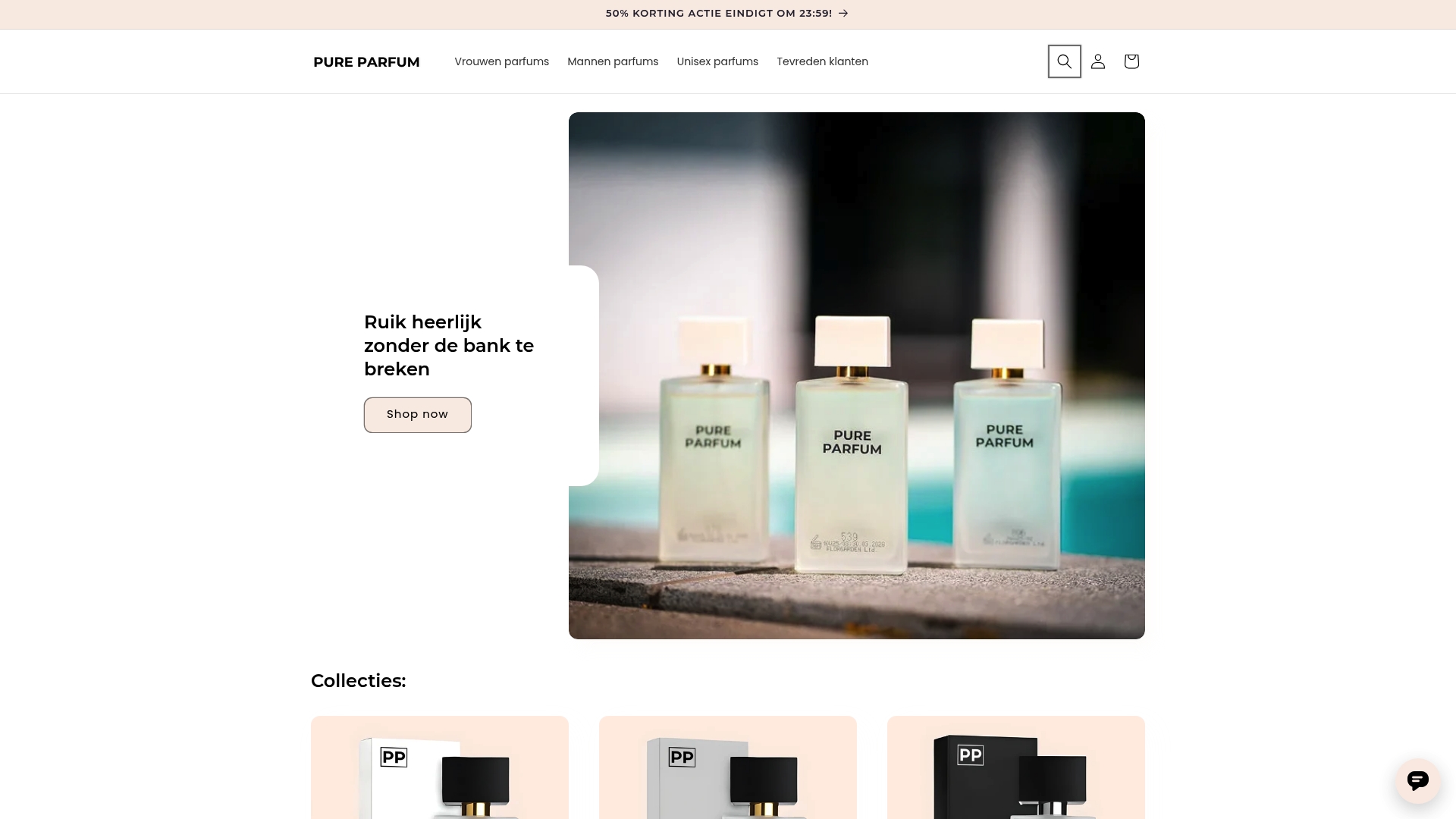
Want to test calmly which notes you do tolerate, without immediately buying a full bottle? The 30ml x4 perfume set is ideal for that: you test four scents in small amounts and build your own list of safe notes. If you prefer to wear a scent without it spreading through the air, you can also look at the scented hand cream or body lotion, both with a much more subtle scent release than a spray.
Do you have severe or persistent reactions to perfume? Then always consult a doctor first. This is a mild, affordable alternative for people who want to experiment carefully — not a medical solution. Order a test set today via Pureparfum and discover which notes suit you.
Sources
- PubMed: relevant study on chemosensory irritation and trigeminal irritation
- Current Biology study on scent preferences
- Migraine caused by scents: what are possible triggers?
- No, your hormones and thyroid are not disrupted by a cloud of perfume in your neck | VRT NWS News