


Heat accelerates evaporation, causing perfume to open faster but also fade faster. You can smell the top notes more strongly at first, but the base notes last less long. Avoid direct sunlight on your skin and on the bottle. Spray onto heat points such as your wrists and neck, and store your perfume in a cool, dark place.
In short:
- Higher temperatures speed up the evaporation of top notes and shorten the overall wear time of the fragrance on the skin.
- Humidity can dilute the perception of base notes and influence how the scent is experienced on humid days.
- Spraying on warm areas of skin such as wrists and the neck helps the fragrance spread more evenly and last longer.
- Store perfume in a cool, dark place and avoid exposure to heat and light to prevent fragrance changes.
- In warm weather, a lighter fragrance concentration and using a light body lotion are effective ways to help fragrance last longer.
Table of contents
- How heat and humidity change the scent of perfume
- Where and how to apply your perfume best in warm weather
- How to store perfume and bottles safely in the heat
- Which concentration and care help fragrance last best
- How Pure Parfum responds to fragrances that are resistant to heat
- What really works on warm days, according to user experiences
- Try a fragrance set that suits warm days
- Sources
- Frequently asked questions
How heat and humidity change the scent of perfume
Perfume consists of volatile molecules that evaporate as soon as they come into contact with air and heat. The warmer your skin, the faster those molecules break free, and the more intense the scent feels at the start. This process is called volatility, and it explains why the same fragrance feels subtle in winter and suddenly much more noticeable in summer.
Not every fragrance note reacts the same way to temperature. Top notes, usually citrus or light spices, are the most volatile and evaporate first. Heart notes follow more slowly, and base notes such as wood, musk, or vanilla stay on the skin the longest because their molecules are heavier. With heat, the entire timeline speeds up: you smell the opening faster, but the transition to the deeper layers also happens more quickly, which shortens the total wear time of the fragrance on your skin.
Measurements confirm this mechanism in a concrete way. Experimental research into the evaporation of a cosmetic ingredient showed that the release rate at skin temperature of 32 degrees was significantly higher than at room temperature of 23 degrees, with a more than doubled rate per unit of surface area. Careful formulation can partly smooth out that difference, but the direction of the effect is certain: heat significantly increases the evaporation rate of fragrance molecules.
Humidity also plays its own role alongside temperature. In humid air, the perception of base notes can change: moisture can make volatile notes seem more diluted in the way they’re perceived, which affects the wearing feel.
- Top notes evaporate fastest in heat, so you smell them immediately stronger.
- Heart notes move through to the base faster than at cooler temperatures.
- Base notes last the longest, but humidity can make their presence seem less pronounced in your perception.
Where and how to apply your perfume best in warm weather
Warm areas on your body act like natural diffusers. Your wrists, neck, and the inside of your elbow have higher blood flow and skin temperature, so the fragrance evaporates more actively there and spreads better through the air around you. In warm weather, this works in your favor—as long as you adjust the amount.
- Spray on your wrists and neck, not in the sun, but right after showering onto clean skin.
- Use less product per application and spread it across multiple heat points instead of one heavy spray in one place.
- Layer with a fragrance-free or lightly fragranced body lotion underneath, so the fragrance releases more slowly.
- Avoid spraying directly on clothing in bright sun, because fabric holds heat longer than skin.
- Spray into the hair only occasionally and from a distance, because alcohol in perfume can dry hair out.
Clothing holds fragrance longer than skin, but combined with sunlight and heat, it can also cause stains or shifts in scent on light fabrics. Hair transfers fragrance nicely over a longer period, although the drying effect of alcohol often doesn’t outweigh the benefit for everyday use.
Pro tip: Spray perfume on your skin right after showering, when pores are still slightly open and moisture helps the scent stay.
How to store perfume and bottles safely in the heat
Bottles are more fragile than most people think. Heat and light together can chemically change fragrance ingredients, and that process isn’t always reversible.
- Store perfume in a closed cabinet or drawer, not on the windowsill or in the bathroom where temperature and humidity fluctuate.
- Never leave a bottle in a car parked in the sun, because the temperature there rises quickly.
- When traveling, bring a small spray sample instead of the full bottle; that limits your exposure to heat in suitcases or carry-on bags.
- For long trips, choose an insulated pouch or cooler bag if you still take a full bottle.
- Watch for color changes or an unusual smell when opening: that often points to irreversible breakdown caused by heat or light.
Repeated exposure to heat and UV light can oxidize fragrance ingredients, shifting the composition and making the scent less faithful to the original. A dark, cool place is the simplest protection.
Which concentration and care help fragrance last best
In warm weather, a lower perfume concentration is often more practical than the strongest version at home. Eau de toilette evaporates faster and feels lighter on the skin, while eau de parfum and pure perfume contain more fragrance oil and therefore release more slowly—even in heat. If you wear a heavy pure perfume in summer, you often smell a more intense, sometimes overwhelming opening, while eau de toilette builds up more gradually and subtly.
The base layer under your perfume makes a difference. A light body lotion that absorbs quickly holds fragrance better than a thick, oily cream that feels sticky on warm days. Formulation research by Gattefossé shows that specific emulsifiers and texturizing ingredients improve skin feel and the stability of care products in warm, humid conditions, which is relevant when choosing a base layer that needs to support the fragrance without feeling heavy.
- In heat, choose eau de toilette or a lighter concentration over a heavy pure perfume.
- Use a quickly absorbing lotion as a base instead of a thick, oily cream.
- Avoid oily primers that, combined with sweat, form a sticky layer.
Sensorial tests with those formulations showed that specific wax-butter emulsifiers strongly reduce oiliness and the sticky after-feel in warm, humid conditions, which noticeably improves the skin feel of care products in summer.
How Pure Parfum responds to fragrances that are resistant to heat
Pure Parfum works with a higher oil concentration than many other affordable scents, which
helps the brand deliver a longer-lasting scent profile, even on warm days. The fragrances can be vegan and animal-friendly, and are often made without the extra costs of expensive packaging or marketing.
For anyone who wants the scent to last longer in summer, combining perfume with a body lotion or perfumed hand cream from the same range is a logical addition: the lotion forms a light base layer on which the perfume evaporates more slowly. The full range is available at Pureparfum.
What really works on warm days, according to user experiences

From customer reviews and brand tests, the same picture keeps coming up: less is more when it’s hot. People who reapply during the day rather than using one heavy morning spray keep a more consistent scent profile all day. The combination of perfume with a light body lotion is mentioned more often as a simple ritual than any technical solution.
What stands out is how few users adjust their habits to the season—while precisely that small adjustment (less product, applied more often) is what makes the difference between a scent that’s gone by ten o’clock and one that lasts all day.
— J
Try a fragrance set that suits warm days
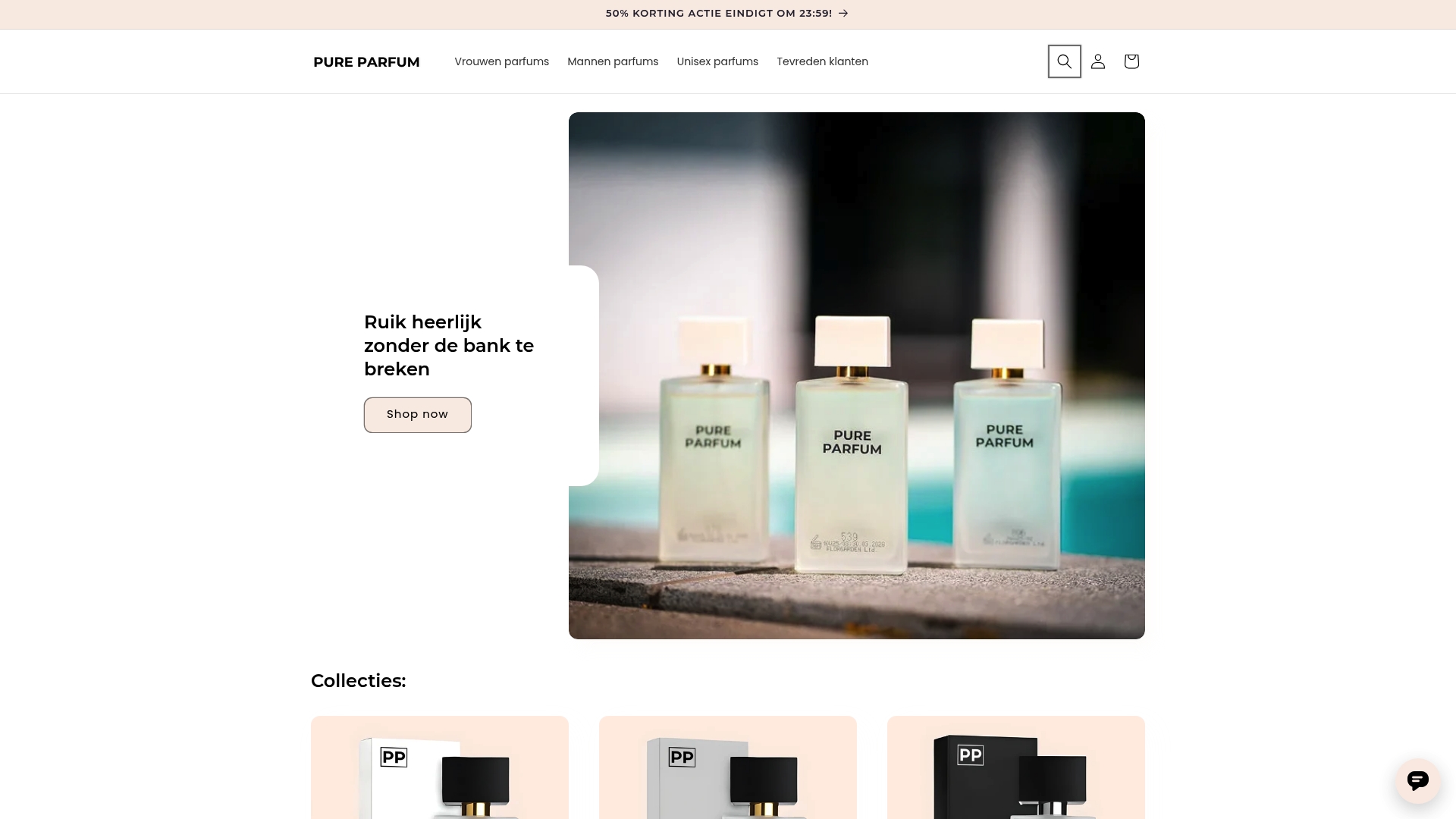
In warm weather, variation is more practical than one heavy bottle: with a fragrance set, you can switch between concentrations depending on the temperature, without buying a full bottle for every scent. The 3x100ml perfume bundle is a practical choice, with three fragrances that you can combine with a light body lotion or hand cream for a longer-lasting scent experience.
Check out the full range of perfumes and care products on Pureparfum and create your own combination for summer.
Sources
- Evaporation of decamethylcyclopentasiloxane (D5) from selected cosmetic products: Implications for consumer exposure modeling
- Exploring the Climate Impact on Formulations | Gattefossé
Frequently asked questions
Why should you avoid wearing perfume in the sun?
Direct sunlight speeds up the breakdown of fragrance molecules and can permanently change the composition of your perfume. That’s why you should apply perfume in a shady spot and never leave the bottle in the sun—also not in the car.
Where does perfume last the longest on your body?
Fragrance lasts the longest on heat points with higher blood flow, such as wrists, neck, and the inside of your elbow, and on a well-hydrated skin surface. A light body lotion as a base layer helps the fragrance evaporate more slowly.
What’s the difference between eau de toilette and perfume in heat?
Eau de toilette contains less fragrance oil and evaporates faster, making it suitable for warm days when you want a lighter presence. Perfume and eau de parfum contain more oil and last longer, but in heat they can feel more intense.
How do you store perfume best in summer?
Store perfume in a closed cabinet or drawer away from direct sunlight and away from damp or warm areas such as the bathroom. When traveling, it’s better to bring a small spray sample than the full bottle, so you limit exposure to heat.
Can heat permanently damage perfume?
Repeated exposure to heat and light can cause fragrance ingredients to oxidize, which makes the scent and sometimes the color of the liquid change. These changes are usually not reversible, so a cool, dark place remains the best protection.