


Oud, also called agarwood, is resin-rich heartwood from the Aquilaria and Gyrinops trees that only forms after damage or infection. Distilled into oil, it produces a warm, woody, and strikingly varied fragrance that can come across as sweet, smoky, leathery, or even slightly animalic. Its unpredictability adds to the appreciation of oud in perfumery, because it can give a composition depth and a long-lasting trail.
In short:
- Natural oud offers an unpredictable scent that depends on origin and extraction method, while synthetic alternatives provide more consistent fragrances.
- Oud often smells woody and warm, with variations ranging from sweet, smoky, animalic or leathery, depending on quality and production method.
- The scent of oud is mainly used as a base note because it lingers and strengthens the fragrance composition.
- Trading in natural oud is regulated by CITES, so always check the origin and certification when purchasing.
- If the label doesn’t provide clear information, it’s likely just a fragrance accord and not real distilled agarwood oil.
Table of contents
- What is oud: botanical origin and production types
- How oud smells: fragrance profiles and variation
- Chemical basis: which molecules explain oud’s scent
- Natural oud versus synthetic oud accords and sustainability
- How oud is used in perfume: base note and combinations
- How to assess oud: practical testing method and checklist
- Why oud lovers keep coming back
- Try an oud-like depth via Pureparfum
- Sources
- Frequently asked questions
What is oud: botanical origin and production types
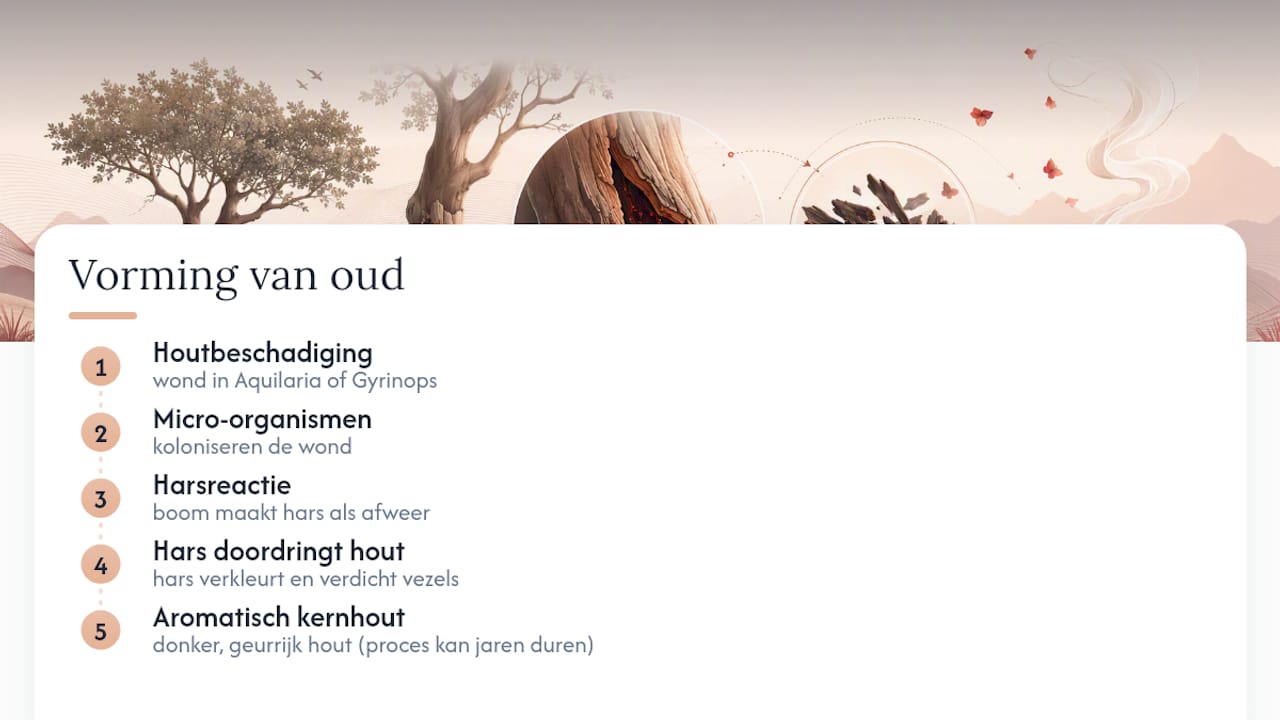
Oud doesn’t form in trees by default. Only when an Aquilaria or Gyrinops tree is damaged, and micro-organisms colonize the wound, does the tree begin producing resin as a defense reaction. That resin penetrates the wood and transforms it from light, odorless wood fiber into dark, dense, and richly fragrant heartwood. In the wild, this process can take years, which explains why natural oud has always been a scarce and expensive product.
On the market, oud is most often found in wood chips, distilled oil, and extracts or absolutes, which are used for different applications and scent effects.
In addition to natural infection, there are also induced methods: biological inoculation, chemical stimulation, or physical injury that accelerates resin formation. This mainly happens on plantations, where controlled inoculation increases yield without requiring wild harvesting.
How oud smells: fragrance profiles and variation
No two bottles of oud smell exactly the same, and that’s exactly the point. The scent depends on the tree species, the age of the wood, the extraction method, and the geographical origin.
Recognizable descriptions you’ll encounter in reviews and perfume notes:
- Woody and warm, the most common base layer
- Resinous and smoky, especially with wood chips or harsher distillates
- Leathery, with a lightly smoky undertone
- Sweet and honey-like, characteristic of higher quality grades
- Animalic or medicinal, often in the opening phase
Premium agarwood is typically described as earthy, sweet, and woody, while cheaper or harsher batches may smell sharper and more medicinal.
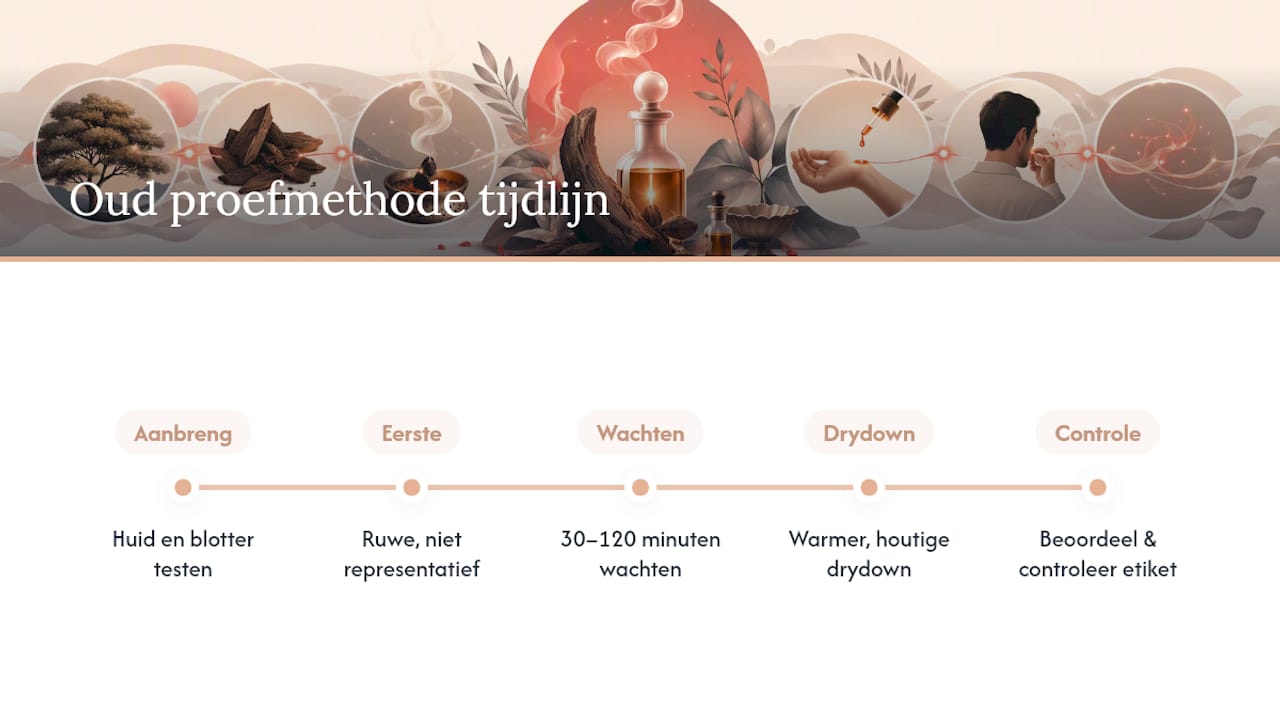
The development in an oud perfume happens in stages. In the opening, a sharper tone often dominates—sometimes smoky or animalic. After a few dozen minutes, the heart takes over with a softer, warmer woodiness, and in the dry-down, often after an hour or longer, a sweet, dry woody scent remains that lasts longest on the skin.
Chemical basis: which molecules explain oud’s scent
The way oud is perceived isn’t random—it’s the result of two groups of substances that largely determine the aromatic profile. Sesquiterpenes are responsible for the woody, deep, and sometimes earthy undertone you recognize in nearly every oud. 2-(2-phenylethyl)chromones, on the other hand, create the sweeter, incense-like facets that distinguish premium agarwood from a simple block of wood.
Analytical studies using gas chromatography coupled with mass spectrometry (GC–MS) have identified specific molecules that contribute to these impressions, including α-guaiene, β-caryophyllene, and agarospirol. These substances explain why one bottle of oud may bring to mind wet earth while the other smells like smoked leather: the ratio of these molecules shifts depending on origin and extraction method.
Natural oud versus synthetic oud accords and sustainability
Natural oud oil offers a complexity that synthetic variants struggle to match: each batch has a unique, sometimes animalic signature that directly comes from the wood’s biology. That’s also the downside. No two harvests smell identical, and the ecological pressure on wild Aquilaria and Gyrinops populations is significant.
Synthetic oud accords solve this with predictability and scalability. From a formulation perspective, they aren’t an inferior solution—they give perfumers a consistent foundation to build on, while natural oil provides the unpredictable, rich finish that enthusiasts look for.
Both types of oud trees are also listed in Appendix II of CITES, meaning that trade in natural agarwood is regulated. Kew is working on clearer annotations around plant parts and derivatives, so consumers and brands can better check whether a product comes from certified cultivation.
- When buying natural oud, always ask about origin and certification.
- Watch out for vague terms like “oud accord,” which usually point to a synthetic or blended approach.
- Without a clear mention of the botanical source, it’s never possible to determine with certainty how much real agarwood oil a perfume contains.
Pro tip: Does the label only say “oud” without further specification? Then assume it’s a fragrance accord, not distilled agarwood.
How oud is used in perfume: base note and combinations
Oud is almost always used as a base note, meaning it’s the longest-lasting and most defining scent in a perfume.
- As a carrier of longevity: oud significantly extends the wear trail of a composition, often lasting well into the evening.
- In combination with rose: a classic pairing that softens the sharpness of oud with floral sweetness.
- With vanilla and amber: enhances warmth and makes the scent more accessible to a wider audience.
- With musk and leather: reinforces the animalic, deeper side of oud.
- With spices like saffron or cinnamon: adds a defined, oriental character.
If you’re wearing oud for the first time, you’ll typically do better to start with an eau de parfum rather than an extrait: the latter concentrates the scent so strongly that the sharper opening notes can feel overpowering.
How to assess oud: practical testing method and checklist
Test oud on skin and blotter paper, giving it at least 30 to 120 minutes. The first impression is often rough and not representative; the warmer, woody dry-down is what determines quality. Pay attention to purity, complexity, and the lasting trail. Check the label for terms like “natural oud” or “oud accord” to know what you’re buying. So never judge an oud perfume based on just the first ten minutes.
Why oud lovers keep coming back
In a perfume collection, oud stands out because it never smells exactly the same. That unpredictability—something that would be a disadvantage with other ingredients—is exactly why oud lovers keep returning to it. It shines best in the colder months, when the skin holds onto the warm, resinous tones for longer, and in moments when you want a fragrance that fills the room without being loud.
If you haven’t tried oud yet, you’ll do yourself a favor by experimenting with smaller sizes or sets before committing to a full-size purchase. That way, you’ll discover which combination—rose, leather, vanilla—works best for you.
— J
Try an oud-like depth via Pureparfum
Want to experience that warm, woody depth without immediately buying an expensive niche bottle? There are concentrated, vegan perfumes inspired by well-known designer scents, including compositions with deeper, woody base notes that evoke oud—without the cost of premium packaging or marketing that normally drives the price up.
Not sure which direction suits you yet? Start small. The 30ml x4 Parfum Set lets you test four different fragrances side by side—perfect for discovering whether a warmer, woodier signature matches your taste before choosing a full bottle. See the full range at Pureparfum and find the scent that lingers the longest.
Sources
- Agarwood in the Modern Era: Integrating Biotechnology and Pharmacology for Sustainable Use — PMC
- Molecules — chemical constituents of agarwood
Frequently asked questions
What is oud like for a fragrance?
Oud is a warm, woody scent that comes from resin-rich heartwood of Aquilaria or Gyrinops trees. The fragrance can vary from sweet and honey-like to smoky, leathery, or slightly animalic, depending on origin and extraction method.
What does oud smell like exactly?
Oud rarely smells one way only: woody and resinous is the constant, but sweet, smoky, or animalic notes can run through it. Premium agarwood is often described as earthy, sweet, and woody, while lower quality can feel sharper and more medicinal.
What is the smell of death, and does it have anything to do with oud?
In some cultures, oud is used in rituals around mourning and transition, because of its heavy, smoky, and animalic associations. This is a cultural and olfactory association, not a chemical similarity to the smell of decomposition.
Which scent is often perceived as attractive or sensual?
Warm, woody, and slightly animalic fragrances like oud are often used in perfumery to suggest intimacy and attraction, especially when combined with musk, amber, or leather. Pureparfum incorporates similar warm base notes into compositions inspired by designer fragrances, available via Pureparfum.
Is natural oud always better than synthetic oud accords?
No, that’s a misconception. Natural oud offers unique, varying complexity, but synthetic accords provide a consistent, predictable scent development that is often desired in many compositions.