


Base notes such as vanilla, patchouli, sandalwood, vetiver and ambroxan usually make a fragrance last the longest, along with a higher perfume concentration and the right fixatives. This combination of fragrance family and concentration strongly determines whether a perfume is still noticeable after many hours. Below, you’ll read exactly which notes create that effect, how concentration and fixatives play a role, and how you can test it yourself at home.
In short:
- Perfumes with base notes like vanilla, patchouli and sandalwood usually last longer because they evaporate slowly and function as natural fixatives.
- A higher perfume concentration and fixatives increase the length of time a scent remains noticeable, especially with Eau de Parfum and extrait.
- Oriental and amber-like fragrances are typically the longest-lasting thanks to their resinous and vanilla-rich base, while fresh citrus scents usually fade sooner.
- Applying to pulse points, using an unperfumed lotion, and storing in a cool, dark place help the scent linger longer.
- Self-testing with a clock and asking someone else to smell it gives a practical indication of whether a perfume lasts on your skin and in your environment.
Table of contents
- Which fragrance notes last the longest?
- Concentration and fixatives: how much influence do they have?
- Fragrance families that are typically long-lasting
- Practical tips to make your scent last longer
- Sustainability and longevity: what to trust and what to look out for
- How to test at home whether a perfume is long-lasting
- Perspective: choosing between sustainability and maximum longevity
- Pure Parfum as a practical choice for long-lasting, vegan fragrance
- Sources
- Frequently asked questions
Which fragrance notes last the longest?
A perfume consists of top, heart and base notes, and it’s that base layer that largely determines longevity. Top notes like citrus evaporate within minutes, heart notes provide the core of the fragrance during the first hours, and the base notes remain on the skin after the rest has faded.
According to Wikiparfum, classic base notes such as patchouli, vetiver, sandalwood, vanilla and resins often work as natural fixatives—so they literally hold the scent to the skin.
- Vanilla and tonka bean: sweet, warm and heavy enough to last for hours.
- Patchouli and vetiver: earthy, woody notes with a high molecular mass, which means slow evaporation.
- Sandalwood and oud: respectively creamy and smoky—both known for long dry-downs.
- Benzoin and labdanum: resinous notes that often serve as fixatives in oriental compositions.
- Musks: provide a soft, skin-like trail that can remain noticeable for days.
In addition to these natural ingredients, perfumers increasingly rely on synthetic anchors such as ambroxan and iso e super. These molecules have low volatility and strengthen the substantivity of a composition without making the scent heavier. Base notes with a high molecular mass are the most important predictor of long-lasting wear, as shown by the listing of powerful base notes and modern anchors on Wikiparfum.
Concentration and fixatives: how much influence do they have?
The concentration of perfume oil largely determines how long you can smell a fragrance. Eau de Parfum, with 15 to 25%, lasts about 6 to 8 hours, while Eau de Toilette, with 5 to 15%, is often already fading after 3 to 5 hours, according to data from Vogue.

A higher oil concentration is the most direct way to extend longevity, says Vogue, but fixatives play an equally big role. Fixatives are substances that slow down the volatile top notes, so a composition remains balanced and doesn’t just disappear right away. Resins, musks and woody molecules do this most often.
Skin type also matters: oily skin holds fragrance molecules better than dry skin, and warm, humid environments speed up evaporation. That’s why the same bottle can perform completely differently on two people.
Fragrance families that are typically long-lasting
Not every fragrance family has the same built-in staying power. Oriental and amber-like compositions usually score the highest, thanks to their base of resins, vanilla and spices that naturally evaporate slowly.
- Oriental/amber: resins, vanilla and warm spices create a long, stable dry-down.
- Woody, chypre and leather: patchouli, vetiver and leather-like molecules create a deep, long-lasting base.
- Gourmand: vanilla, caramel and cocoa often last as long as amber scents.
- Fresh and citrus: naturally the most volatile, but it can still linger for hours thanks to synthetic anchors like ambroxan.
This last point is important: a fresh fragrance isn’t automatically short-lived. Perfume makers increasingly build a woody or musky base under citrus or aquatic compositions, so the freshness from the top stays, while the underlying layer provides persistence.
Practical tips to make your scent last longer
How you apply a perfume makes just as much difference as the composition itself.
- Spray, don’t rub: rubbing on the wrists damages the top notes and speeds up evaporation, while letting it dry in the air gives the scent time to develop fully, according to advice from Elle.
- Target pulse points: neck, wrists and the inside of the elbows generate heat, which helps the fragrance spread.
- Prep your skin: an unperfumed body lotion or body wash helps retain moisture, and oily skin holds fragrance better than dry skin.
- Store cool and dark: heat and light break down fragrance molecules faster, even while you’re on the go.
- Match the dose to the concentration: extrait often needs only two sprays, while EDT requires three to four sprays for a comparable result.
Pro tip: apply a thin layer of unperfumed lotion before you spray—it gives the fragrance molecules something to cling to and noticeably extends longevity.
Sustainability and longevity: what to trust and what to look out for
Sustainability and long-lasting performance don’t exclude each other. IFRA positions the Green Chemistry Compass as a practical framework that helps manufacturers design sustainable ingredients without compromising on fragrance performance—among other things, through biotechnology for synthetic bio-aromatics.
However, not every label is what it seems. According to Trouw, ‘natural’ is no guarantee of sustainability—and certainly not of longevity. So pay attention to:
- Ingredient transparency: a brand that names its raw materials is usually more reliable than a brand that only claims ‘natural’.
- Refill or refillable options: reduce packaging waste without sacrificing fragrance quality.
- Packaging choices: minimal, functional packaging is often a better sustainability indicator than marketing language.
How to test at home whether a perfume is long-lasting
You don’t need a lab to judge lasting power—just a clock and a bit of patience.
- Spray the fragrance on clean, moisturized skin and note the time.
- Smell it after one hour, four hours and eight hours, and write down what changes.
- Ask someone else to smell it: after a while your own nose gets used to the scent—an effect known as nasal adaptation—while bystanders can still detect the fragrance clearly, according to Vogue.
- Repeat the test on another day with a different temperature or clothing choice to see the influence of the environment.
A perfume performs well if, after eight hours, you can still detect a trail without pressing your nose right against your skin.
Perspective: choosing between sustainability and maximum longevity
Choosing sustainability doesn’t automatically mean giving up longevity, but the two questions require a deliberate trade-off. If you want maximum lasting power, choose extrait or EDP and combine it with an unperfumed body lotion for extra fixation. If you prioritize sustainability, look for refill options and minimal packaging, and accept that you may sometimes need a slightly lower concentration. Always test a sample first: fragrance works differently on every skin type.
— J
Pure Parfum as a practical choice for long-lasting, vegan fragrance
Looking for long-lasting fragrance notes without the high price of designer bottles? At Pure Parfum, you’ll find a practical alternative. There are perfumes with a higher oil concentration than many other affordable scents, which matches everything you read above about concentration and longevity.
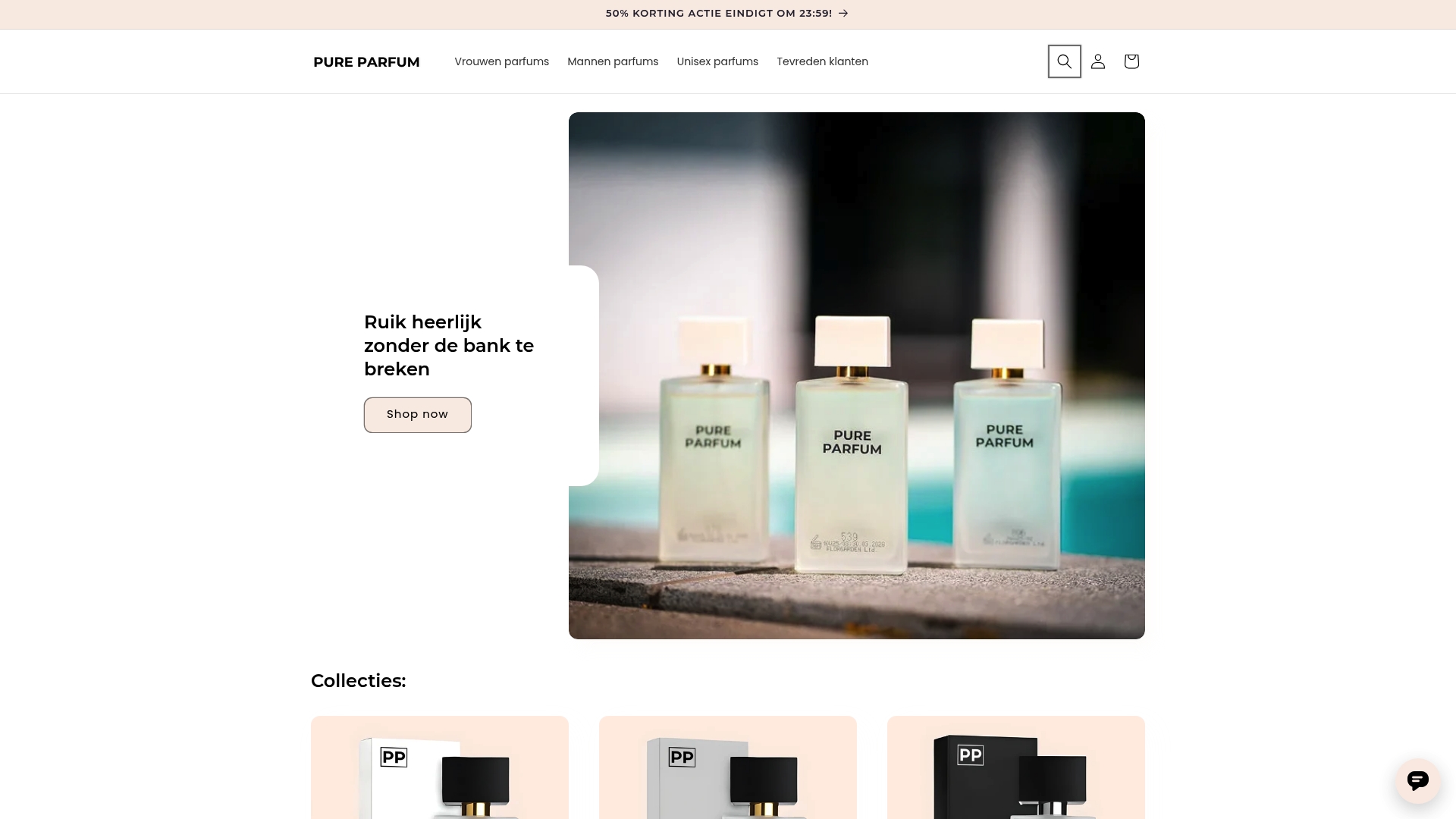
- The fragrances can be vegan and animal-friendly, without compromising on scent intensity.
- Without unnecessary marketing costs or expensive packaging, the price can be kept low.
- There are positive reviews that indicate customer satisfaction.
Want to try multiple long-lasting profiles with minimal risk? Check out the perfume bundle with three scents and combine it with the body lotion for extra fixation on the skin.
Sources
- The best long-lasting perfumes you can still smell all day
- Green Chemistry Compass | IFRA
- Perfume for: long-lasting perfume
- Perfumes aren’t so bad for the environment, but some ‘green’ scents still come with a catch
Frequently asked questions
Which perfume can you smell all day?
A perfume or extrait with 20 to 40% perfume oil typically lasts 12 to 24 hours, which is the longest option according to Vogue. Compositions with vanilla, patchouli, sandalwood or ambroxan in the base further strengthen that effect.
Which scents last a long time?
Scents with heavy base notes such as patchouli, vetiver, sandalwood, oud and resins last the longest, because these molecules evaporate slowly and work as natural fixatives. Modern synthetic anchors like ambroxan further enhance this effect, according to Wikiparfum.
What is the longest-lasting perfume?
There isn’t a single universal long-lasting perfume, but perfumes with an extrait concentration and a base of resins, vanilla or oud usually perform the best, with longevity up to 24 hours according to Vogue. The exact duration strongly depends on skin type and your environment.
How can I test at home whether a perfume keeps smelling?
Spray the fragrance on clean skin and check after one, four and eight hours what’s still left of the composition. Also let someone else smell it, because your own nose becomes less sensitive to the scent you’re wearing after a while.