


Hedione is methyl dihydrojasmonate, a molecule that gives perfumes an almost invisible transparency. It doesn’t work as a standalone fragrance note, but as a bridging ingredient that helps other notes shine and diffuse better. Professional literature has described it for decades as essential in modern composition technique, and peer-reviewed fMRI research shows that the molecule also has neurological effects that go beyond just “smelling.”
In short:
- Hedione boosts diffusion and radiance in perfumes without making the scent stronger, especially effective in fresh and floral compositions.
- More powerful isomer variants like Hedione HC smell more intensely and more jasmine-like, but require a lower dosage and better storage management.
- The molecule works at a neurological level via VN1R1 and can cause subtle changes in behavior, but is not a universal attraction agent.
- Hedione is used in a wide range of products, from perfumes to skincare, with concentrations varying depending on the type of formula and regulatory requirements.
- The molecule plays an essential role in modern perfumery by structuring and clarifying, without becoming the main fragrance.
Table of contents
- Fragrance profile and sensory characteristics of hedione
- The functional role of hedione in perfume compositions
- Isomers and commercial qualities: standard Hedione vs Hedione HC
- Typical usage concentrations and application categories
- Where you’ll find hedione: types of compositions and product categories
- Science and behavior studies: VN1R1 activation, fMRI, and behavioral research
- Practical tips for perfumers and advanced enthusiasts
- Author’s perspective: creative value and the future of hedione
- Discover concentrated and vegan alternatives at Pure Parfum
- Sources
- Frequently asked questions
Fragrance profile and sensory characteristics of hedione
On a scent strip, hedione smells disappointingl y weak: a vague, waxy little blossom with a hint of jasmine and a green, lightly citrusy edge. If you smell it for the first time, you often expect something stronger and are surprised by how transparent and airy it feels. That’s exactly the point. Hedione doesn’t develop its power as an isolated note, but in combination with other ingredients, where it lets a sort of light shine through the composition.
The difference from methyl jasmonate, the closely related molecule, lies in intensity and texture. Methyl jasmonate smells more directly floral and heavier, while hedione stays lighter and more transparent—more like an impression of jasmine than a literal rendering of it. Première Peau describes it aptly as “more air” than floral, used in most formulas between 2 and 15 percent, with higher percentages in jasmine-dominant compositions.
The sensory properties can be summarized in several traits that fragrance experts consistently mention:
- Transparent and airy, without the weight of classic floral absolutes.
- Vaguely jasmine-like, with a green and lightly citrusy edge.
- Weak on the strip, but functionally strong in a full composition.
- Diffusive: it spreads through the air more easily than most floral molecules.
- Not very recognizable as a standalone fragrance, which makes it suitable as a bridging ingredient.
Trade publications describe hedione’s influence on modern perfumery as decisive for the “fresh” and “clean” feel of many contemporary formulas, without consumers consciously recognizing the molecule, according to WhatScent’s analysis. That invisibility is precisely why it appears so often: it works in the background while other notes take center stage.
The functional role of hedione in perfume compositions
Where most ingredients give a composition a scent, hedione gives a composition structure. It increases diffusion and sillage without increasing the volume of the fragrance: you don’t smell more hedione—you smell the other notes better and farther. That’s what sets it apart from other fixatives or boosters, which often create the impression of more mass.
Three functions keep showing up in professional literature:
- It lifts heavy floral or woody bases, making them feel lighter and airier instead of oppressive.
- It bridges the gap between top notes and heart notes, so a composition flows more smoothly from fresh to floral.
- It enhances radiance, the impression that a fragrance “shines” from the skin, without needing to increase concentration.
Perfumer s therefore often use it in fresh compositions, where it helps citrus and green notes spread further, and in floral constructions, where jasmine, rose, or tuberose absolutes take on a lighter, more modern look. In classic chypre and fougère structures, where transparency is desired without losing the characteristic heaviness, it acts as a bridge between the herbal top and the mossy base.
Pro tip: don’t add hedione to make a fragrance stronger, but to make it more open: the other notes should remain clearly noticeable, only with more space between syllables.
Isomers and commercial qualities: standard Hedione vs Hedione HC

Not all hedione is the same. The commercial standard product is a racemate with a ratio of about 90 percent trans and 10 percent cis. In addition to this standard type, there are cis-enriched qualities, of which Hedione HC (high cis) is the best-known, with a cis content of more than 75 percent.
This shift in isomer ratio has major consequences for fragrance strength and behavior in a formula:
- Hedione HC smells significantly stronger and more jasmine-like than the standard quality, with a much lower detection threshold, up to about twenty times stronger according to technical sources like ScenTree.
- This extra strength comes with less chemical stability: HC qualities can epimerize, gradually shifting the cis content back toward trans.
- Formulators therefore dose HC lower than the standard racemate and account for changes in the fragrance profile during storage.
- Correct storage conditions — cool and dark — slow down epimerization and keep the fragrance profile stable for longer.
For anyone experimenting with prototypes, this means something concrete: start with a lower dose of HC than you would expect based on weight, and retest the formula after a few weeks to see whether the balance still holds. Trade publications like those from Perfumer & Flavorist emphasize that this instability requires a deliberate formulation choice, not an obstacle you can ignore.
Typical usage concentrations and application categories
The recommended dosages of hedione vary widely by product category, and that spread says a lot about how versatile the molecule is. Firmenich lists concentration ranges within broad limits for fine fragrances, shampoo, and shower gel, suitable for hedione’s wide use across different product types, measured by the presence of hedione within the fragrance composition itself, according to the Firmenich marketing sheet.
Those broad intervals reflect how hedione adapts to the purpose of the product. In fine fragrance, a higher percentage can work aesthetically, especially in jasmine-rich compositions where the molecule needs to support the floral core without overpowering it. In bodycare and haircare, the emphasis is more on subtle, long-lasting radiance that doesn’t compete with other actives in the formula.
For safety and regulatory reasons, concentrations must remain within the bounds of the applicable IFRA standards, which differ by product category and use. A formulator who doses hedione highly in fine fragrance therefore always considers the exposure category of the finished product, not just the aesthetic result.
Where you’ll find hedione: types of compositions and product categories
Hedione shows up in a wide range of formulas, often without the user realizing it. Here are some recognizable categories where the molecule plays a functional role:
- Citrus-jasmine eau de perfumes that focus on a fresh, transparent character rather than a heavy floral impression.
- Modern “clean” accords, where the emphasis is on lightness and a clean-skin feel.
- Fougères and chypres where the classic herbal and mossy structure gets a modern, transparent finish.
- Shampoos and bodycare products, where hedione contributes to a subtle, long-lasting scent impression after use.
- Home fragrance such as candles and diffusers, where radiance helps spread the scent further into the room. If you’re looking for an additional scent experience at home, you can for example look at an edelsteen scented candle as a complement to a personal fragrance.
The common thread in all these applications is that hedione rarely takes the lead. It supports, broadens, and lightens—making it just as relevant in an inexpensive shower gel as in a complex fine fragrance.
Science and behavior studies: VN1R1 activation, fMRI, and behavioral research
Besides its professional technical role, hedione has also attracted attention in neuroscience research. An fMRI study identified hedione as a ligand for the VN1R1 receptor and showed activation of limbic areas and a sex-differentiated response in the hypothalamus, compared with a control odorant (phenylethyl alcohol), according to research published on PubMed.
Hedione activates VN1R1 and causes limbic and hypothalamic responses that differ between the sexes, suggesting a possible neuroendocrine function of the molecule.
This result is often cited as evidence that hedione does more than just smell, and behavioral research adds a practical layer to that. Behavioral studies report that exposure to hedione in controlled play paradigms can affect reciprocity, though the generalizability of these findings remains limited according to the underlying research.
That nuance is important. Both research lines are interesting and peer-reviewed, but they say nothing about hedione as an “attraction agent” in the popular sense of the word. Individual differences in scent perception, and the fact that part of the population smells certain molecules less well or not at all (a form of specific anosmia), limit how far you can extend these results to every user or situation.

Practical tips for perfumers and advanced enthusiasts
If you really want to learn hedione, you should test it the way it’s intended: in context, not in isolation.
- First compare a drop of pure hedione on a blotter with the same drop on skin: on the strip it stays flat, on the skin it develops warmer and fuller.
- Don’t judge the composition right away, but after two to twenty-four hours, because the effect on radiance and diffusion only becomes fully visible then, as Première Peau also advises.
- Test in a full formula instead of separately, so you can truly assess the bridging effect between top notes and heart notes.
- When using Hedione HC: start with a lower dose than in the standard racemate and repeat the test after a few weeks of storage.
Pro tip: store prototypes with Hedione HC cool and dark, and label the test date: epimerization changes the fragrance profile gradually, and without a date you’ll never know whether a deviation comes from the formula or from time.
Author’s perspective: creative value and the future of hedione
For me, hedione remains one of the most underappreciated molecules in perfumery, precisely because it never claims the starring role. The real creativity isn’t in adding it, but in knowing when a composition actually doesn’t need it: too much transparency can make a fragrance feel just as empty as something that lacks character.
The rise of more thoughtfully dosed HC qualities and more controlled isomer practices points to a broader shift in the industry: less brute force, more precision in what a molecule actually adds. That balance between effectiveness and responsible use is what will keep hedione relevant for decades, despite its apparent simplicity.
— J
Discover concentrated and vegan alternatives at Pure Parfum
Anyone who has learned to appreciate hedione’s transparency and radiance in compositions will recognize the same principle in a well-built perfume: no unnecessary heaviness, but a scent that makes itself known without overpowering. Pure Parfum offers perfumes with a higher concentration of perfume oil than many alternative fragrances, and uses vegan and animal-friendly fragrance ingredients, without expensive packaging and marketing.
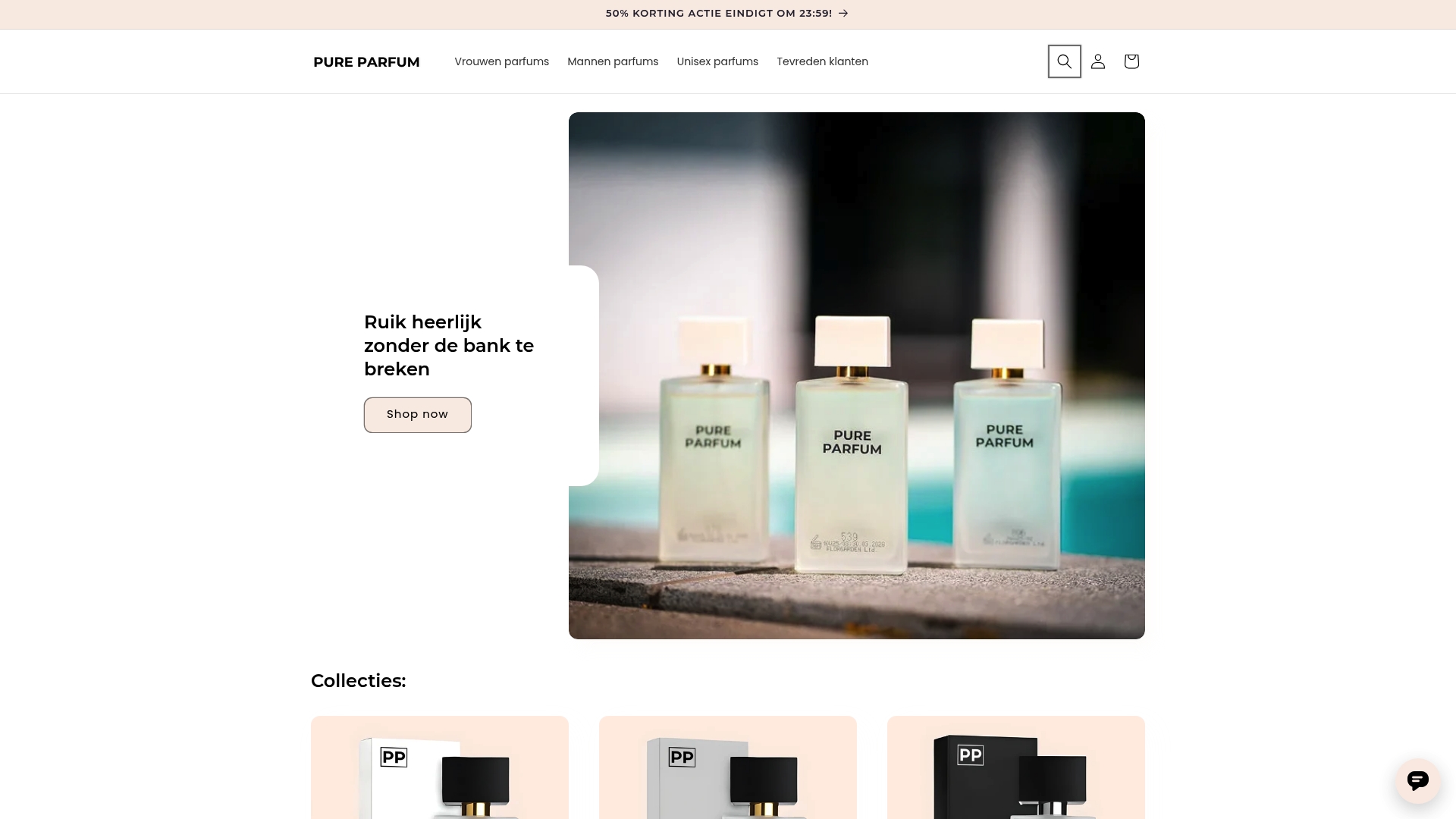
For those who want to smell for themselves after this technical deep dive how transparency and sillage come together in a finished composition:
- Explore the full range of women’s, men’s, and unisex perfumes for fragrances with a concentrated, long-lasting base.
- Discover the Body Care line for fragranced care products that apply the same radiance idea to skin and hair.
- Test multiple formulas at once with the 3x100ml perfume bundle, ideal for experiencing the difference between airy and heavier compositions yourself.
Visit the webshop and discover which fragrance best matches what you’ve learned to recognize in this article.
Sources
- HEDIONE® (Firmenich) marketing sheet / perfumery
- Wallrabenstein et al. — VN1R1 ligand identification and fMRI evidence (PubMed)
- Behavioral studies linking exposure to hedione with changes in reciprocity (PubMed)
- Perfumer & Flavorist — The chemistry and creative legacy of methyl jasmonate and Hedione
- WhatScent — Hedione and the birth of modern fresh perfume
Frequently asked questions
What exactly is hedione and what is it used for?
Hedione is methyl dihydrojasmonate, a synthetic fragrance molecule with a transparent, light jasmine-like profile. It is mainly used to enhance diffusion, radiance, and sillage in perfumes, without making the scent feel heavier or fuller.
What is the difference between standard hedione and Hedione HC?
Standard hedione consists of approximately 90 percent trans and 10 percent cis isomer, while Hedione HC has a cis content of more than 75 percent. HC smells significantly more powerful and more jasmine-like, but it is less stable and requires lower dosages and more careful storage, as technical sources like ScenTree describe.
What scent do people find attractive in perfumes with hedione?
Compositions with hedione are often perceived as fresh, clean, and transparent, with a soft floral background that doesn’t feel overpowering. Research on VN1R1 activation suggests that hedione may trigger a physiological response, but that doesn’t justify a general claim that one specific fragrance universally works as attraction.
Which fragrances with hedione are suitable for a broader audience, including older users?
Transparent, less heavy compositions with hedione are often experienced as accessible and timeless because they don’t smell overwhelming and work well in low to moderate concentrations. That makes them suitable for those who prefer to wear a subtle, long-lasting scent rather than a heavy, intrusive composition.
Is hedione safe to use in perfumes and personal care products?
Within the applicable IFRA guidelines, hedione is considered safe when used at the recommended concentrations for each product category. The exact maximum percentages differ depending on the application, such as fine fragrance, shampoo, or shower gel, and formulators follow the guidelines that apply to that specific product.