


For everyday use, you usually choose an eau de parfum: versatile, with good projection and suitable for most occasions. If you want maximum skin closeness and a scent that is still subtly present hours later, then an extrait de parfum is a better fit. Ultimately, the formula and your own skin matter more than the percentage on the label, so always test first on your skin before making a final choice.
In short:
- The performance of a perfume does not depend only on the oil percentage, but above all on the formula and ingredients.
- An extrait often stays closer to the skin and lasts longer, while an EDP usually projects further and lasts less long.
- When comparing, you should test both variants separately and assess how they develop over time for a fair result.
- Price per milliliter gives more insight than the price per full bottle, because extraits are usually more expensive but you typically need less.
- The right choice depends on whether you want the scent mainly for yourself or whether others need to be able to smell it, as well as the situation and temperature.
Table of contents
- What is eau de parfum (EDP)?
- What is extrait de parfum (parfum or XDP)?
- Key differences: concentration, longevity, projection, price
- How to compare EDP and extrait fairly
- How to choose: decision rules and scenarios
- Application tips and layering for more longevity
- Why the formula matters more than the percentage
- My personal take on extrait and EDP
- Pure Parfum as a practical choice between extrait and EDP
- Frequently asked questions
- Sources
What is eau de parfum (EDP)?
Eau de parfum is the best-selling concentration within perfume and the standard for anyone who wants one bottle that fits everywhere. The oil percentages are typically around 8 to 20 percent, although this varies by house and even by scent within the same brand, as Women’s Health NL also states.
In practice, this means a fragrance that projects well, so it’s also noticeable to others, and usually lasts six to eight hours before the scent becomes less noticeable.
EDP is well-suited for:
- Everyday use at the office or during social occasions
- Moments when you want a clearly noticeable sillage without overwhelming people
- A broader budget per bottle, because EDP is often priced more accessibly than extrait
For most people, eau de parfum is the practical foundation of a fragrance collection, precisely because it strikes a good balance between presence and subtlety.
What is extrait de parfum (parfum or XDP)?
Extrait de parfum, sometimes simply called “parfum” or “XDP,” contains the highest concentration of fragrance oil among the common variants. Typical ranges are between 20 and 30 percent, although some houses report higher or lower percentages depending on the formula, as Women’s Health NL also describes.
This higher oil concentration and lower alcohol percentage result in a fragrance that stays closer to the skin rather than projecting far into the air. Key characteristics of extrait at a glance:
- Less sillage, but often a longer-lasting effect on the skin itself
- A richer, fuller scent character because less alcohol lets the top notes evaporate more slowly
- Often smaller bottles at a higher price per milliliter than EDP
Extrait is not a “better” version of EDP; it’s a different balance between closeness and reach.
Key differences: concentration, longevity, projection, price
The concentration percentage is a useful starting point, but it’s not a guarantee of how a fragrance will behave. According to IFRA, fragrance performance comes mainly from the raw materials and the composition itself, not from the percentage alone. So two extraits from different brands can smell completely different and last differently, even if the oil percentage is similar.
Longevity and projection are also two different properties that are often confused. Longevity refers to how long you can still smell the fragrance on your own skin. Projection, also known as sillage, is about how far the scent spreads so that others can smell it too. An extrait can stay on the skin for hours longer while the sillage is more limited—exactly as The Perfume Society explains: some extraits stay close to the skin, while EDP more often projects further into the room.
Price per milliliter is typically higher for extrait simply because there’s more fragrance oil and less alcohol in the bottle. That can feel unfair until you remember that you often need fewer sprays per application.
What matters in your choice:
- Concentration is a guideline, not a prediction of quality or performance
- Longevity and projection are independent of each other and both deserve attention
- Price per ml tells you more than the price per bottle
How to compare EDP and extrait fairly
A fair comparison requires a consistent method—not a quick sniff in the store. The Perfume Society recommends testing both variants separately and tracking how they develop over time.
- Spray the EDP on one wrist and the extrait on the other—never on the same spot together.
- Write down your first impression right after applying it, the so-called opening phase.
- Smell again after about an hour and pay attention to how the fragrance has developed.
- Later in the day, check the dry-down, the final lingering trace of scent.
- For both variants, evaluate projection, longevity, and how the fragrance changes on your skin.
Avoid the trap of testing immediately on clothing, because fabric holds scent differently than skin and can distort your judgment. Whenever possible, use samples so you can compare multiple formulas side by side without making a big purchase.
Pro tip: Never test more than two or three fragrances per day—your nose gets tired quickly and then you lose the ability to notice subtle differences.
How to choose: decision rules and scenarios
The choice between EDP and extrait mostly comes down to one question: do you want others to be able to smell your fragrance, or do you mainly want to enjoy a scent that stays close to you? Based on that priority, the practical rules follow almost automatically.
- Choose EDP when you work in an office or in enclosed spaces where a strong sillage could be disruptive.
- Choose extrait for an evening out or an intimate setting where you want a personal, skin-close layer of scent.
- Choose EDP when budget per bottle matters more than oil concentration.
- Choose extrait when you’re willing to pay more per milliliter for a richer, longer-lasting experience on the skin.
- On warm days, a lighter EDP often feels more pleasant, because heat enhances the scent release of every concentration.
If you’re still unsure, think in scenarios: an extrait fits a romantic dinner, an EDP fits a busy workday, and for warm summer days a fresher, lower concentration is often more comfortable than a heavy extrait. There is no universally right choice—only a choice that matches the moment and your skin.
Application tips and layering for more longevity
How you apply a perfume affects the final performance at least as much as the concentration itself. Apply fragrance to warm spots such as wrists, the neck, and behind the ears, where body heat supports fragrance development. Never spray directly onto clothing, because stains and color differences can happen with fabrics like silk.
- Use two to four sprays for EDP and one to two for extrait, given the higher oil content
- Combine your perfume with a matching body lotion to help the scent last longer on your skin
- Store bottles cool and out of direct sunlight, because heat and light affect the composition
Layering with a perfumed hand cream in the same fragrance line strengthens the dry-down without you needing extra sprays.
Pro tip: Apply body lotion right before your perfume—on a moisturized skin, fragrance molecules hold on better than on dry skin.

Why the formula matters more than the percentage
Concentration is a handy starting point, but it’s not a guarantee of quality or performance. IFRA confirms that fragrance performance depends mainly on raw materials and composition, and guidelines from IFRA and RIFM determine which ingredients are safe to use and in what proportions.
Another source of confusion: on a label, you often simply see “parfum” in the ingredient list. According to Cosmetics Europe, this term refers to the fragrance composition itself, and it is not proof that you’re dealing with an extrait concentration. So always check the product description rather than only the ingredient list.
What we at Pure Parfum focus on:
- We use a higher oil content than many standard fragrances, aimed at a long-lasting fragrance experience
- All our fragrances are formulated vegan and cruelty-free
- We keep prices low by saving on expensive packaging and marketing, not on fragrance oil
My personal take on extrait and EDP
During the day, I personally always reach for an EDP, simply because I don’t want a heavy scent cloud around me all day during meetings. For an evening out, I choose an extrait instead, because by midnight I still want to be able to smell some of that fragrance on my skin.
What I’ve noticed most: the difference between two extraits from different brands can be bigger than the difference between an extrait and an EDP from the same house.
— J
Pure Parfum as a practical choice between extrait and EDP
If, after testing, you notice that a higher oil concentration and a longer-lasting fragrance experience are the deciding factors, you’ll find an alternative with us that doesn’t require you to compromise on fragrance quality. We work with vegan, cruelty-free perfumes with a higher oil content than many comparable options, without the extra cost of expensive packaging or marketing budgets.
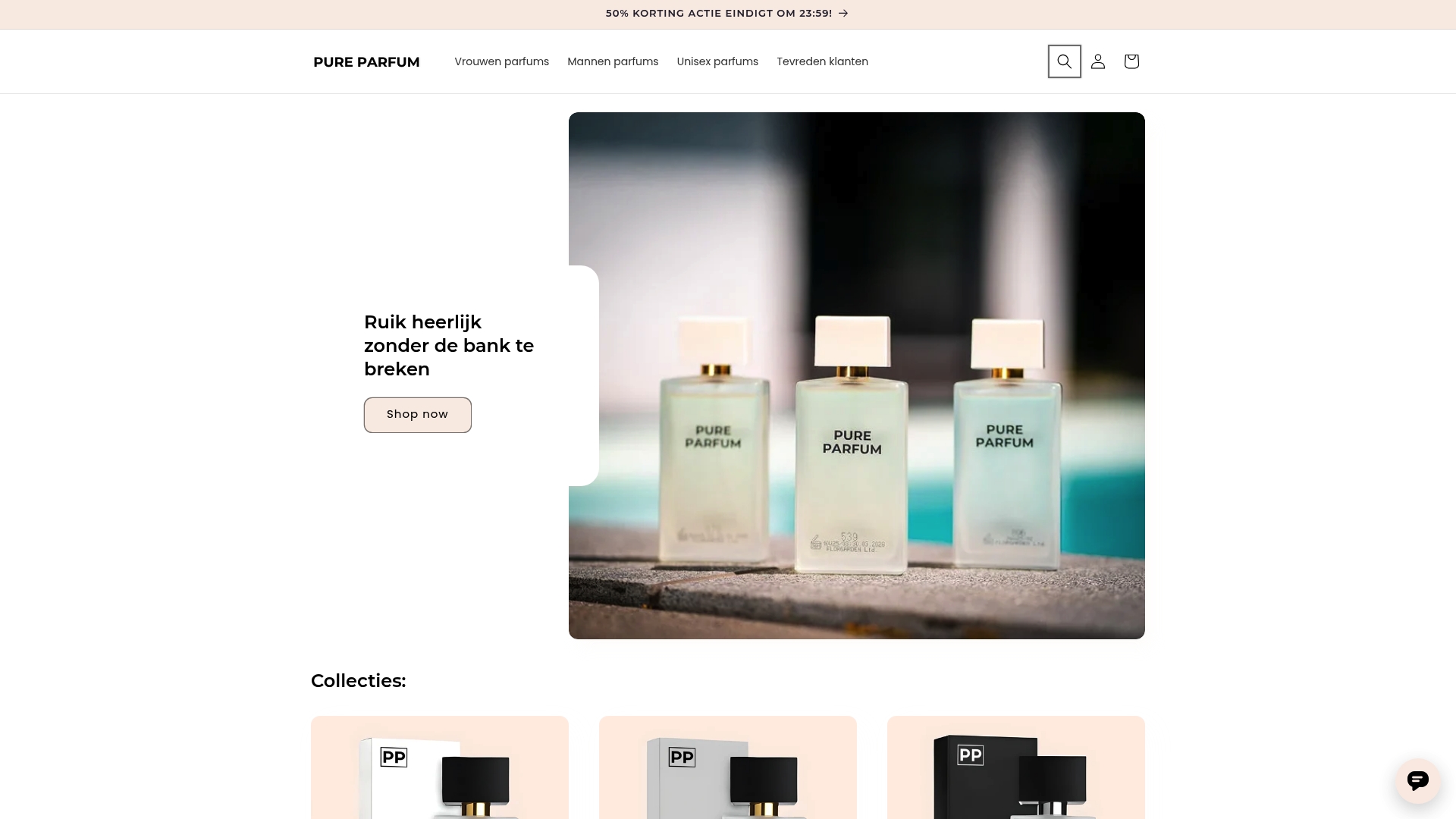
If you’re still torn between variants, a sample set or trial set is an easy way to test which concentration suits your skin. View our full range at Pure Parfum and find the scent that fits your everyday moments.
Frequently asked questions
Which is better, extrait de parfum or eau de parfum?
Neither is objectively better—it depends on whether you prioritize sillage or skin closeness. EDP often works more practically for everyday use, while extrait fits better for moments when you want a personal, long-lasting scent close to your skin, as The Perfume Society also indicates.
What does extrait de parfum mean?
Extrait de parfum, also called parfum or XDP, is the concentration form with the highest fragrance oil content, typically between 20 and 30 percent. Thanks to the low alcohol level, the fragrance stays close to the skin and the top notes evaporate more slowly.
What’s stronger, eau de parfum or parfum?
On paper, extrait de parfum generally contains more fragrance oil than eau de parfum, but “stronger” doesn’t automatically mean it can be smelled from farther away. Extrait often stays on the skin for longer, while EDP tends to project further—so the final experience strongly depends on the formula itself.
What is the price difference between extrait and EDP?
Extrait generally costs more per milliliter because there’s more fragrance oil and less alcohol in the bottle. You partly compensate for this, because with extrait you often need fewer sprays than with an EDP.
How do I test which concentration suits me?
Spray both variants separately on different spots on your skin and compare the opening, after an hour, and the dry-down later in the day. Avoid testing on clothing and, ideally, use samples before you buy a full bottle.
Sources
- Sarah Baker Extrait vs Eau de Parfum (what’s the difference & where to get samples) - The Perfume Society
- Guidelines on fragrance allergens & labelling - Cosmetics Europe
- How is fragrance made - IFRA