

For a weekday or a warm summer day, you usually choose eau de toilette; for an evening out, cold weather, or a perfume you want to smell all day, eau de parfum is the safer choice. The difference lies in the amount of fragrance oil: eau de parfum (EDP) typically contains more of it than eau de toilette (EDT), which means the scent lasts longer and projects more strongly.
There is no universal winner. Your skin type, the climate, and the occasion together determine what works, and that varies from person to person and brand to brand.
- Always test on your skin, not on a fragrance strip. Your own chemistry affects how a perfume develops.
- Can’t decide between two bottles from the same brand? Spray both on different wrists and compare them for hours, not after two minutes of sniffing in the store.
Key takeaways
The right choice between EDT and EDP doesn’t come down to a fixed rule, but to your skin, the occasion, and how long you want the scent to linger.
| Point | Details |
|---|---|
| Concentration determines longevity | EDP typically contains more fragrance oil than EDT, which directly affects how long it lasts. |
| Labels aren’t standardized | Brands decide for themselves how much oil goes into an EDT or EDP, so compare per bottle—not by label. |
| Test on skin, not on a strip | Evaluate a scent after at least twenty minutes and later on your own wrist for a fair picture. |
| Sensitive skin and occasion matter | An EDP often has less alcohol and works better for evenings and cold weather, while EDT suits warmth and daytime. |
| Test small before you buy big | Pureparfum’s vegan sets with a higher oil density let you compare your EDT and EDP at an affordable price before choosing a large bottle. |
Table of contents
- Edt vs edp in numbers: concentration, longevity, and projection
- Why concentration is more than a percentage on the label
- When should you choose EDT and when EDP?
- How to test and use EDT and EDP yourself
- Why our concentrations fit these selection criteria
- What most buying advice overlooks
- Sources
Edt vs edp in numbers: concentration, longevity, and projection
The term “concentration” refers to the percentage of fragrance oil dissolved in a mix of alcohol and water. The higher that percentage, the more intense the scent usually smells and the longer it stays on your skin.
| Feature | Eau de toilette (EDT) | Eau de parfum (EDP) |
|---|---|---|
| Fragrance oil (%) | Typically a lower concentration in EDT | Typically a higher concentration in EDP |
| Longevity | About 3 to 5 hours | Often lasts longer |
| Projection / sillage | Stronger in the first minutes, then fades faster | More subtle when sprayed, but stays noticeable longer |
| Best use case | Daytime, office, warm weather, casual occasions | Evening, parties, cold weather, moments when you want to smell it longer |
| Price per milliliter | Usually lower due to less fragrance oil per bottle | Usually higher, but often with fewer sprays you still get a comparable price per use moment |
These ranges are guidelines, not law. There is no legal standardization for the terms EDT and EDP: each brand can decide how much fragrance oil goes into a bottle with that label. The result is that an EDT from one brand sometimes smells stronger than an EDP from another brand.
What does this mean for you in practice?
- An EDT is usually the better choice if you want to smell fresh without the fragrance filling the whole room—for example at work.
- An EDP works better if you spray in the morning and want the scent to still be there in the evening, without having to reapply.
- Never compare two bottles purely by the label. Smell and test both yourself, because the table is correct on average, but not for every bottle.
Why concentration is more than a percentage on the label
A higher percentage of fragrance oil doesn’t automatically mean a perfume “smells better.” It mainly determines how the scent unfolds and how long you perceive it—not which notes are in it.
Perfume makers often rebuild the entire fragrance pyramid when converting an EDT version to EDP. They adjust the balance between top, heart, and base notes, and sometimes even change which raw materials they use. That’s why an EDT and EDP with exactly the same name can smell quite different. This is exactly why you should test both versions on your skin instead of relying on what you smell on a strip in the store: the higher concentration in the EDP can bring certain notes forward more strongly—notes that barely come through in the EDT.
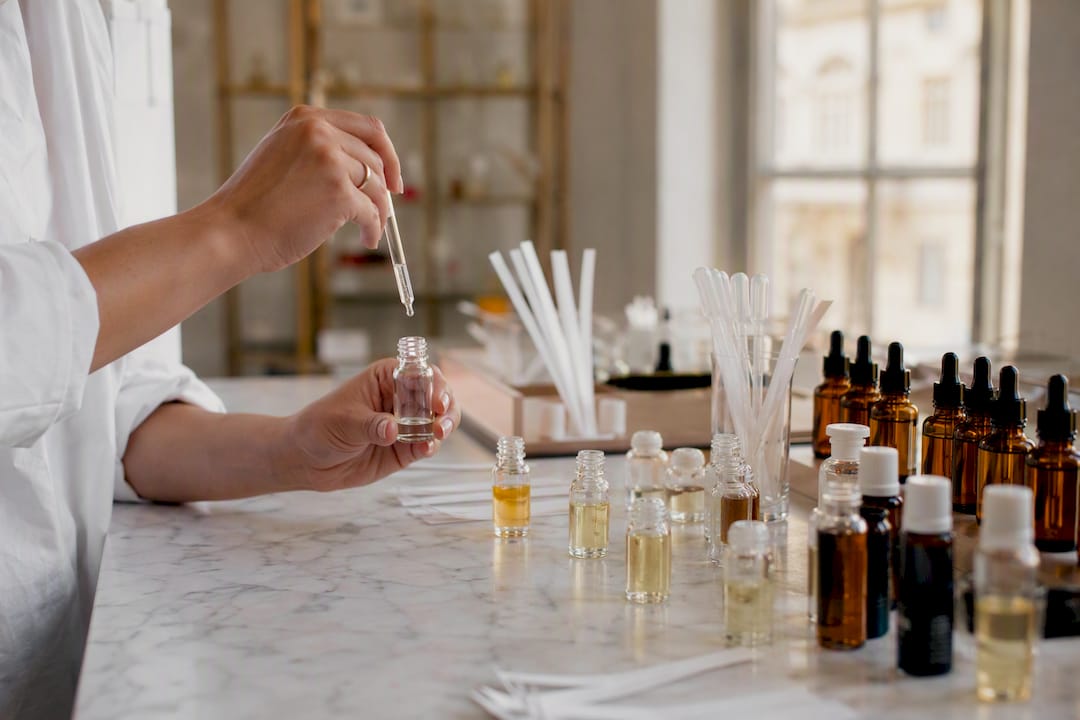
The opening of a fragrance is determined by light, volatile molecules that evaporate quickly. That’s why an EDT can sometimes seem to project more strongly in the first fifteen minutes than an EDP: the top notes jump out immediately, while an EDP builds more slowly and stays deeper in the background once the base notes take over.
Modern perfumers use synthetic molecules to steer projection and longevity, independent of the percentage of fragrance oil. Ambroxan provides a warm, musky depth that lingers on the skin. Iso E Super is almost invisible: it enhances other notes and creates a soft, woody haze around your body without standing out as a scent on its own. An EDT with a lot of fixatives like this can therefore last longer than a cheap EDP without those molecules.
Pro tip: Never smell a perfume only right after spraying it. The first impression is often the top note, and it tells you little about how the scent will be after four hours. Wait at least twenty minutes before forming a real judgment.
When should you choose EDT and when EDP?
The right choice depends on five practical factors: occasion, season, work environment, skin type, and budget. Go through them one by one before you buy a bottle.
- Occasion. For the office, lunch, or a gym session, a lighter EDT works better: it’s present without overwhelming others. For dinner, a party, or a date, an EDP is a better fit, because it stays intensely longer and stands out better in the evening.
- Season. Heat amplifies every fragrance, because warmth makes molecules evaporate faster. An EDT is already enough then. In winter, a scent evaporates more slowly, so an EDP can actually come into its own without becoming overpowering.
- Workplace. Do you work in a small space with colleagues close by, or in healthcare, hospitality, or a store? Then a subtle EDT is often nicer for everyone around you than a heavy EDP that fills the entire room.
- Skin type. If you have dry skin, perfume evaporates faster and you’ll benefit more from the higher oil density of an EDP. If you have sensitive skin that reacts to alcohol, an EDP may be more pleasant, because it typically contains less alcohol than an EDT due to the higher oil concentration.
- Budget. An EDP usually costs more per bottle, but you often need fewer sprays to achieve the same effect. So don’t calculate only the price per bottle—also work out the price per spray or per milliliter for a realistic view of the actual costs.
Still unsure? Ask yourself these questions before you check out:
- Am I wearing this mainly during the day, or especially in the evening and on weekends?
- Do I live or work in an environment where strong scents are disruptive?
- Do I have dry skin that “eats” fragrance quickly, or oily skin that holds scent well?
- Do I want to top up all day, or would I rather spray once and forget it?
- Am I going for the lowest price per bottle, or the lowest price per use moment?
If three or more answers come out as “evening,” “sensitive skin,” or “prefer not to reapply,” then an EDP is the logical choice. If the dominant answers are “daytime,” “warm workplace,” or “budget per bottle,” then an EDT fits you better.
How to test and use EDT and EDP yourself
A fragrance strip in the store tells you almost nothing about how a perfume will smell on you. Paper absorbs scent differently than skin, and it lacks the body heat and skin oils that influence how a fragrance develops.
- Spray the EDT on your left wrist and the EDP on your right wrist, without rubbing them together.
- Smell after ten minutes: this is the top note—volatile and often fresh or citrusy.
- Smell again after two hours: this is the heart of the fragrance, where the perfume’s true identity shows.
- Check after six hours what’s left. This shows which version actually lasts longer on your skin, rather than on paper.
For application itself: spray on pulse points with warmth, such as wrists, neck, and the inside of your elbows. Two to three sprays are often enough for an EDT; with an EDP, one or two sprays can already achieve the same effect. Prefer spraying on skin rather than clothing, because fabric holds scent differently and can even enhance the fragrance in an uncontrollable way.
Pro tip: Apply an unscented or matching body lotion to your skin before you put on your perfume. Moist skin holds fragrance molecules better, so both an EDT and an EDP will noticeably last longer.
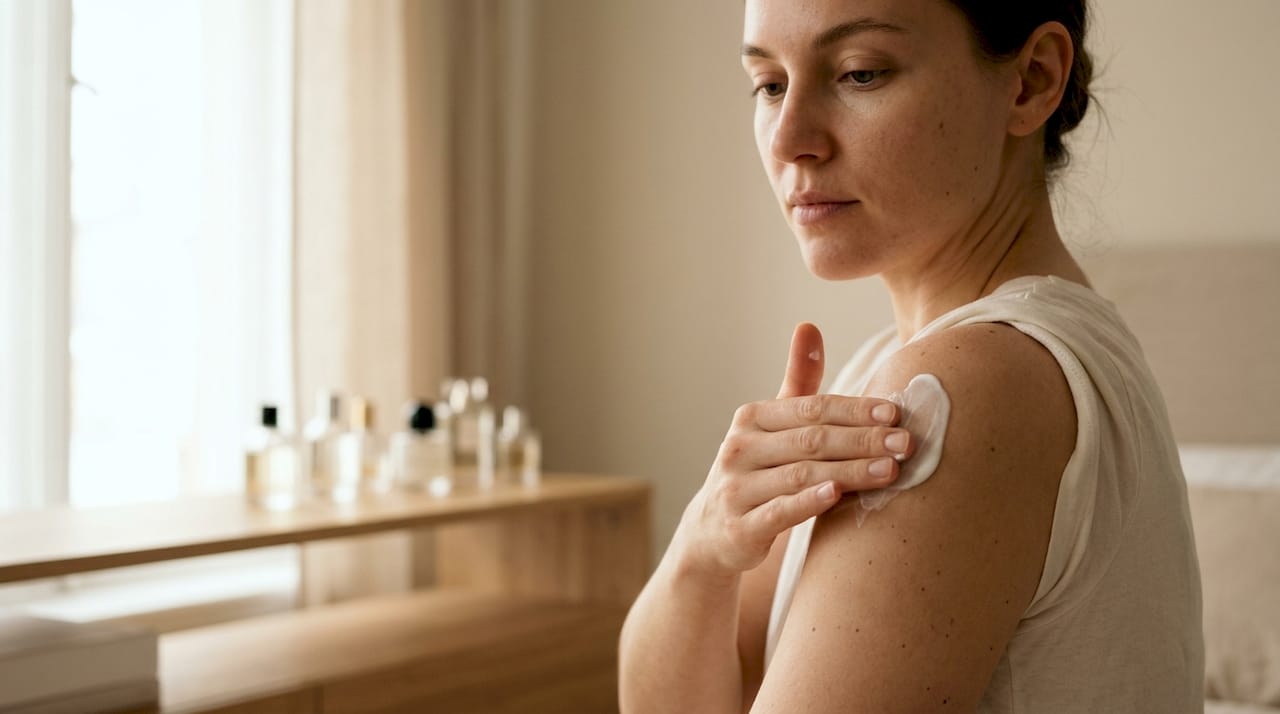
In a warm climate, fragrance evaporates faster, so reapplying after a few hours is normal, even with an EDP. In cold or dry air, you can often get through the whole day with one application—especially with a scent rich in base notes.
Why our concentrations fit these selection criteria
At Pureparfum, the selection criteria in this article—skin type, occasion, budget—come down to one thing: you should be able to feel what suits you without taking an expensive gamble. Our perfumes are made with vegan, animal-friendly fragrance formulas and a higher oil density than many scents in the same price range, which matches the advice from the previous sections exactly: more oil means more longevity and projection.
Because we don’t spend money on heavy packaging or marketing campaigns, you can test our concentrations without the budget you would normally have to spend on a brand’s signature bottle. Our sets in 30ml formats are specifically suited for this: you compare multiple scents or concentrations side by side, exactly as the test protocol from the previous section describes, without immediately needing to buy a large bottle.
We believe you shouldn’t have to spend a hundred euros to find out whether an EDP suits you better than an EDT. You test that best yourself, on your own skin, with a formula that’s honest about what’s in it.
What most buying advice overlooks
Most articles about EDT vs EDP treat it like a fixed decision chart: EDT for daytime, EDP for evenings, done. That’s a useful starting point, but it doesn’t do justice to how much variation exists within each label.
The biggest problem is that people trust the label instead of their own experience. Because there’s no legal standard behind the terms EDT and EDP, you can end up buying an EDT from one brand that smells heavier than the EDP of another brand. If you don’t know that, you draw the wrong conclusion: “EDPs are always too strong for me” or “EDT never lasts on me.” Often the issue isn’t the concentration, but the specific bottle.
What I’d recommend to readers: stop looking for the “right” concentration in general. Look for the right formula for your skin, and use EDT vs EDP only as a rough guideline—not as a final verdict. Test first cheaply and in small sizes, then invest in a large bottle.
Practical next step: try a Pureparfum sample set
Can’t decide between EDT and EDP? You won’t solve it by reading another article—you solve it by comparing two bottles on your own skin. That’s what Pureparfum is built for: our 30ml x4 perfume set lets you try multiple scents and concentrations side by side, for a fraction of the price of one full-size bottle from a luxury brand.
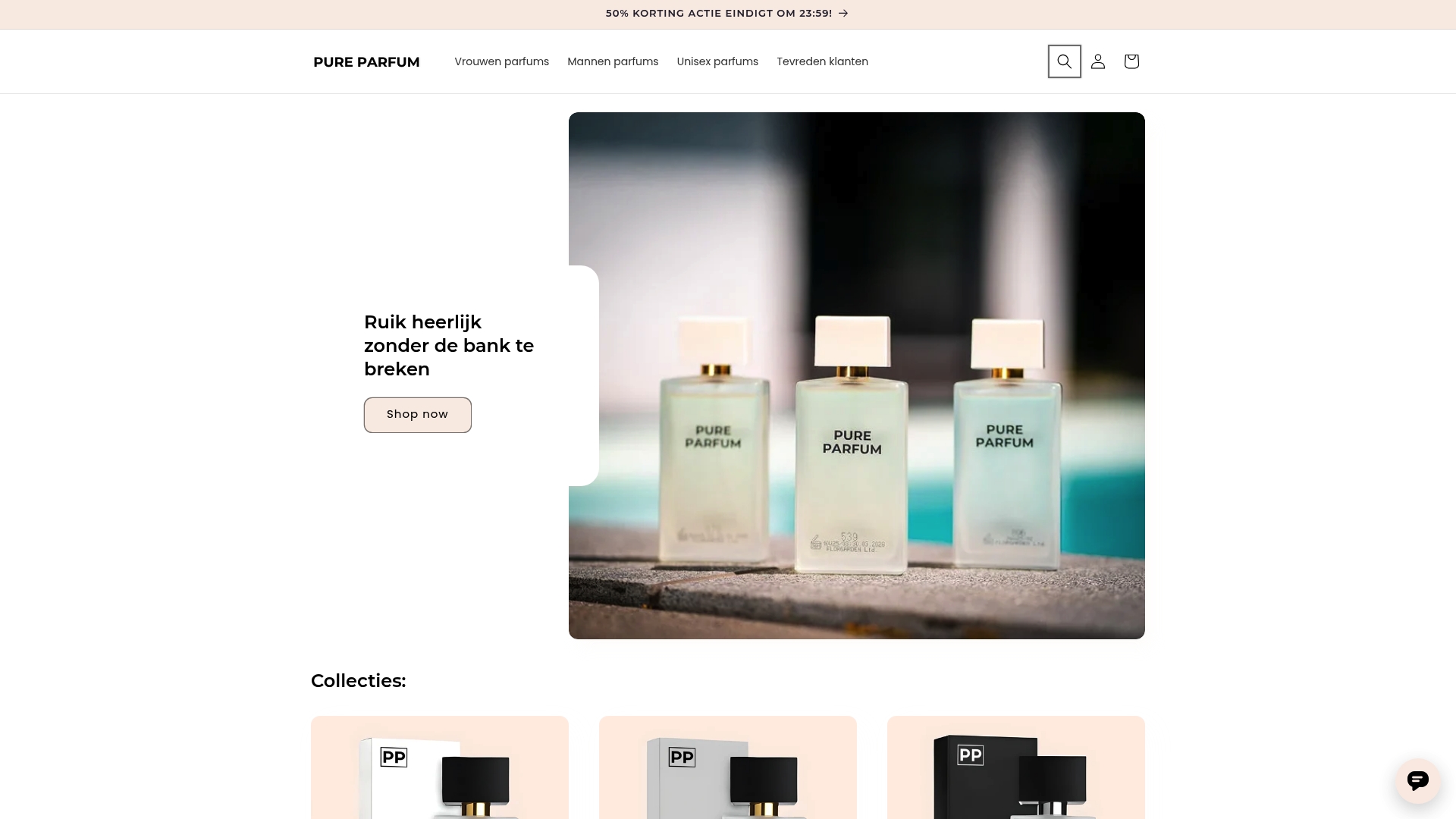
Each fragrance in our collection is vegan, animal-friendly, and made with a higher oil concentration than you’re used to in this price segment—exactly the kind of long-lasting scent experience this article is about. Want to go bigger right away once you’ve found your favorite? Then the 3x100ml perfume bundle is the logical next step. Looking for a gift idea for someone else who’s still testing? A compact sample set is often more fun than one big bottle. Check out the sets and order your first sample set today via Pureparfum.
Sources
- Eau de Parfum vs Eau de Toilette: The Real Differences - GlamGeek
- Eau de Parfum vs Eau de Toilette: The Difference - ScentVerdict
- Eau de Parfum vs Eau de Toilette vs Parfum | YSL Beauty