

No, “Intense” is not automatically the same as a standard EDP: it can be a real concentration boost, but it can just as easily be an adapted fragrance formula. For most people, the rule of thumb is: choose Intense for long days, evening wear, or cold weather, and stick to a regular EDP when you want versatility and a fresher opening. Always test it yourself on your skin, because only that gives certainty.
In short:
- A higher oil concentration in a perfume does not automatically mean it is stronger; “Intense” can be either a reformulation or simply a simpler increase in oil concentration.
- “Intense” is not protected and can have different meanings; always check the oil percentage or compare the scent itself directly alongside a regular EDP.
- Longevity and scent projection do not depend only on concentration, but also on skin chemistry, ambient temperature, and how much you spray.
- Choose an EDP in the daytime and an “Intense” variant in the evening or in cold weather, depending on the projection you want.
- Test yourself by smelling at the same time on your wrist and again after a few hours, and don’t rely on the name alone or on how it smells in another situation.
Table of contents
- What exactly is an Eau de Parfum (EDP)?
- Does ‘Intense’ mean a higher concentration or something else?
- Why do two similar perfumes smell different on you?
- When do you choose an EDP and when an Intense?
- How to test EDP and Intense fairly side by side
- Why Pure Parfum thinks this explanation is important
- Discover the difference for yourself with a Pure Parfum sample set
- Sources
- Frequently asked questions
What exactly is an Eau de Parfum (EDP)?
An Eau de Parfum typically contains more fragrance oil than an Eau de Toilette. Extrait or Parfum goes even further, often toward 20 to 30%.
That sounds clearly defined, but it isn’t. There is no legally fixed percentage for what name a brand may put on the bottle. So two EDPs from different houses can measurably smell different and last for different lengths of time, even if they have the same label.
What does that mean for you in practice?
- An EDP generally lasts longer than an EDT, often by a few hours, although that can vary.
- The sillage, the scent cloud around you, is usually stronger with an EDP than with lighter concentrations.
- Guidelines are a starting point for managing expectations, not a guarantee of performance.
Does ‘Intense’ mean a higher concentration or something else?
That’s where the biggest misunderstanding happens. “Intense” is not a protected term and not an established concentration category like EDT or EDP. Brands use the word in two very different ways, and it is not mandatory anywhere on the label to state which of the two it is.
The first meaning is simple: a higher oil concentration in exactly the same fragrance composition. You smell the same perfume, but fuller, with more projection. The second meaning is more significant: the brand fully reformulates the scent. Think less citrus in the opening, more wood or vanilla in the base—an entirely different feel while the name stays almost the same. Perfume experts call that a flanker: a new interpretation of the same theme, not simply a stronger version.
What this gives you, specifically:
- An Intense with a higher concentration smells noticeably familiar, but fuller and often lasts longer.
- An Intense as a flanker can open completely differently, with a different character in the heart and base.
- Some Intense variants get close to the oil concentration level of Extrait de Parfum; others stay close to a regular EDP with just a bit more depth.
Pro tip: Never go by the name alone. Ask in the store for the concentration percentage, or look it up from the brand, before assuming that ‘Intense’ is automatically stronger or better for you.
Why do two similar perfumes still smell different on you?
Concentration is only one variable. Skin chemistry, climate, and how much you spray determine at least as much about what you ultimately smell.
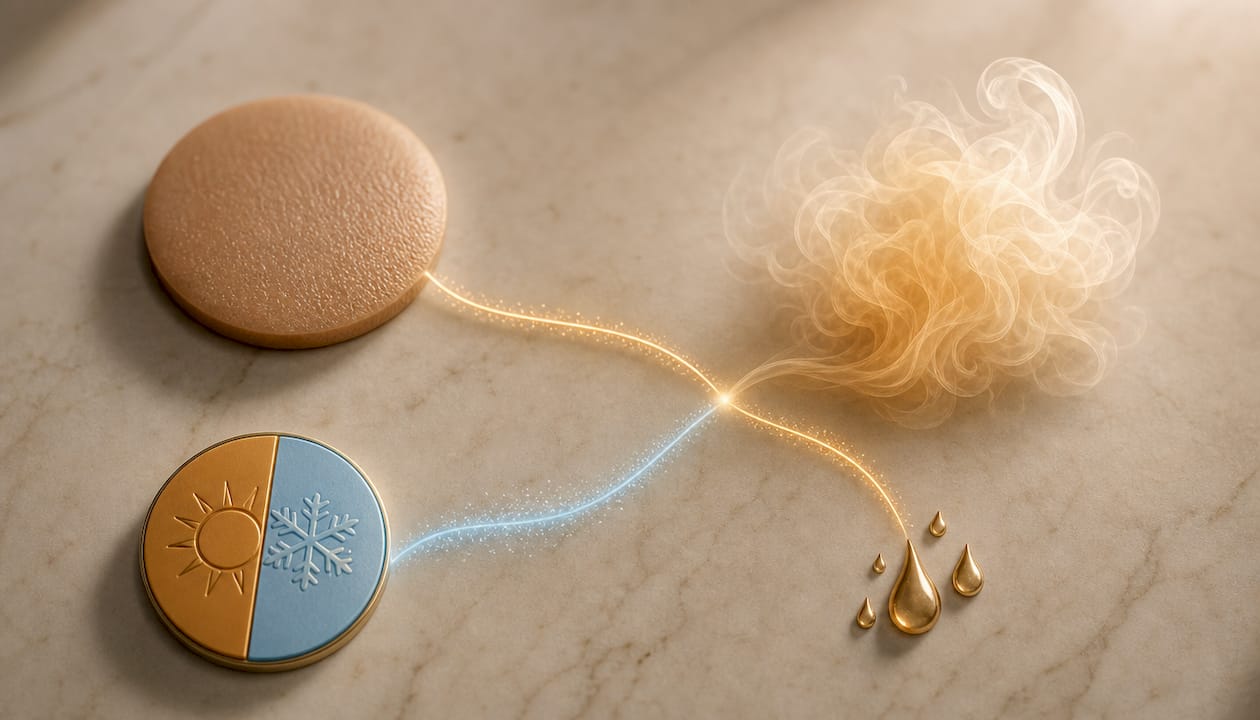
The volatility of the notes used also plays a role. Citrus and light aldehydes evaporate quickly, while woods and musk linger much longer. That’s why the same perfume smells different on two people and lasts differently, regardless of what’s written on the bottle.
Some factors that steer the outcome:
- Warm, humid environments strengthen the noticeable projection of both concentrations.
- A dry skin holds scent molecules less well than oily skin.
- The amount of product you apply often affects the duration more strongly than the concentration percentage itself.
A guideline on the packaging is therefore never a guarantee. It’s an indication your own skin may contradict.
When do you choose an EDP and when an Intense?
Your choice depends mainly on the situation, not on which name “sounds better.”
- During the day at work: choose a regular EDP. In general, it is less overpowering for colleagues in a small space.
- Evening or party: an Intense variant really shines here, with more projection that lasts throughout the evening.
- Travel or cold weather: cold dampens scent diffusion, so an Intense compensates for that loss of sillage well.
- Warm summer days: dial it back. Two sprays of an Intense are often enough, whereas with a lighter EDP you might still use three to four sprays without it becoming overpowering.
Spray preferably on your wrists, neck, and the inside of your elbows, where body heat slowly builds up the scent.
How to test EDP and Intense fairly side by side
Do you want to know for yourself instead of trusting a label? Do this test.
- Spray the EDP on your left wrist and the Intense on your right wrist, both at the same distance from your skin.
- Don’t rub it in; that breaks the fragrance structure and distorts the result.
- Smell again after 30 minutes: check the differences in the opening and the first impression of development and sillage.
- Smell again after four to six hours and note which variant is still present and whether it remains pleasant or becomes too heavy.
Pro tip: Test it once on a piece of clothing too. Fabric holds scent differently than skin, and that difference is exactly why a perfume feels different in the store than an hour later on your sweater.
Why Pure Parfum thinks this explanation is important
Every brand fills “Intense” in differently, and that’s exactly why at Pure Parfum we don’t ask you to take our word for it. Test for yourself, on your own skin, in your own situation. Our fragrances are vegan, cruelty-free, and made with a higher oil concentration than many other affordable perfumes, so long-lasting scent experience doesn’t have to be a luxury. A sample set is the cheapest way to discover which concentration suits you before you buy a full bottle.
— J
Discover the difference for yourself with a Pure Parfum sample set
At Pure Parfum, you pay for fragrance oil, not for an expensive bottle or a marketing campaign. This allows customers to get a higher concentration at home than with some other brands, without sacrificing the scent experience.
Want to experience for yourself whether a higher concentration is right for you, without buying a full bottle right away? The 30ml x4 perfume set is made for that: four different fragrances in a small format, ideal for running the test from this guide literally on your own wrists. If you like a scent after wearing it for a few days, switch to a full bottle via the 100ml x3 perfume set. Order a sample set and compare today which concentration best fits your skin and daily routine.
Sources
- Difference between perfume types: EdT, EdP, EdC & Extrait explained 2026
- Difference between perfume types: EdT, EdP, EdC & Extrait explained 2026
Frequently asked questions
What is the difference between perfume and Intense perfume?
“Parfum” or Extrait usually has the highest concentration of fragrance oil, often above 20%. Intense is not a fixed category: it may approach that concentration, but it can also simply be a reformulation of an existing EDP without a guaranteed increase in strength.
What’s stronger: EDP or perfume?
Extrait de Parfum (often briefly called “parfum”) typically contains more fragrance oil than an EDP and therefore, on average, lasts longer. An Intense EDP can sometimes sit in between, but that varies by brand and formula.
What does an Intense variant smell like compared to the standard version?
It depends entirely on the brand: some Intense versions smell identical but fuller; others have a noticeably different note structure, with more wood, spices, or vanilla in the base. Always smell both versions side by side before making an assumption.
What exactly is an EDP?
The exact percentage is an industry habit, not a legal standard.
How do I choose between EDP and Intense at Pure Parfum?
Choose a regular EDP for everyday, versatile wear, and an Intense variant for evenings or colder months when you want more projection. A Pure Parfum sample set lets you test both categories side by side without a big investment.