

Eau de parfum lasts longer because it contains more perfume oil: about 15 to 20% versus 5 to 15% for eau de toilette. On the skin, that translates into a clear difference in longevity: EDT generally lasts 3 to 5 hours, while EDP lasts between 6 and 8 hours.
To decide quickly:
- Evening, winter, an occasion where you need it to last without reapplying: choose an eau de parfum.
- Office day, summer, wanting something light: eau de toilette is more than enough.
- Tight budget or you like to change your perfume often: EDT costs less to produce and is easy to reapply.
The rest depends on your skin, the climate, and the fragrance itself. We break everything down below.
Key points
The difference between eau de toilette and eau de parfum comes mainly from the concentration of perfume oil, which determines longevity, olfactory richness, and the price per use.
| Point | Details |
|---|---|
| Concentration | EDP contains 15 to 20% perfume oil, compared with 5 to 15% for EDT. |
| Longevity | EDP lasts an average of 6 to 8 hours, while EDT lasts more like 3 to 5 hours. |
| Occasion | Reserve EDP for evenings and winter; EDT for everyday wear and summer. |
| Reliable test | Spray on the skin and judge after 2 to 4 hours—never based on the very first impression. |
| Test before buying | Pureparfum discovery sets let you compare EDT and EDP without investing in a large bottle. |
Table of contents
- What is eau de toilette?
- What is eau de parfum?
- EDT or EDP: what does the comparison table say?
- How to choose between EDT and EDP in-store?
- Does the same fragrance smell different in EDT and EDP?
- How to test EDT and EDP at Pureparfum?
- What the numerical comparison really reveals
- Why test before buying in a large size?
- Frequently asked questions about eau de toilette and eau de parfum
- Sources
What is eau de toilette?
Eau de toilette (EDT) contains between 5 and 15% perfume oil diluted in alcohol, according to the guidelines cited by Typology. This lighter concentration means that top notes, citrus, aromatic herbs, and fresh accords dominate the olfactory experience during the first few minutes. The fragrance then evaporates more quickly, which limits longevity but makes EDT pleasant to wear without becoming overpowering.
Key statistic: on average, eau de toilette lasts 3 to 5 hours on the skin, compared with 6 to 8 hours for eau de parfum.
In practice, EDT is a great fit for:
- everyday office wear, where an overly strong scent bothers others;
- hot days, when heat increases diffusion and strong concentrations can feel overwhelming;
- people who like to reapply their perfume during the day without worrying about it becoming too much.
For application, two to three sprays on pulse points (wrists, neck, inner elbows) are enough.
Pro tip: in-store, never judge an EDT by the first five minutes. Spray, wait two to three hours, then compare what’s left on your skin to what you smelled at application. That’s often when you discover whether the perfume really suits you.
What is eau de parfum?
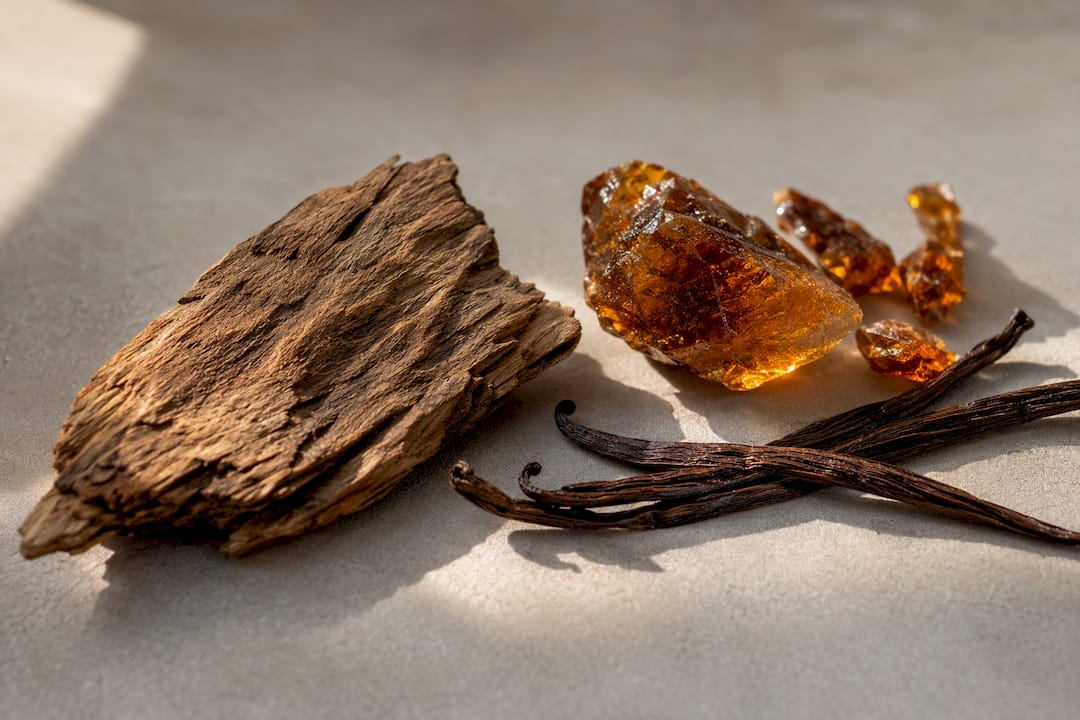
Heart and base notes—woods, amber, musks, vanilla—have more material to express themselves, and the sillage evolves more noticeably between the opening and the final drydown. That richness is why an EDP often seems more “dense” or more sophisticated than an EDT with the same name.
Key statistic: eau de parfum lasts an average of 6 to 8 hours, compared with 3 to 5 hours for eau de toilette, according to Vogue UK.
EDP naturally shines for:
- evenings and events where you don’t want to think about your perfume all night;
- winter, when the cold reduces diffusion and makes a stronger concentration welcome;
- long days when you can’t reapply—such as a business trip.
One or two sprays are usually enough, on the wrists and behind the ears. There’s no need to multiply application points—the concentration does the work.
Pro tip: an EDP often contains less alcohol than an EDT, but the higher density of essential oils increases the risk of a skin reaction. Test on a small area before applying a larger amount, even if you’ve tolerated other perfumes without any issues.
EDT or EDP: what does the comparison table say?
The ranges below are indicative.
| Criteria | Eau de toilette (EDT) | Eau de parfum (EDP) |
|---|---|---|
| Perfume oil concentration | 5 to 15% | 15 to 20% |
| Average longevity | 3 to 5 hours | 6 to 8 hours |
| Projection / sillage | Subtle, quickly gets close to the body | More noticeable, lasts over time |
| Price / perceived value | Generally cheaper to buy | More expensive, but fewer reapplications needed |
| Best use | Day, summer, office | Evening, winter, special occasions |
| Application and reapplication | 2 to 3 sprays, easy to reapply | 1 to 2 sprays, rare reapplications |
Some nuances to keep in mind:
- oily skin holds onto perfume better than dry skin, regardless of concentration;
- humidity and heat speed up diffusion, which can make an EDT seem more long-lasting in summer than in a lab;
- the amount sprayed affects both perceived longevity and the concentration itself.
Ulta Beauty’s guide also reminds us that cost per use matters as much as the listed price: an EDP that costs more but lasts twice as long can sometimes work out cheaper per application than an EDT you keep repurchasing.
How to choose between EDT and EDP in-store?
Follow this method instead of relying on your first impression at the touch card:
- Define the occasion. Everyday office wear points you toward EDT; a wedding or an important dinner pushes you toward EDP.
- Identify the olfactory family. Woody or oriental perfumes gain depth with a higher concentration, unlike fresh colognes that sometimes lose their lightness in EDP.
- Consider your skin and the climate. Dry skin and cold weather require a higher concentration to achieve the same result as oily skin in the heat.
- Test on your skin, never on paper. Spray on your wrist, not on a card, because your personal chemistry changes everything.
- Wait two to four hours before judging. The opening tells you nothing about the drydown, and it’s often the drydown you’ll wear the longest.
- Decide based on your real preferences. If you like what you smell in the first twenty minutes, EDT will suit you. If it’s the end-of-day evolution you enjoy, choose EDP.
When it comes to budget, EDT lets you experiment with more fragrances without breaking the bank, while EDP requires an investment designed to last.
This layering works well as long as you don’t overdo it. Two to three sprays total are enough.
Does the same fragrance smell different in EDT and EDP?
Yes—and not only because of concentration. Perfumers sometimes rebalance the notes between the two versions rather than simply diluting the same formula. An EDT may highlight citrus and green notes, while the EDP of the same name emphasizes woods or vanilla in the base. Result: two bottles with the same name can deliver noticeably different olfactory experiences.
- Spray the EDT on one wrist and the EDP on the other.
- Evaluate the opening at 15 minutes, the heart at 2 hours, and the drydown at 4 hours.
- Avoid testing more than two or three perfumes in a row: your nose saturates quickly and your judgment is skewed.
This direct comparison remains the only reliable way to know which of the two versions truly suits you, rather than relying on generalities.
How to test EDT and EDP at Pureparfum?
At Pureparfum, we offer several formats designed specifically for this comparison step, without pushing you to buy a large bottle before you’re sure about your choice.
- The 30 ml x4 discovery set is ideal if you’re still torn between several olfactory families and want to test in real conditions over multiple days.
- The 100 ml x3 set is for those who already have a fairly clear idea and want a quantity that will last.
- Before testing, clean skin gives more reliable results: the perfumed shower gel neutralizes residues that often distort the perception of a new fragrance.
Our vegan perfume oils are not tested on animals, a point many environmentally conscious customers look for without always finding it elsewhere at a comparable price. The composition of each fragrance is listed on its product page, so you can check the olfactory families yourself before purchasing.
What the numerical comparison really reveals
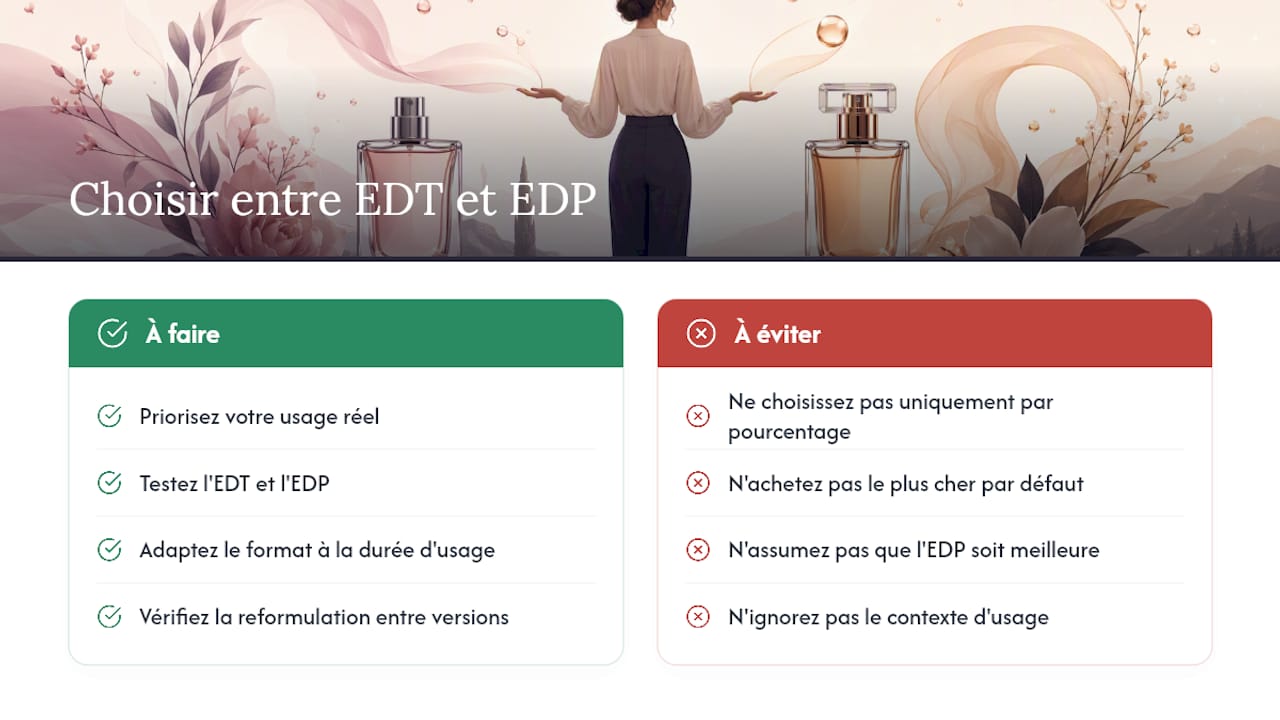
The debate between EDT and EDP is often framed as a quality choice: EDP would be “better” because it’s more concentrated. That’s a lazy interpretation. The real question isn’t which one is superior, but which one matches your actual use: nobody needs eight hours of sillage for a ten-hour morning meeting, and conversely, an EDT that fades after three hours ruins an evening that lasts six.
What guides often forget to say is that reformulation between versions sometimes changes the experience more than the concentration itself. You might prefer the EDT of a perfume and dislike its EDP simply because the perfumer has rebalanced the notes differently. That’s why it’s worth testing both rather than choosing based solely on the displayed percentage.
First, prioritize your real-life use—not the technical sheet. The most expensive format is never automatically the best choice; it’s only the best fit for certain specific situations.
Why test before buying in a large size?
At Pureparfum, we believe a perfume should be purchased after you’ve truly worn it—not just after you’ve smelled it on a card in a store.
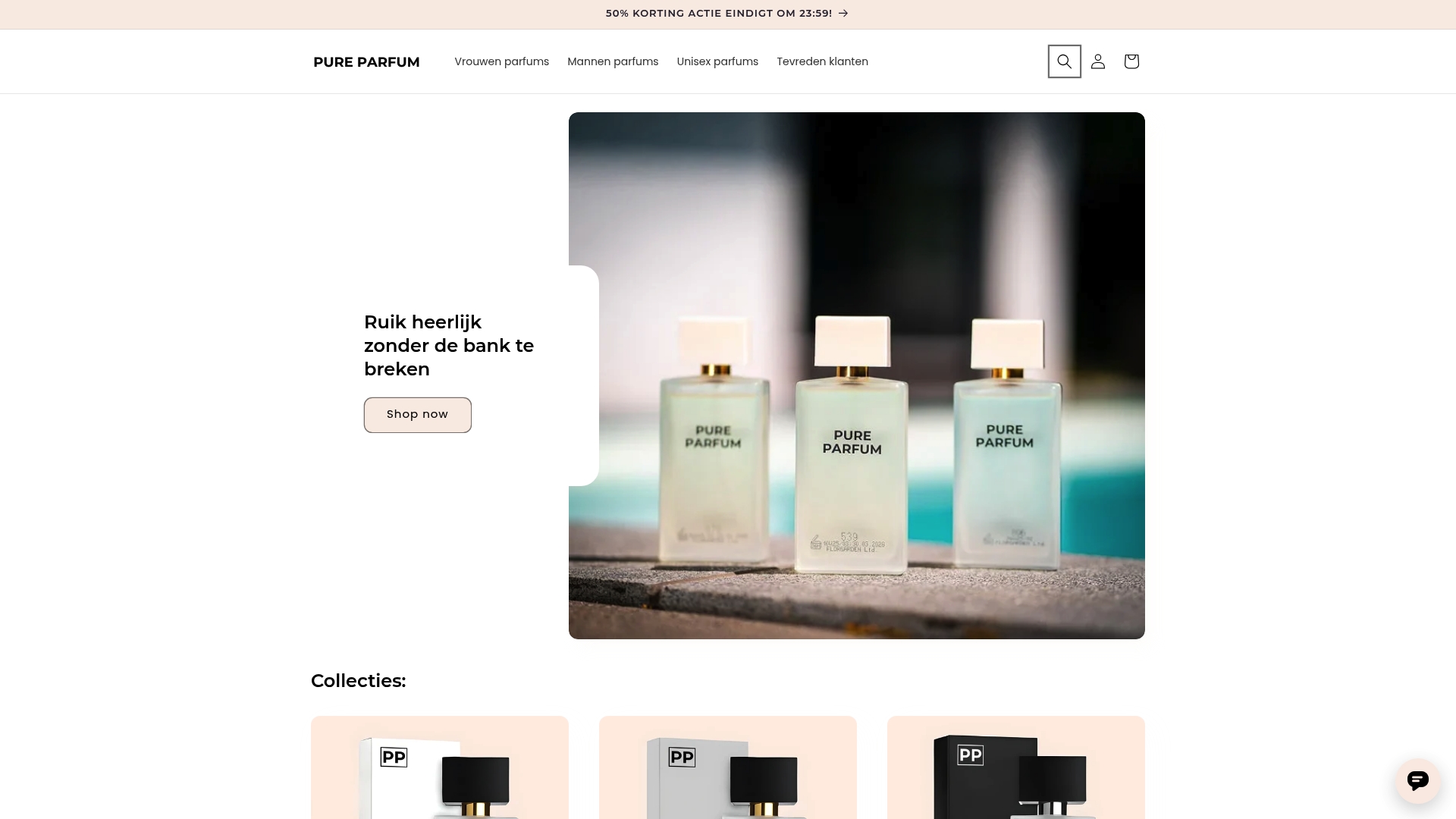
Our vegan perfume oils, not tested on animals, are sold without the marketing and packaging costs that inflate the price of big brands. You get a comparable olfactory experience for a fraction of the price. If you’re torn between several formats or fragrances without committing to a large bottle, the 3x100 ml set is the most cost-effective option if you already know you’ll wear multiple perfumes in rotation. Browse our selection and choose the set that matches your current indecision.
Frequently asked questions about eau de toilette and eau de parfum
Is eau de parfum better than eau de toilette? Neither is better in absolute terms. EDP lasts longer and offers more depth, but EDT is better suited for everyday wear, warm weather, and a tighter budget.
Which format lasts the longest?
Can I wear an EDT in the evening? Yes, as long as you spray more or reapply during the evening, since its shorter longevity doesn’t always cover a long event.
Does the price always justify choosing EDP? Not always. If you reapply easily during the day, a cheaper EDT can end up costing the same per use as an EDP.
How can I tell if a fragrance suits me before buying a large bottle? Test on your skin, wait several hours, and choose a discovery format like a set of multiple miniatures to compare several options without investing in a large amount.
Sources
- Eau de parfum vs eau de toilette — Vogue UK
- Eau de parfum, Cologne, toilette: the perfume guide — Typology
- Eau de Parfum vs Eau de Toilette — Hindustan Times