


Parfum, also known as extrait de parfum, contains 20 to 40% fragrance oil and can last as long as 8 to 24 hours. The higher the concentration, the longer it lasts, the richer the projection, and the slower the fragrance unfolds.
If you want the scent to last the whole evening without having to reapply, choose parfum. If you need a lighter daytime option that you can re-spray without worry, go for EDT or eau de cologne.
- Parfum (extrait): 20-40% oil, 8-24 hours of wear, lowest consumption per application.
- Eau de parfum (EDP): 15-20% oil, a versatile choice for both day and evening.
- Eau de toilette (EDT) and eau de cologne: 5-15% and 2-5%, ideal for warm weather and frequent wear.
Key takeaways
Choosing between parfum, eau de parfum, and eau de toilette depends mainly on the concentration of fragrance oil, which determines longevity, projection, and the right occasion to wear it.
| Point | Details |
|---|---|
| Concentration determines longevity | Parfum has 20-40% oil and lasts 8-24 hours, EDP has 15-20% with 5-8 hours of wear, EDT has 5-15% with 3-5 hours. |
| Alcohol affects projection | A higher alcohol content in EDT creates a faster first impression, but the fragrance also disappears more quickly. |
| Sensitive skin and alcohol | A stronger concentration with less alcohol is often gentler for sensitive skin; a patch test is always necessary. |
| Test both versions on your skin | Reformulations between concentrations can change the character of the fragrance, not just its intensity. |
| Pure Parfum as a practical choice | Vegan, cruelty-free fragrances with a high oil concentration for longer wear and lower consumption per application. |
Contents
- Eau de parfum vs parfum: quick comparison of concentration and longevity
- What is parfum (extrait de parfum) and who is it for?
- What is eau de parfum and why most people reach for it first
- Eau de toilette and eau de cologne: when a lighter version is enough
- How concentration changes the way a fragrance is perceived on skin
- How to choose a fragrance by occasion, climate, and skin
- Does the same fragrance smell different in parfum and in EDT?
- Why choose fragrances from Pure Parfum
- Sources
Eau de parfum vs parfum: quick comparison of concentration and longevity
Before you get into the details, just look at the numbers. Differences between fragrance types aren’t just cosmetic—they’re chemical, and they show on the skin during the first hour of wear.
| Type | Concentration (%) | Typical longevity | Projection | Price level | Best use | Impact on sensitive skin |
|---|---|---|---|---|---|---|
| Parfum / extrait | 20-40% | 8-24 hours | Close to the skin, rich | Higher | Evening, winter, special occasions | Less alcohol, usually gentler |
| Eau de parfum (EDP) | 15-20% | 5-8 hours | Balanced, medium sillage | Medium to higher | Day and evening wear | Medium alcohol content |
| Eau de toilette (EDT) | 5-15% | 3-5 hours | Light, fresh | Lower | Summer, work, sport | Higher alcohol content, can dry out |
| Eau de cologne / aftershave | 2-5% | 1-3 hours | Very light | Lowest | Quick refresh, reapplication | Highest alcohol proportion |
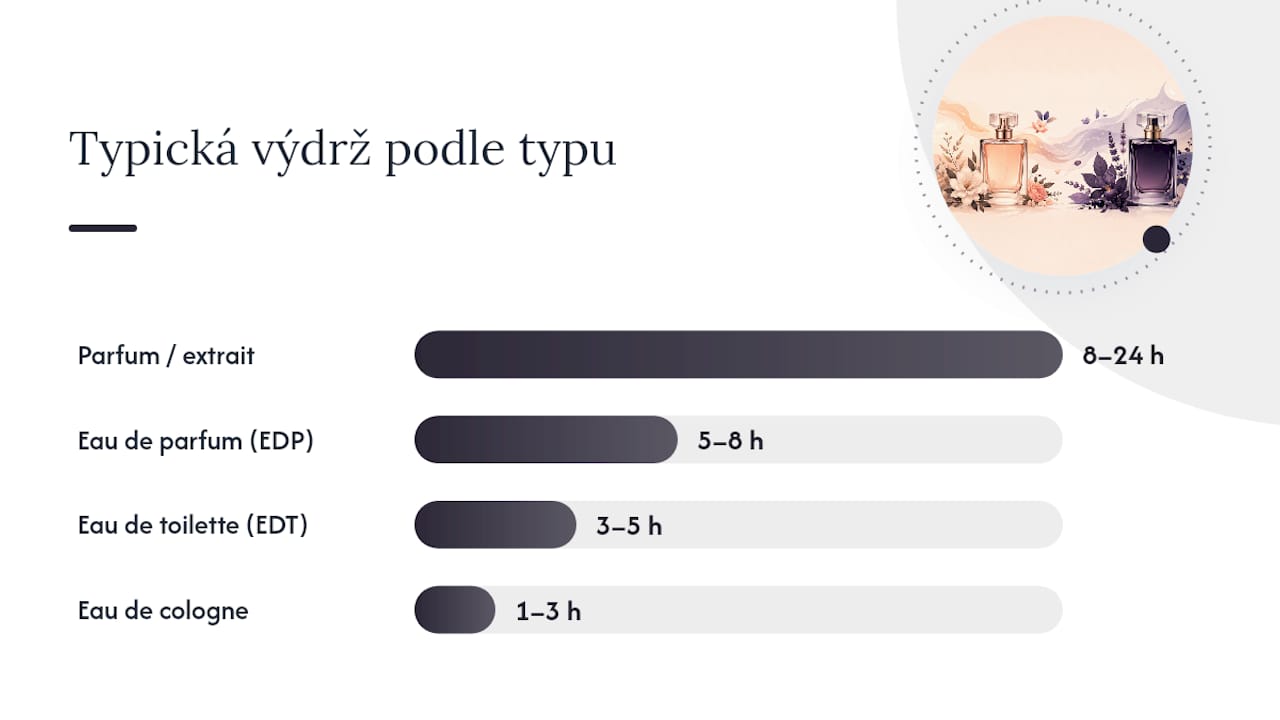
These are typical ranges, not fixed guarantees. The quality of the ingredients and any reformulation can shift longevity by hours up or down, regardless of the percentages on the label.
What is parfum (extrait de parfum) and who is it for?
Parfum is the strongest format you typically buy on the market. A concentration of 20 to 40% fragrance oil means the scent develops more slowly on the skin, and the base notes—woodsy, amber, or musky tones—take center stage only after dozens of minutes.
- The fragrance sits close to the body and doesn’t spread throughout the whole room.
- Note development is slower, so the first impression is gentler than with EDT.
- Just 1 to 2 sprays or a very light mist is enough—more is unnecessary.
Pro tip: Parfum has a lower alcohol content than EDT or cologne, so it’s often gentler on sensitive skin. Still, always do a patch test on the inner side of your wrist.
What is eau de parfum and why most people reach for it first
Eau de parfum is a balanced choice that fragrance houses design today as the reference version of a scent. A concentration of 15 to 20% provides enough strength for the fragrance to last through the whole workday, while still wearing well in enclosed spaces.
- A higher alcohol content speeds up the first projection, so you’ll smell the top notes right after spraying.
- The heart and base remain noticeable even after several hours.
- Two to four sprays on pulse points (wrists, neck, décolletage) are enough—over-spraying in public will likely backfire.
EDP works well in cooler weather and in the evening, when you want the fragrance to be noticeable but not aggressive.
Eau de toilette and eau de cologne: when a lighter version is enough
Eau de toilette has a concentration of 5 to 15% and lasts roughly 3 to 5 hours. Both variants rely on fresh, citrus, or light floral accords that dissipate quickly and don’t cling to the space.
- EDT is ideal for warm weather, when stronger parfum can feel heavy and quickly become tiresome.
- A lower price and a lighter character make EDT a practical choice for the office or for sport.
- Cologne is worth it where you’ll be reapplying the scent several times a day—such as after working out.
If you work in an open-plan office or are in close contact with clients, EDT won’t overwhelm you—and it won’t overwhelm the people around you either.
How concentration changes the way a fragrance is perceived on skin
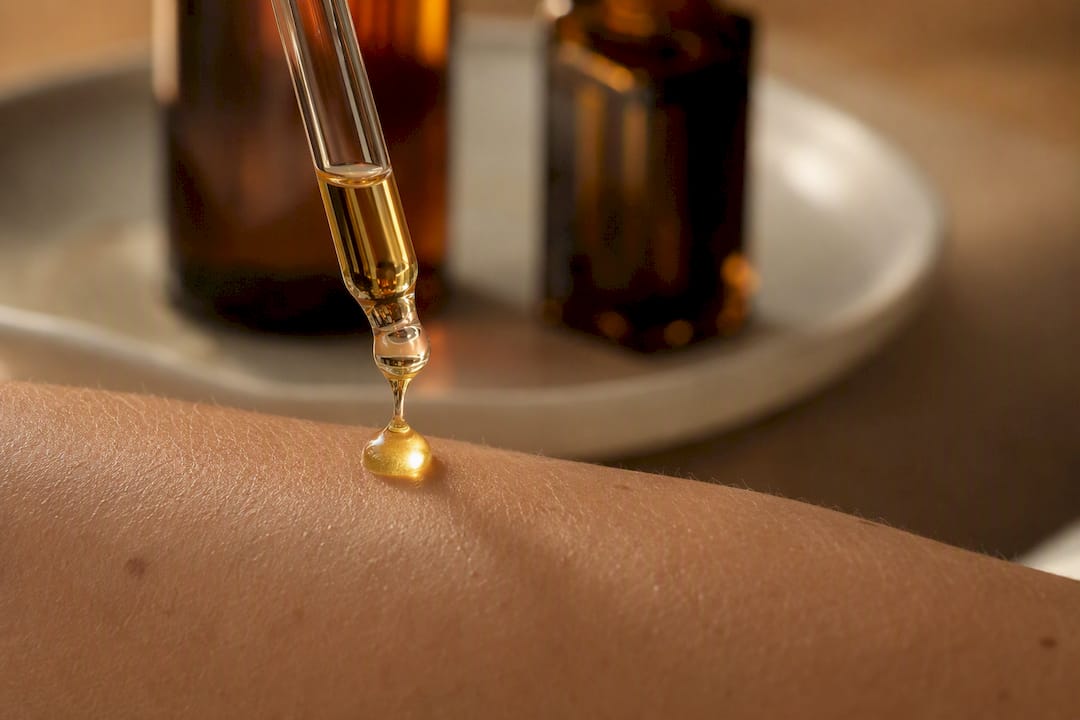
The difference between parfum and EDT isn’t only about the percentages on the label, but about the ratio of oil to alcohol. Alcohol evaporates quickly and carries the top notes with it, so EDT or cologne “shoots” right after spraying and disappears just as quickly. Parfum, on the other hand, has more oil and less alcohol, so it unfolds slowly and the base notes last long after an EDT version would have faded.
This is why the same fragrance can smell different in EDT than in parfum. It’s not just about intensity, but also about the order in which the different layers—top, heart, and base—appear on your skin.
- A higher alcohol proportion can cause dryness or mild irritation on sensitive skin.
- A stronger concentration with less alcohol is often gentler for sensitive skin, even though paradoxically it’s a “stronger” product.
- A new fragrance should always be tested on a small area of skin first.
Pro tip: Apply a small amount to the inner side of your arm and wait 24 hours. If there’s no redness or itching, you can wear the fragrance on your usual pulse points without worry.
How to choose a fragrance by occasion, climate, and skin
You can narrow down the choice between parfum, EDP, and EDT with three simple questions: where you’re going, what the weather is like, and how your skin reacts.
- Occasion: evening events and winter call for parfum or a stronger EDP; a typical day and summer call for EDT.
- Environment: in a closed office or an elevator, a lighter concentration is more considerate to others.
- Skin type: dry skin holds fragrance worse, so oilier parfum tends to last longer than on oily skin.
Before you buy your chosen fragrance in a large bottle, test it properly:
- Spray it on your skin—never just on paper—and let it develop for at least 4 to 6 hours.
- Compare the EDP and EDT versions of the same fragrance on both arms at the same time.
- Note when the projection weakens and when the fragrance completely disappears.
- If the longevity on your skin falls short of expectations, consider a higher concentration from the same line.
Sets with smaller bottles, like the 30ml x4 Parfum Set, are ideal for this kind of testing because you don’t have to buy a full bottle just to try it.
Does the same fragrance smell different in parfum and in EDT?
Yes and no. Concentration alone won’t change which ingredients are inside, but it will change their intensity and the pace at which they reveal themselves on your skin. A stronger version will always feel richer and unfold more slowly, even if the formula is identical.
The problem is that the formula is often not identical. When brands move between concentrations, they sometimes adjust the ratio of ingredients, so the EDP version may have a different base than the EDT of the same name. The only reliable way to find out is to spray both versions on your skin and compare them side by side—not just by the description on the box.
Why choose fragrances from Pure Parfum
Pure Parfum is built on vegan and cruelty-free ingredients, without unnecessarily expensive packaging that would only increase the price on the shelf. A higher concentration of fragrance oil in our products means you need less product per application, so the fragrance is actually better value for you—even if the price looks similar to other brands at first glance.
- Vegan formula without animal testing.
- Focus on high concentration for longer wear with lower consumption per spray.
- Simple packaging without marketing markups.
This combination makes Pure Parfum a meaningful choice if you’re looking for a fragrance comparable to more expensive brands, but without their price tag.
A brief reflection to wrap up
Most people should start by choosing EDP, because it combines longevity and wearability. But parfum deserves a place in your wardrobe for those moments when you want the fragrance to last from morning until midnight without losing intensity.
Try the difference between concentrations without risk
The safest way to understand the difference between parfum, EDP, and EDT is to have both versions at home and wear them alternately for a few days. That’s exactly what the 3x100ml Parfum bundle from Pure Parfum is for: three full-size bottles for a fraction of the price you’d pay with luxury brands for a single bottle.
Thanks to the high concentration of fragrance oil in all our fragrances, you don’t need to re-spray every hour, so one bottle lasts much longer than competing eau de toilette. If you want to start on a smaller scale, the 20ml x5 Parfum Set gives you five different fragrances to test the longevity on your own skin before you decide on the full size. Choose a set, spray the first fragrance this morning, and see how long it truly lasts.
Sources
- Extrait de Parfum vs Eau de Parfum: The Real Difference – Joojina
- Eau de Parfum vs. Eau de Toilette vs Parfum | YSL Beauty Australia
- Eau de Parfum vs Eau de Toilette: The Difference - ScentVerdict
- Eau De Parfum Vs Eau De Toilette: What’s The Difference? | British Vogue
- Perfume vs. Eau de Parfum: What’s the Difference? | TOPWALLI