


Yes, perfume can cause allergic reactions. Most often, it involves a delayed contact allergy—the so-called type IV—which only shows up hours to days after contact with the skin. Do you notice symptoms after using a fragrance product? Then stop using the suspected product, write down exactly what you used, and consider a user test or a dermatological exam. The updated EU labeling helps you find those ingredients on the packaging more quickly.
In short:
- Repeated skin contact with leave-on products increases the chance of a perfume allergy, especially due to oxidation of fragrance ingredients such as limonene and linalool.
- The new EU regulation now lists 82 fragrance allergens instead of 26, with lower thresholds for labeling in leave-on products.
- Symptoms of a perfume allergy include itching, redness, flaking, and blistering at contact sites, such as the neck and eyelids.
- A patch test with a dermatologist usually confirms the diagnosis, particularly by testing specific fragrance ingredients and using a fragrance mix.
- Avoid contact with fragrance ingredients by reading labels more consciously, choosing fragrance-free products, and performing a user test on the inner elbow.
Table of contents
- What is a perfume allergy and how does a type IV reaction work?
- How does sensitivity to fragrance ingredients develop, and who is at greater risk?
- What symptoms fit a perfume allergy, and where do they occur?
- Which substances does the label list, and what changes with the new EU rule?
- In which products are fragrance allergens found, even in unexpected places?
- How is a perfume allergy diagnosed by a doctor or dermatologist?
- How do you avoid exposure to fragrance allergens in your daily routine?
- How do you do a safe user test yourself using the inner elbow?
- When should you see a GP or dermatologist?
- Why ingredient transparency makes a difference for sensitive skin
- Choosing perfume with transparent ingredients: how we handle that
- Frequently asked questions
- Sources
What is a perfume allergy and how does a type IV reaction work?
A perfume allergy is a delayed contact allergy, also called a type IV reaction. Your immune system recognizes a fragrance ingredient as foreign and builds memory cells against it. With the next contact, that reaction only starts after hours to days, which makes it easy to miss the connection with the product. That’s why a perfume allergy is often harder to recognize than an immediate reaction.
This distinguishes it from IgE-mediated allergies, such as reactions to food or pollen, which occur within minutes. Not everyone reacts to the same substances: sensitivity depends on previous exposure, the skin barrier, and individual predisposition.
- Type IV reactions develop via memory cells of the immune system, not via antibodies.
- Symptoms appear with delay, usually after one day or longer, which delays diagnosis.
- Sensitivity is individual: one substance triggers something for you, but not for someone else.
How does sensitivity to fragrance ingredients develop, and who is at greater risk?
Sensitization builds up after repeated skin contact. Products you let absorb—so-called leave-on products like body lotion or perfume itself—remain in contact with the skin longer than products you rinse off. Over time, this increases the risk of an allergic reaction.
An important, often underestimated factor is oxidation. Oxidized limonene and linalool—two widely used fragrance ingredients—are more allergenic than their original fresh form, as discussed in the context of substance in gel polish and skin reactions. Exposure to air and light speeds up oxidation, even during storage of a perfume bottle.
- Repeated contact via leave-on products increases the chance of sensitization.
- Oxidized fragrance ingredients, such as old limonene or linalool, are more allergenic than their fresh form.
- Occupational exposure and existing eczema increase the likelihood of a fragrance allergy.
Pro tip: Store perfume and fragranced care products in the dark and keep them tightly closed; this slows oxidation and limits the buildup of allergenic breakdown substances.
What symptoms fit a perfume allergy, and where do they occur?
A perfume allergy usually presents as a localized skin reaction at the contact site. Recognizable signs include itching, redness, flaking, small blisters, and in more severe cases, weeping eczema.
- Itching and redness are often the first signs, sometimes already after a single exposure.
- Flaking and dryness develop after repeated or longer contact.
- Blisters and weeping eczema indicate a stronger or chronic reaction.
- Typical locations are the neck, eyelids, armpits, hands, wrists, and the beard area.
- Airborne spread or contact through clothing can also bring fragrance ingredients to other, not directly treated areas.
This last point explains why symptoms sometimes appear in places where you never intentionally applied perfume—for example via a scarf that touched your neck.
Which substances does the label list, and what changes with the new EU rule?
Manufacturers must list specific fragrance allergens by name on the packaging once a certain concentration is exceeded. Common examples include linalool, limonene, geraniol, citral, eugenol, benzyl alcohol, and Lyral—substances that regularly appear in the INCI lists of fragrance products.
Regulation (EU) 2023/1545 expands the mandatory listing of individual fragrance allergens in Annex III. From now on, an allergen must be listed separately at concentrations starting from 0.001% in leave-on products and from 0.01% in rinse-off products such as shampoo.
Concretely, this means the number of allergens that must be listed separately has increased significantly—from 26 to 82 substances, according to a analysis of the legal amendment. This results in longer ingredient lists on the packaging, without necessarily changing the product’s formulation itself. For you as a consumer, it mainly means more transparency: you can check more specifically whether a product contains a substance that has caused you a reaction before.
- Linalool, limonene, geraniol, and citral are widely used fragrance ingredients with known allergenic potential.
- Lyral and eugenol are also on the expanded list of allergens to be declared.
- The threshold for declaring them is lower for leave-on products than for rinse-off products.
In which products are fragrance allergens found, even in unexpected places?
Fragrance allergens are not only found in perfume. They occur in a wide range of everyday products, both cosmetic and household.
- Cosmetics and care: perfume, deodorant, body lotion, makeup, lip balm, and shampoo.
- Household sources: laundry detergent, fabric softener, air fresheners, scented candles, toilet paper, and wet wipes.
- Flavoring substances in food and oral care can play a role for a small group of people with stubborn eczema around the mouth—just like certain fragrance ingredients in cosmetic products that sustain systemic reactions.
Laundry detergent and fabric softener are often underestimated culprits, because fragrance ingredients remain in textiles and stay in contact with the skin all day.
How is a perfume allergy diagnosed by a doctor or dermatologist?
A dermatologist usually uses a patch test to confirm a perfume allergy.
- For the patch test, a fragrance mix—and often also Lyral and specific hydroperoxides—is applied to the skin and read after a few days, as described in the test protocol for fragrance mix allergy.
- A positive result is always linked to your symptom pattern: a red spot without a matching medical history is not enough to make a diagnosis, as also shown in diagnostic guidelines regarding fragrance mix and Lyral.
- If there is doubt or if the result is unclear, additional tests are done on individual fragrance ingredients, or you may be referred to an allergy center.
How do you avoid exposure to fragrance allergens in your daily routine?
Avoidance starts with choosing more consciously and reading labels.
- Where possible, choose fragrance-free care products—especially for leave-on use such as body lotion or cream.
- Read the INCI list on the packaging and compare it with ingredients you’ve reacted to before.
- Avoid aerosols and diffusers in small spaces, which spread fragrance ingredients throughout the room.
- Pay attention to the laundry detergent and fabric softener your partner or household uses, because fragrance ingredients in textiles can also reach your skin.
- Rinse-off products like shampoo generally pose less risk than leave-on products, because skin contact is shorter.
Sometimes, temporary avoidance is enough to see whether symptoms go away before you switch to a more extensive test or a doctor’s visit.
Pro tip: If you’re unsure, take a product break of two to three weeks before testing a new fragrance product—this makes it easier to identify which ingredient is responsible.
How do you do a safe user test yourself using the inner elbow?
The user test is a consumer-friendly way to check whether a product irritates your skin, as described in the patient information about fragrance mix allergy.
- Apply the product twice a day for 14 days to a small area of skin in the inner elbow.
- Check daily for redness, itching, or flaking on and around the test area.
- Stop immediately if you get blisters, significant swelling, or spreading redness, and stop using the product.
- Keep a short product diary so that, if you’re unsure, you can precisely find what you tested and when.
This test does not replace a medical diagnosis: if you have a clearly positive reaction, the next step is a patch test with a dermatologist.
When should you see a GP or dermatologist?
Contact a doctor right away if you have facial or throat swelling, breathing problems, or eczema that worsens despite self-care or doesn’t respond. A dermatologist can perform a patch test, provide targeted treatment advice, and help you choose suitable, allergy-fewer products. Bring the packaging and your product diary to the appointment—it significantly speeds up diagnosis.

Why ingredient transparency makes a difference for sensitive skin
More and more consumers want to know what is actually in their perfume, not just how it smells. The updated labeling rules are a step forward, but the responsibility to truly read the label still lies with you. A long INCI list isn’t a bad sign—it’s proof that a brand follows the rules. We believe transparency should be the norm, not the exception: always review the full ingredient list of Pure Parfum and, if you have doubts, contact our customer service or a GP.
— J
Choosing perfume with transparent ingredients: how we handle that
We’re all about scent enjoyment without hidden costs and without hidden ingredients. We work with fragrances suitable for environmentally conscious users and with a high concentration of perfume oil, which provides a long-lasting scent experience without unnecessary packaging costs.
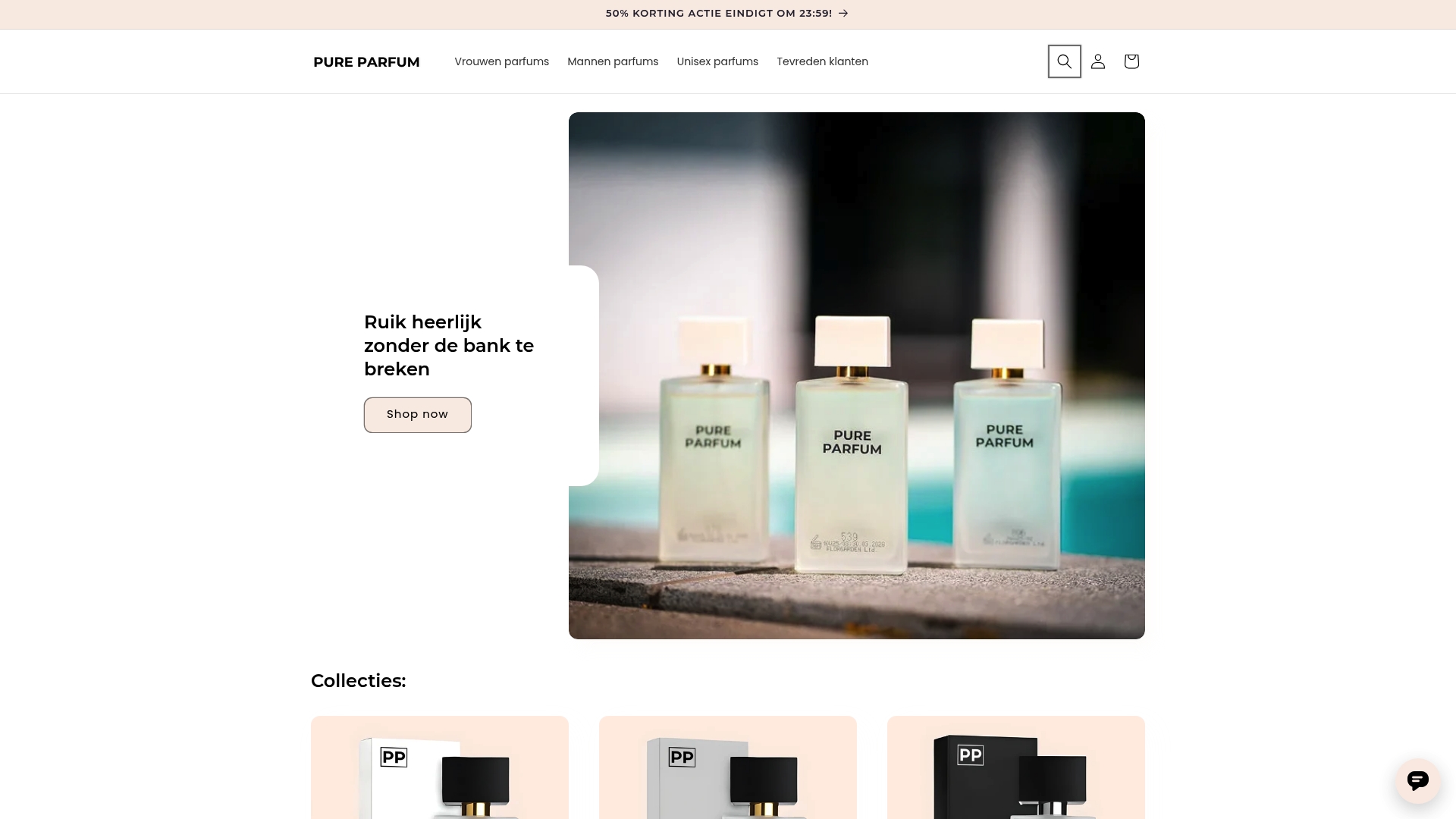
- Always check the INCI list on our product pages before ordering, especially if you’ve reacted to a specific fragrance ingredient before.
- Not sure about a particular ingredient? Our customer service will be happy to help you with questions about a specific product.
- Prefer to try a set right away? Check our perfume bundle with three scents and discover which one best suits your skin.
Visit our webshop and find a fragrance that fits you, with ingredient information at your fingertips.
This article contains general information and does not replace the advice of a qualified doctor. Consult a qualified healthcare professional about your own situation before acting based on this content.
Frequently asked questions
Can you be allergic to a perfume?
Yes, perfume can cause a contact allergy, usually a delayed type IV reaction that occurs hours to days after exposure. The chance of a reaction depends on prior sensitization and on the specific fragrance ingredients in the product.
What are the 4 types of allergic reactions?
Allergic reactions are generally classified into four types, of which type I is the immediate, IgE-mediated reaction, such as with food or pollen. A perfume allergy falls under type IV, a delayed, cell-mediated reaction that presents as contact eczema. The other two types, type II and III, play virtually no role in skin reactions to fragrance ingredients.
Can you get an allergic reaction from fragrance?
Yes, fragrance ingredients in perfume and personal care products can cause a contact allergy, especially with repeated skin contact through leave-on products. Symptoms include itching, redness, and eczema, usually at the contact site such as the neck, eyelids, or armpits.
What substances are in perfume?
Perfume contains a mix of fragrance ingredients, some of which are known as contact allergens, such as linalool, limonene, geraniol, citral, and eugenol. These substances must, according to the revised EU regulation, be listed separately on the label once they exceed a certain concentration.
How do I best avoid allergens in perfume?
Read the INCI list on the packaging and avoid substances you’ve reacted to before, such as oxidized linalool or limonene. Prefer fragrance-free care products for leave-on use and test new products first with a user test on the inner elbow.
Sources
- Perfume allergy: eczema caused by perfume and fragrance ingredients | ACN
- Amending Regulation (EC) No 1223/2009 – fragrance allergens labelling (EU 2023/1545)
- EU allergens 2023/1545 — INCI API blog
- Allergy to fragrance mix — NVDV