

Perfumes almost always use denatured ethanol as a solvent for fragrance ingredients. This alcohol evaporates quickly and carries the scent to your skin and into the air around you. If you prefer not to put alcohol on your skin, you can choose alcohol-free alternatives such as oil perfumes or water-based formulas—though they behave differently in terms of sillage and longevity.
In short:
- Alcohol in perfume prevents the fragrance oil from becoming too thick and allows for wide diffusion, but it can dry out and irritate sensitive skin types.
- The ratio between alcohol and fragrance oil varies: perfume (70–80% alcohol), eau de parfum (80–90%), and eau de cologne (up to 80%), where more oil usually results in a stronger and longer-lasting scent.
- Denatured ethanol is used in perfumes and must meet criteria such as 95–96% ABV and a skin-friendly denaturant, while other technical alcohol types are not suitable for skin contact.
- Alcohol-free alternatives such as oil perfumes, water-based formulas, and solid perfumes offer a more intimate fragrance experience with less projection, ideal for sensitive skin or everyday use.
- For making perfume yourself, alcohol is sold via specialized web shops and stores, and it’s wise to pay attention to safety and storage options for the alcohol.
Table of contents
- Which types of alcohol are used in perfume?
- Why is there alcohol in perfume?
- How much percentage of alcohol is in perfume?
- Is alcohol in perfume bad for your skin?
- What are good alcohol-free alternatives to perfume?
- Where do you buy perfume alcohol and what should you look out for?
- What makes Pureparfum a logical choice?
- Alcohol remains the norm, but not for everyone the best choice
- Discover perfumes with a fair price and clear ingredients
- Sources
- Frequently asked questions
Which types of alcohol are used in perfume?
Perfumers use almost exclusively ethanol, also known as ethyl alcohol. In its undiluted form, this so-called perfume alcohol has a purity of about 95 to 96% ABV before anything is added. To prevent people from drinking this alcohol, it is “denatured”: a small amount of a bitter or toxic substance is added, such as isopropyl alcohol. That substance makes the alcohol unsuitable for drinking, but it remains suitable for skin contact.
Isopropyl alcohol, methanol, and other technical alcohol types do not belong in a bottle of perfume. They smell sharper, evaporate differently, and can unnecessarily irritate the skin.
When purchasing alcohol for your own use, pay attention to these points:
- Check whether the label states “cosmetic grade” or “perfume alcohol”.
- Look at the ABV percentage: 95 to 96% is the usual standard.
- Avoid beer alcohol intended for cleaning or industrial use.
- Check that the denaturant is skin-friendly—not only toxic enough to prevent drinking.
Why is there alcohol in perfume?
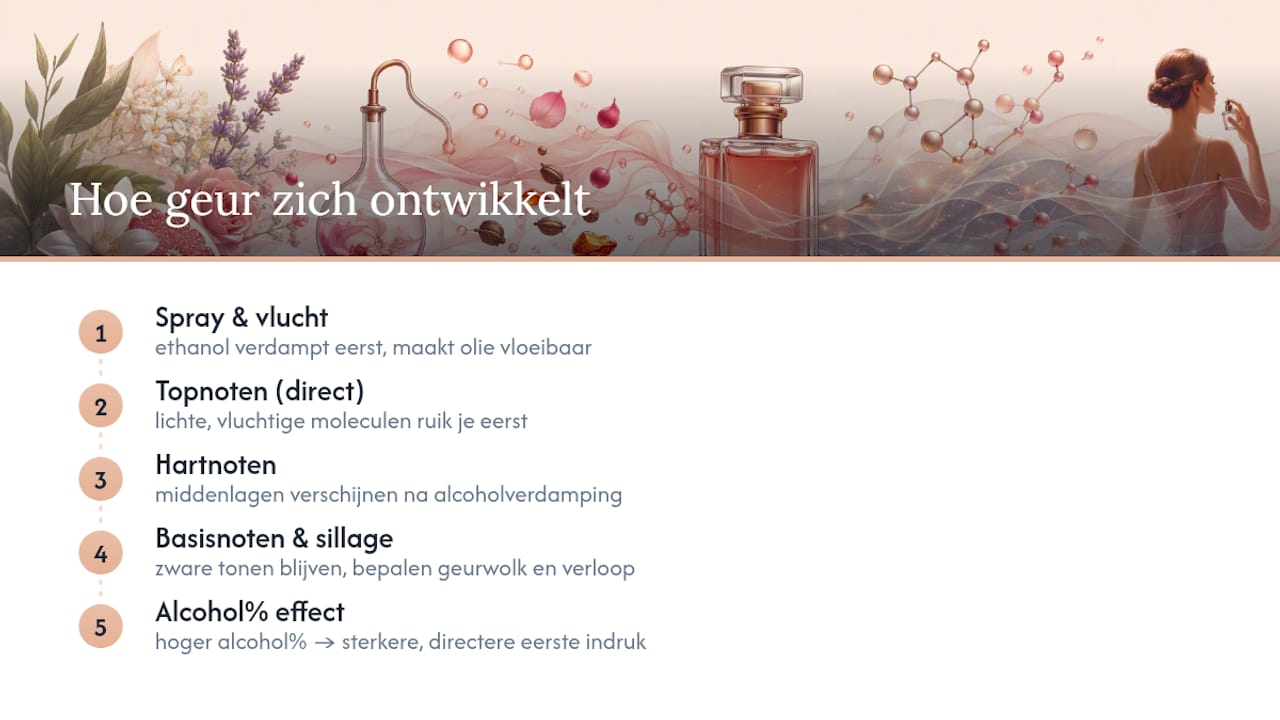
Alcohol dissolves the oily fragrance ingredients that naturally don’t mix with water. Without a solvent, a perfume would be a thick, unusable paste. Ethanol makes the fragrance oil liquid and wearable, and ensures that the scent spreads as soon as you spray it on your skin.
Directly after spraying, the alcohol evaporates fastest. That’s why you first smell the top notes: the lighter, more volatile molecules. While the alcohol evaporates, the heart notes—and later the heavier base notes—come to the surface. This progression determines the sillage, the scent cloud around you, and how the perfume changes throughout the day. A higher alcohol percentage usually gives a more immediate, stronger first impression, which is one reason professional perfumers intentionally choose higher concentrations.
How much percentage of alcohol is in perfume?
The alcohol percentage is directly related to the percentage of fragrance oil. The more oil, the less space remains for alcohol and water. The usual classification:
- Perfume or extrait: more than 20% fragrance oil, usually 70 to 80% alcohol.
- Eau de Parfum (EDP): 10 to 20% fragrance oil, about 80 to 90% alcohol.
- Eau de Toilette (EDT): 5 to 15% fragrance oil, often around 80% alcohol.
- Eau de Cologne (EDC): 3 to 5% fragrance oil, with the highest alcohol share of all four.
A higher concentration of fragrance oil does not automatically mean less alcohol overall; it means a different balance. Eau de Parfum smells more intense and generally lasts longer than Eau de Cologne, because it contains more fragrance molecules per spray.
Is alcohol in perfume bad for your skin?
Alcohol can dry out the skin, especially with repeated use in the same area. Still, most skin reactions to perfume are not caused by the alcohol itself, but by specific fragrance ingredients. Substances like linalool, limonene, geraniol, and citral are known as common allergens and must therefore be listed on the label above a certain concentration.
Dermal absorption of ethanol through perfume is minimal. Your skin absorbs too little alcohol to cause any kind of intoxication, no matter how often you spray. Chemically, the ethanol in perfume is identical to the alcohol in drinks, but the application, purity, and quantity differ fundamentally, as also general information about alcohol confirms.
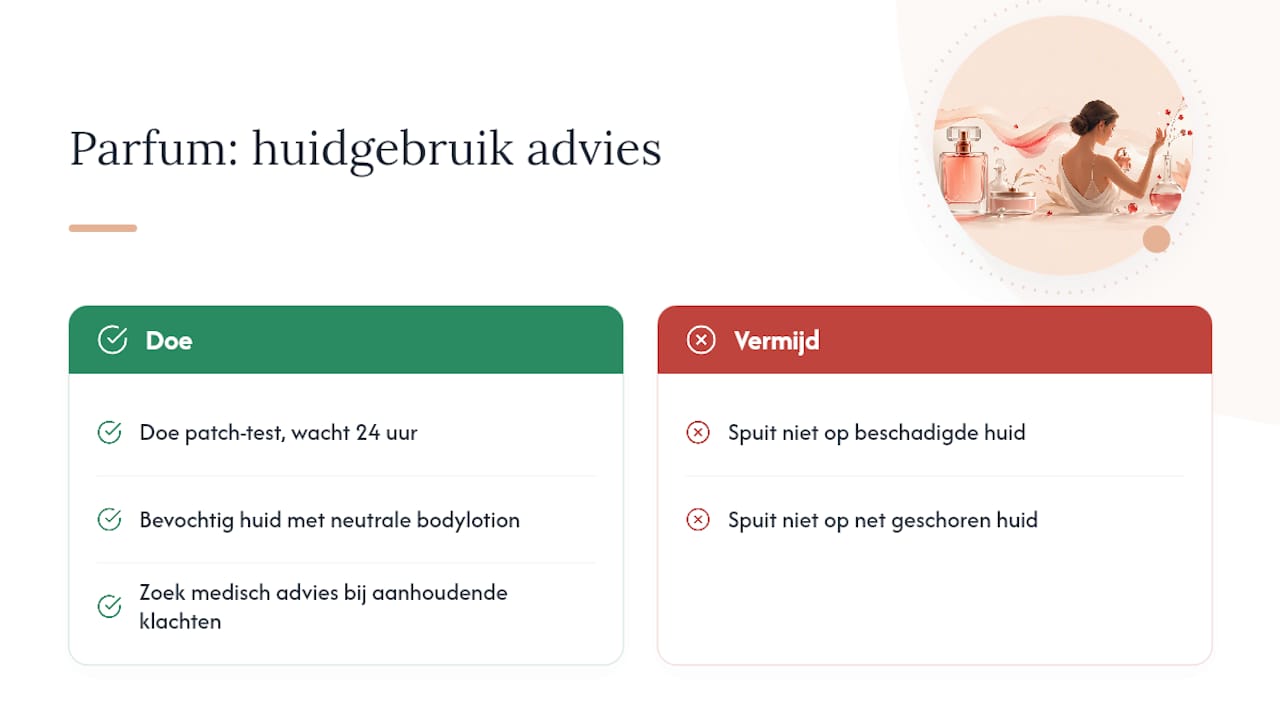
With a new perfume, do a patch test first on your inner arm and wait 24 hours. Avoid spraying on damaged or freshly shaved skin, and seek medical help for persistent redness or itching.
Pro tip: Lightly moisturize your skin with an unscented body lotion before you perfume. Oily skin holds fragrance molecules longer than dry skin, so your perfume lasts noticeably longer and dries out less quickly.
What are good alcohol-free alternatives to perfume?
If you’d rather not wear alcohol on your skin, you have three serious options.
- Oil perfumes. These stay on your skin the longest, because there’s no alcohol that slowly runs off and carries the fragrance molecules with it. The sillage is more modest: you smell it well yourself, but people at a distance smell it less. Ideal for intimate or everyday use without an overwhelming scent cloud.
- Water-based or glycerine formulas. These feel softer on the skin and sometimes give a fuller, rounder scent impression than an alcohol perfume, but they spread differently through the air.
- Solid perfumes and attars. Strongly concentrated, skin-intimate, and in many cultures already the standard form of fragrance for centuries—often with a religious or traditional background.
The difference between alcohol-containing and alcohol-free is mainly a difference in projection versus intimacy. An alcohol perfume fills a room, while an oil perfume stays closer to your skin. If you use an alcohol-free format, you can apply a bit more with confidence, because the scent doesn’t disperse as quickly and is less likely to overwhelm than a sprayed version.
Where do you buy perfume alcohol and what should you look out for?
Wholesale suppliers and specialized web shops sell this alcohol specifically for perfume bases, separate from cleaning or disinfection alcohol.
Pay attention to these points before ordering:
- Ask for the safety data sheet (SDS) from the supplier, especially for larger quantities.
- Store the alcohol in a cool, well-ventilated place, away from open flames; it is flammable.
- Avoid industrial alcohol without a cosmetic denaturant, even if the percentage is correct.
- Check the expiration date and packaging: a properly sealed dark bottle preserves quality longer.
If you have doubts about trademark rights or copying existing fragrance formulas, you’ll quickly run into legal risks—something that’s also relevant for anyone who wants to produce or sell perfume themselves, such as this analysis of trademark risks in the perfume industry.
What makes Pureparfum a logical choice?
Perfumes are offered with a high concentration of fragrance oil at affordable prices, because the costs for marketing and expensive packaging are left out. The scents are vegan and animal-friendly, giving environmentally conscious customers an option to choose.
For readers who want to know exactly what’s in their bottle, that’s relevant: clear ingredient information and a fair price weigh more than expensive packaging. These perfumes suit people looking for long-lasting fragrance without paying the price tag of a designer brand, and with an animal-friendly composition.
Alcohol remains the norm, but not for everyone the best choice
Technically speaking, alcohol is still the strongest option for anyone who wants a perfume that projects well and quickly shows its scent layers. Alcohol-free formulas are gaining ground among people with sensitive skin or anyone looking for a more subtle, “closer-to-the-home” type of fragrance. Choose alcohol-free for dry or reactive skin; choose alcohol-containing if you want projection and a clear scent progression.
— J
Discover perfumes with a fair price and clear ingredients
Alternatives are offered to expensive designer brands, providing a comparable fragrance experience without the extra cost for packaging and marketing.
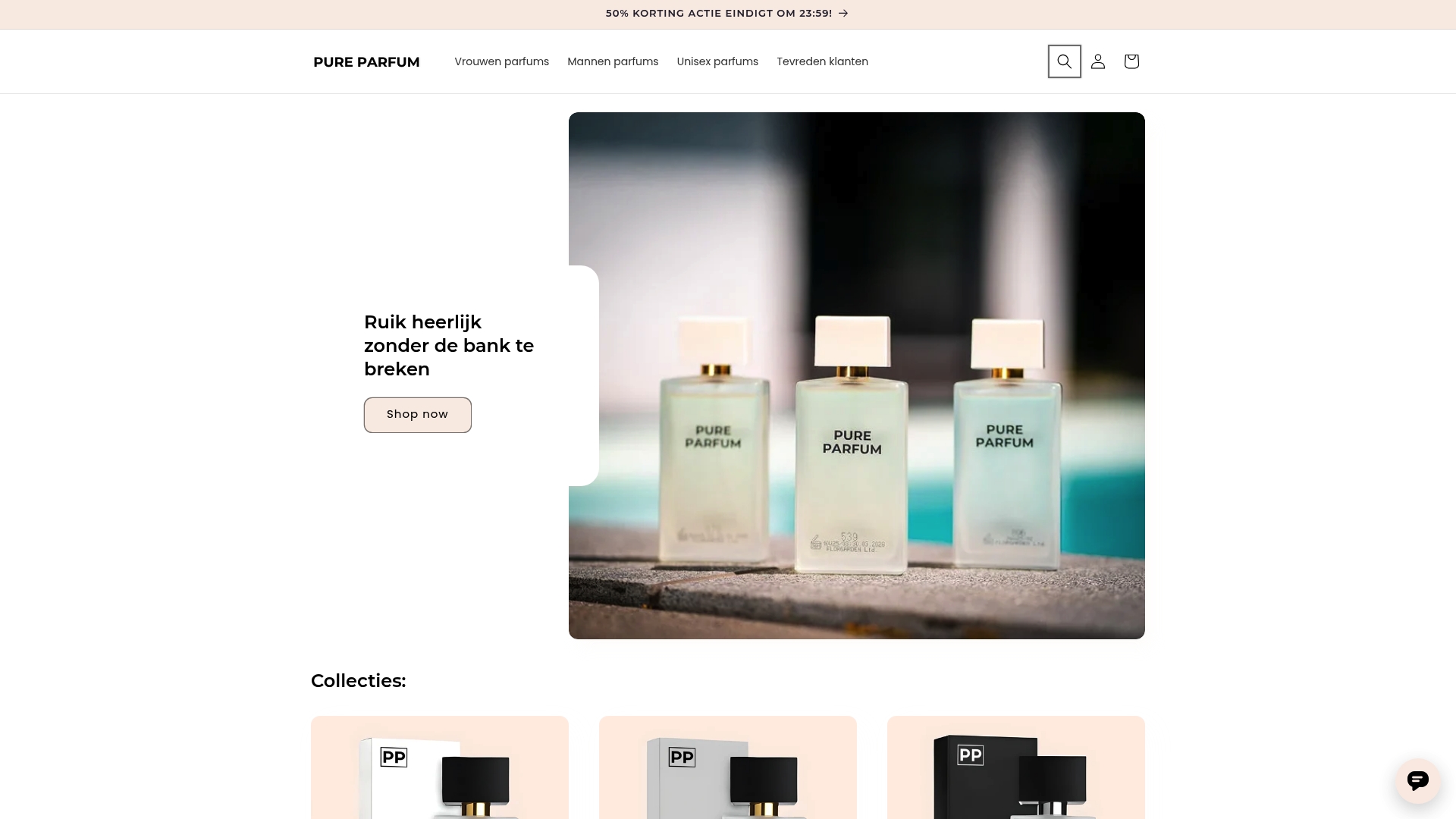
Every scent in the collection is vegan and animal-friendly and has a high oil percentage for a long-lasting fragrance. Can’t decide between Eau de Parfum and a more intense extrait? Check the women’s, men’s, and unisex perfumes and read the concentration and composition for each product. Want to try a few fragrances before buying a full bottle? The perfume bundle with three 100 ml bottles is made for that. Sensitive skin from alcohol use? Combine your perfume with a product from the body care collection to limit dryness and help the scent last longer.
Sources
For technical specifications, allergen lists, and safety data sheets: consult suppliers of perfume alcohol and the allergen specifications of fragrance oils.
- Benc
- Is it in perfume the same alcohol as in drinks… - ALCOHOLinfo
- Fragrance oil specifications and allergens (Gildewerk PDF)
Frequently asked questions
How much percentage of alcohol is in perfume?
That depends on the concentration: Eau de Cologne often contains the highest percentage of alcohol, an extrait the lowest, with a typical range of 70 to 90% depending on the oil percentage.
Why is there alcohol in perfume?
Alcohol dissolves the fragrance oil and carries the scent molecule into the air, so you smell the top notes right away and the fragrance unfolds throughout the day. Without alcohol, the oil would be too thick and difficult to spread.
Is the alcohol in perfume the same as in drinks?
Chemically, it’s the same ethanol, but the application and purity differ strongly, and the alcohol in perfume is denatured to prevent drinking. Dermal absorption through the skin is too small to cause any kind of intoxication.
Is there feces in perfume?
No, modern perfumes do not use excrement. Some classic base notes, such as civet or castoreum, historically come from animal glands, but nearly all current perfumes, including those from Pureparfum, use exclusively vegan and synthetic fragrance ingredients.
What are good alcohol-free alternatives to perfume?
Oil perfumes, water-based formulas, and solid perfumes are the main alcohol-free options. They typically stay close to the skin longer, but they give less sillage than a classic alcohol perfume.